


Fire Engine Customization Trends for Specialized Rescue Operations
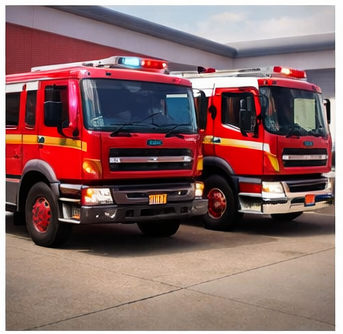
Fire Trucks Evolve with Smarter, Safer, and More Sustainable Design
Firefighting vehicles have come a long way from basic pumpers to highly engineered emergency response platforms. Today’s fire truck is no longer defined only by water capacity or ladder height; it reflects advances in safety systems, digital controls, sustainability, and customization. As urban density increases and climate-driven emergencies become more frequent, manufacturers are rethinking how the modern fire engine supports faster response, better situational awareness, and reduced operational risk.
Electrification, Hybrid Powertrains, and Emissions Reduction
One of the most visible trends shaping fire truck development is the gradual shift toward low-emission and hybrid powertrains. Municipal fire departments are under pressure to meet sustainability targets without compromising performance. As a result, manufacturers are introducing hybrid fire engines that reduce fuel consumption during idle and low-speed operations while maintaining full power during emergency deployment.
Fully electric fire trucks are also emerging in select cities, particularly for urban response units. These vehicles reduce noise pollution, improve air quality around stations, and offer instant torque for rapid acceleration. While range and charging infrastructure remain challenges, advancements in battery technology are steadily addressing these concerns, making electric fire engines increasingly viable for specific use cases.
Advanced Safety, Automation, and Digital Integration
Modern fire trucks are becoming safer and more intelligent through automation and digital integration. Advanced driver-assistance systems (ADAS), including collision avoidance, lane monitoring, and 360-degree camera views, are now being incorporated to reduce accidents during high-speed responses. Inside the cabin, touchscreen interfaces allow crews to manage pumps, ladders, lighting, and diagnostics from a centralized control system.
Connected vehicle technology is another major innovation. Real-time data sharing between dispatch centers and fire trucks enables optimized routing, traffic signal preemption, and predictive maintenance. According to Grand View Research., these technology-driven upgrades are playing a critical role in improving response efficiency and lowering long-term operating costs for fire departments worldwide.
Customization and Modular Fire Truck Design
Customization has become a defining feature of today’s fire truck model offerings. Fire departments face diverse operational environments, from dense urban centers to industrial zones and rural areas. Modular designs allow agencies to configure vehicles with specialized equipment such as foam systems, aerial ladders, rescue tools, or hazardous material units.
Manufacturers are also focusing on ergonomic improvements to reduce firefighter fatigue and injury. Lower step heights, improved visibility, better cabin layouts, and lightweight materials contribute to safer and more efficient operations. Even training and education benefit from this trend, as scaled-down fire truck toy replicas and detailed fire truck models are increasingly used in public safety education and firefighter training programs.
Market Growth and Long-Term Outlook
Beyond technological evolution, the fire truck sector is experiencing steady global expansion driven by urbanization, infrastructure investment, and stricter fire safety regulations. Fire departments are upgrading aging fleets to meet modern standards for performance, emissions, and crew safety. In addition, industrial growth and rising wildfire incidents are increasing demand for specialized fire engines designed for extreme conditions.
A research report by Grand View Research highlights that the global fire truck market size is projected to reach USD 7,163.7 million by 2030, growing at a CAGR of 5.6% from 2023 to 2030. This growth reflects sustained investment by governments and private entities in advanced firefighting capabilities, as well as rising awareness of disaster preparedness.
Looking ahead, the future fire truck will continue to blend power, intelligence, and sustainability. Whether through electric drivetrains, smart safety systems, or modular designs, the fire engine is evolving to meet the complex demands of modern emergency response—ensuring that firefighters are better equipped to protect lives and property in an increasingly unpredictable world.

 Arabic
 French
 Spanish
 Portuguese
 Deutsch
 Turkish
 Dutch
Dutch
 Italiano
 Russian
 Romaian
 Portuguese (Brazil)
 Greek
Greek
