


How ECMO Advancements Are Improving Survival Rates in Critical Care
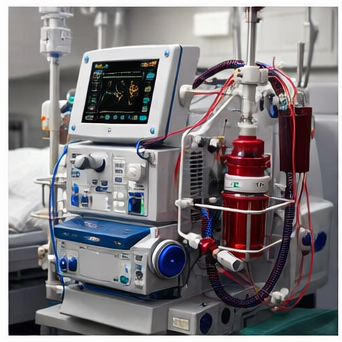
Extracorporeal Membrane Oxygenation Machines: Advancing Critical Care Through Innovation
Extracorporeal membrane oxygenation (ECMO) has become a cornerstone technology in modern critical care, particularly for patients with severe cardiac or respiratory failure who do not respond to conventional therapies. An ECMO machine temporarily takes over the function of the lungs and/or heart, allowing these organs time to rest and recover. In recent years, technological progress, expanding clinical applications, and stronger healthcare infrastructure have collectively driven renewed interest in ECMO systems across hospitals worldwide.
Technology Trends Shaping ECMO Machines
One of the most notable trends in extracorporeal membrane oxygenation is the shift toward compact, integrated ECMO machine designs. Manufacturers are focusing on portability, simplified circuit management, and user-friendly interfaces to reduce setup time and minimize human error. Advanced sensors, real-time monitoring, and automated safety alarms are now standard features, supporting clinicians in managing complex cases more efficiently.
Clinical differentiation between veno-venous ECMO and veno-arterial ECMO continues to guide innovation. Veno-venous ECMO, primarily used for severe respiratory failure, is seeing increased adoption due to rising cases of acute respiratory distress syndrome (ARDS) and post-infectious lung complications. Meanwhile, veno-arterial ECMO remains critical for patients with cardiogenic shock or cardiac arrest, prompting continued improvements in flow control, oxygenation efficiency, and hemodynamic support.
Expanding Clinical Applications and Adoption
Beyond traditional intensive care settings, ECMO is increasingly being utilized in emergency departments, cardiac catheterization labs, and even during high-risk surgical procedures. This expansion has accelerated demand for ECMO machines that can be rapidly deployed and managed by multidisciplinary teams. Training programs and standardized clinical protocols are also improving outcomes, making extracorporeal membrane oxygenation more accessible beyond highly specialized centers.
Pediatric and neonatal care remains a key application area, where ECMO has long been established as a lifesaving intervention. However, adult ECMO usage is now growing at a faster pace, supported by broader clinical evidence and improved survival rates. According to Grand View Research., these factors are contributing to steady global growth as healthcare systems invest in advanced life-support technologies.
Market Outlook and Growth Dynamics
A research report by Grand View Research highlights the strong long-term outlook for this sector. The global extracorporeal membrane oxygenation machine market size is projected to reach USD 445.7 million by 2030, growing at a CAGR of 5.5% from 2024 to 2030. This growth reflects rising critical care admissions, technological advancements, and increased awareness of ECMO as a viable treatment option in severe cases.
In simpler terms, the market is expanding steadily as more hospitals adopt ECMO machines, supported by better clinical outcomes, improved device reliability, and wider physician familiarity. Investments in healthcare infrastructure, especially in emerging economies, are further accelerating adoption and creating new opportunities for manufacturers.
Future Directions and Strategic Focus
Looking ahead, the future of extracorporeal membrane oxygenation lies in smarter, safer, and more efficient systems. Integration of artificial intelligence for predictive monitoring, improvements in biocompatible materials to reduce complications, and further miniaturization of components are all areas of active development. Cost optimization will also play a crucial role, as healthcare providers seek to balance advanced care with budget constraints.
As ECMO therapy continues to evolve, both veno-venous ECMO and veno-arterial ECMO will remain essential tools in critical care medicine. With sustained research, supportive clinical evidence, and growing global demand, ECMO machines are set to play an even more prominent role in saving lives and redefining the standards of advanced life support in the years ahead.

 English
 Arabic
 French
 Spanish
 Portuguese
 Turkish
 Dutch
Dutch
 Italiano
 Russian
 Romaian
 Portuguese (Brazil)
 Greek
Greek
