


Educational Robots in Early Education and Skill Development
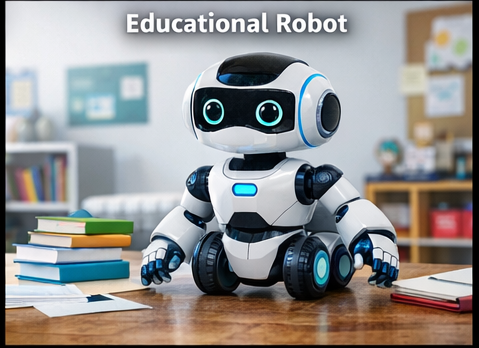
Educational Robots as a Core Learning Tool
Educational robots are rapidly moving from novelty classroom tools to core components of modern learning environments. As schools and parents seek more engaging ways to teach complex concepts, hands-on and interactive approaches are gaining priority. Educational robotics blends software, hardware, and pedagogy to create experiential learning, allowing students to learn by building, programming, and problem-solving rather than passive observation. This shift aligns strongly with global education trends that emphasize creativity, collaboration, and real-world skill development.
One of the most notable trends is the early introduction of robotics-based learning. Robotics kits for kids are now designed for learners as young as five, using visual programming, modular components, and gamified challenges. These kits lower the entry barrier to coding and engineering concepts while encouraging logical thinking and experimentation. As students progress, more advanced educational robots introduce artificial intelligence, sensor integration, and autonomous behavior, creating a clear learning pathway from basic concepts to advanced applications.
Integration with STEM and Digital Curricula
STEM educational robots are increasingly integrated into formal curricula rather than treated as extracurricular tools. Schools are aligning robotics activities with mathematics, physics, computer science, and even life sciences. For example, robots are used to simulate real-world systems, model environmental data, or demonstrate mechanical principles. This interdisciplinary use strengthens conceptual understanding while showing students how abstract theories apply in practical contexts.
Teacher-focused platforms are also evolving. Cloud-based dashboards, lesson libraries, and analytics tools now accompany many educational robotics solutions, helping educators track progress and personalize instruction. This trend reflects a broader move toward data-informed education, where learning outcomes can be measured and refined. Importantly, these platforms reduce the technical burden on teachers, making educational robots more accessible even in schools without dedicated robotics specialists.
Another emerging trend is inclusivity. Manufacturers are designing robotics kits for kids that support diverse learning styles and abilities, including tools for visually impaired students or simplified interfaces for learners with cognitive challenges. This ensures educational robotics supports equitable learning rather than widening digital divides.
Momentum and Global Adoption
The accelerating adoption of educational robots is supported by strong investment and institutional interest. In practical terms, this growth reflects increasing confidence in robotics as a scalable educational solution rather than an experimental technology. The global educational robot market size is projected to reach USD 5,842.2 million by 2030, growing at a CAGR of 28.8% from 2025 to 2030, according to Grand View Research. This expansion is driven by rising digital literacy initiatives, government-backed STEM programs, and growing parental awareness of future workforce requirements.
This momentum is also visible in emerging economies, where affordable educational robotics platforms are helping schools leapfrog traditional infrastructure constraints. Mobile-compatible programming environments and low-cost hardware are making robotics-based learning feasible even in resource-limited settings.
Preparing Learners for an Automated Future
Beyond technical skills, educational robots play a crucial role in developing soft skills such as teamwork, communication, and resilience. Students often work in groups to design, test, and refine robotic solutions, mirroring real-world engineering and product development processes. Failure becomes part of learning, teaching adaptability and critical thinking.
Looking ahead, the convergence of educational robotics with artificial intelligence, machine learning, and Internet of Things technologies will further expand learning possibilities. Adaptive robots that respond to individual student progress, multilingual instruction capabilities, and real-time feedback systems are already entering classrooms. As these innovations mature, educational robots will not only teach students how technology works but also how to think alongside intelligent systems.
In this context, educational robotics is no longer just about building robots—it is about building future-ready learners equipped with the skills, mindset, and confidence to thrive in an increasingly automated world.

 English
 Arabic
 French
 Spanish
 Portuguese
 Turkish
 Dutch
Dutch
 Italiano
 Russian
 Romaian
 Portuguese (Brazil)
 Greek
Greek
