


How Circular Design Is Influencing Sustainable Food Packaging
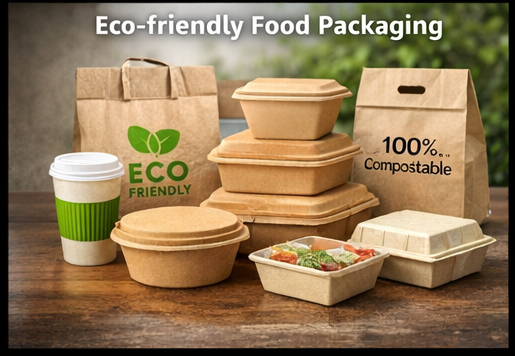
Shifting Priorities in Eco-Friendly Food Packaging
The global food industry is undergoing a fundamental shift as sustainability becomes a core expectation rather than a niche preference. Consumers are more aware of environmental impacts, regulators are tightening waste policies, and brands are rethinking packaging as part of their sustainability commitments. Against this backdrop, eco-friendly food packaging is evolving rapidly, driven by material innovation, smarter design, and scalable circular economy models. These changes are reshaping how food is protected, transported, and presented, while minimizing environmental footprints.
Material Innovation Driving Sustainable Solutions
One of the most visible trends is the accelerated adoption of sustainable food packaging materials that reduce dependence on fossil-based plastics. Paper-based laminates, molded fiber, and plant-derived polymers are gaining traction due to their lower carbon footprint and improved end-of-life options. At the same time, biodegradable food packaging made from materials such as polylactic acid (PLA), starch blends, and cellulose films is being refined to offer better barrier properties and shelf-life performance.
Compostable food packaging is also advancing beyond niche applications. New formulations now meet industrial composting standards while maintaining durability suitable for fresh, frozen, and dry foods. These solutions are particularly attractive to foodservice operators and quick-service restaurants seeking alignment with municipal composting programs. Importantly, manufacturers are investing in coatings and additives that allow compostable materials to resist moisture and grease without compromising compostability.
Recyclability and Circular Design Take Center Stage
While biodegradability and compostability are important, recyclable food packaging remains a cornerstone of sustainability strategies. Brands are simplifying material structures to improve recyclability, moving away from complex multi-layer plastics toward mono-material designs. High-density polyethylene (HDPE), polypropylene (PP), and aluminum are being optimized for food applications where recycling infrastructure is already established.
Design for recycling now extends beyond materials to labeling, inks, and adhesives, all of which affect recyclability. Clear communication on-pack is becoming standard, helping consumers dispose of packaging correctly. Digital watermarking and smart labeling technologies are also emerging, enabling more accurate sorting in recycling facilities and reducing contamination rates.
Momentum and Economic Outlook
These technological and design shifts are supported by strong market momentum. The economic outlook underscores how sustainability is moving from aspiration to scale. According to Grand View Research, the global eco-friendly food packaging market is on a robust growth trajectory, with expanding adoption across packaged foods, beverages, and foodservice sectors. This growth reflects both regulatory pressure and the commercial value brands see in aligning packaging with environmental responsibility.
In practical terms, this means increased investment in production capacity, regional sourcing of raw materials, and partnerships across the value chain. Food manufacturers are collaborating with packaging suppliers early in product development to ensure compatibility between food formulations and eco-friendly packaging formats.
Balancing Performance, Cost, and Compliance
Despite progress, challenges remain. Sustainable food packaging must balance environmental benefits with performance, safety, and cost-efficiency. For example, biodegradable food packaging must meet strict food contact regulations while maintaining competitive pricing. Similarly, compostable food packaging depends on access to appropriate composting infrastructure, which varies widely by region.
To address these challenges, companies are adopting hybrid strategies—using recyclable food packaging where recycling systems are strong, and compostable or biodegradable options where organic waste collection is available. Lifecycle assessments are increasingly used to guide these decisions, ensuring that sustainability claims are backed by measurable environmental benefits.
Looking ahead, eco-friendly food packaging will continue to evolve as innovation, regulation, and consumer expectations converge. The focus is shifting from single solutions to integrated systems that consider material sourcing, product protection, and end-of-life outcomes together. As these trends mature, sustainable packaging will become not just an environmental choice, but a competitive advantage in the global food industry.

 English
 Arabic
 French
 Spanish
 Portuguese
 Deutsch
 Turkish
 Dutch
Dutch
 Russian
 Romaian
 Portuguese (Brazil)
 Greek
Greek
