


Environmental Monitoring Trends Influencing ESG and Sustainability Goals
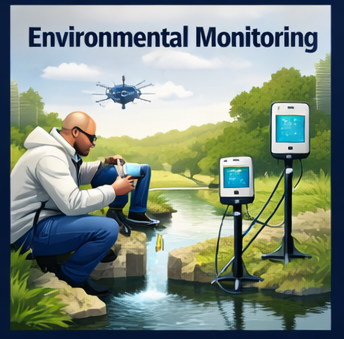
Environmental Monitoring: Technologies Shaping a More Sustainable Future
Environmental monitoring has moved from a regulatory obligation to a strategic necessity for governments, industries, and communities worldwide. As climate change, urbanization, and industrial expansion place increasing pressure on natural resources, the demand for accurate, real-time environmental data is rising. Recent advances in sensors, analytics, and digital platforms are transforming how ecosystems are observed, risks are managed, and sustainability goals are achieved.
Technology-Driven Evolution of Environmental Monitoring
One of the most significant trends in environmental monitoring is the rapid adoption of smart and connected technologies. Internet of Things (IoT)-enabled sensors now allow continuous data collection across vast geographic areas, reducing reliance on manual sampling. These sensors support more precise air quality monitoring by tracking pollutants such as particulate matter, nitrogen oxides, and ozone in real time. Cities are increasingly deploying sensor networks to understand pollution hotspots and design targeted mitigation strategies.
Similarly, water quality monitoring has benefited from automated probes and digital platforms that measure parameters like pH, turbidity, dissolved oxygen, and chemical contaminants. These systems help utilities and industries detect contamination events early, ensure regulatory compliance, and protect public health. Integration with cloud-based dashboards enables faster decision-making and long-term trend analysis, which is essential for managing freshwater resources under stress.
Role of Remote Sensing and Data Analytics
Remote sensing has become a cornerstone of modern environmental monitoring, offering large-scale visibility that ground-based systems alone cannot provide. Satellites, drones, and aerial imaging platforms collect high-resolution data on land use, vegetation health, ocean conditions, and atmospheric changes. This approach is particularly valuable for monitoring remote or inaccessible regions, such as forests, glaciers, and offshore waters.
Advanced data analytics and artificial intelligence are enhancing the value of remote sensing data. Machine learning algorithms can identify patterns, predict environmental risks, and automate anomaly detection. For example, satellite imagery combined with AI models is increasingly used to track deforestation, monitor algal blooms, and assess the impact of extreme weather events. These capabilities are helping organizations shift from reactive responses to proactive environmental management.
Expanding Applications Across Industries
Environmental monitoring solutions are being adopted across a wide range of sectors. In manufacturing and energy, companies use air quality monitoring and water quality monitoring systems to minimize emissions, manage wastewater, and meet environmental, social, and governance (ESG) targets. Agriculture is leveraging remote sensing to optimize irrigation, monitor soil health, and reduce chemical runoff, supporting more sustainable farming practices.
Urban planners and public authorities are also relying on environmental monitoring data to improve quality of life. Real-time insights into air pollution, noise levels, and water safety inform policy decisions, infrastructure investments, and public awareness campaigns. As smart city initiatives expand, environmental data is becoming a core input for resilient urban development.
The growing importance of sustainability and regulatory oversight is reflected in market projections. According to Grand View Research., the global environmental monitoring market size is projected to reach USD 20.1 billion by 2030, growing at a CAGR of 5.7% from 2025 to 2030. This outlook highlights steady investment in monitoring technologies as organizations seek reliable data to address environmental risks and comply with evolving standards. The expansion is supported by technological innovation, increased public awareness, and stronger enforcement of environmental regulations worldwide.
Looking Ahead
The future of environmental monitoring will be defined by greater integration, automation, and accessibility. As sensor costs decline and digital infrastructure improves, monitoring systems will become more widespread, even in developing regions. The convergence of air quality monitoring, water quality monitoring, and remote sensing into unified platforms will provide a more holistic understanding of environmental conditions.
Ultimately, effective environmental monitoring is not just about data collection—it is about enabling informed action. By combining advanced technologies with sound policy and collaboration across sectors, stakeholders can better protect natural resources, reduce environmental risks, and support long-term sustainable growth.

 English
 Arabic
 French
 Spanish
 Portuguese
 Deutsch
 Turkish
 Dutch
Dutch
 Russian
 Romaian
 Portuguese (Brazil)
 Greek
Greek
