


Scaling Data Center Cooling Systems for Rapid Digital Expansion
Emerging Trends Shaping Data Center Cooling
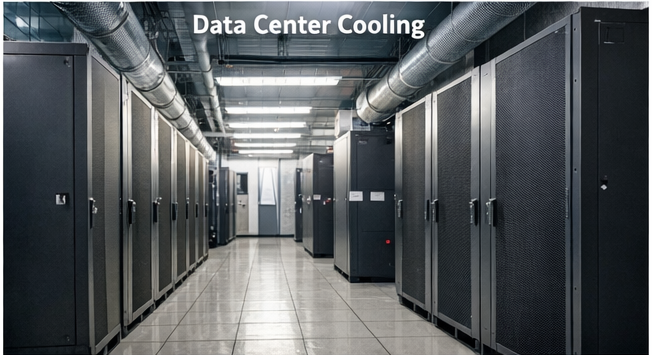
As global digital infrastructure expands, data center cooling has moved from a back-end utility to a strategic priority. The rapid growth of cloud computing, hyperscale facilities, AI workloads, and edge data centers is driving unprecedented heat densities. Traditional air-based approaches are no longer sufficient on their own, prompting operators to rethink how thermal management supports performance, uptime, and sustainability. Today, data center cooling systems are expected to deliver higher efficiency, scalability, and resilience while keeping energy costs under control.
One of the most notable trends is the shift toward high-density computing environments. GPU-heavy AI training clusters and advanced processors generate far more heat than legacy servers. To handle this, modern data center cooling solutions are increasingly designed around precision cooling, localized airflow management, and advanced monitoring. Operators are using real-time thermal analytics and AI-driven controls to dynamically adjust cooling based on workload demands, reducing waste and improving overall energy efficiency.
Liquid and Hybrid Cooling Approaches Gain Momentum
Liquid-based technologies are moving from niche deployments into the mainstream. Direct-to-chip liquid cooling, immersion cooling, and rear-door heat exchangers are being adopted to address extreme rack densities. Compared to air cooling, liquid methods remove heat more efficiently and require less energy, making them attractive for hyperscale and high-performance computing environments.
At the same time, hybrid architectures are becoming more common. Many facilities combine traditional air cooling with targeted liquid cooling for specific high-heat zones. This flexible approach allows operators to modernize existing data centers without a full redesign. As a result, demand for advanced data center cooling equipment—such as pumps, heat exchangers, cooling distribution units, and intelligent controls—is accelerating across both new builds and retrofits.
Sustainability, Regulation, and Market Expansion
Energy efficiency and sustainability are now central drivers of cooling innovation. Data centers are under increasing pressure to reduce carbon emissions and water usage while meeting regulatory and corporate ESG goals. Free cooling techniques, such as using ambient air or water when conditions allow, are being integrated into data center cooling systems to minimize reliance on mechanical chillers. Waste heat recovery is another emerging practice, where excess heat is repurposed for district heating or industrial processes.
These technological and regulatory forces are reflected in the market’s rapid expansion. Industry forecasts indicate strong long-term growth as digital transformation accelerates worldwide. In practical terms, the sector is moving beyond basic temperature control toward holistic thermal ecosystems that balance performance, cost, and environmental impact. According to Grand View Research., the global data center cooling market size is anticipated to reach USD 128.31 billion by 2033, growing at a CAGR of 22.3% from 2026 to 2033. This outlook highlights how essential efficient cooling has become to the future of digital infrastructure.
Looking Ahead: Smarter, Adaptive Cooling Strategies
Looking forward, the next phase of innovation will focus on intelligence and adaptability. AI-powered management platforms are enabling predictive maintenance, automated fault detection, and continuous optimization of cooling performance. These tools help operators anticipate thermal risks before they impact uptime, while also extending the lifespan of critical data center cooling equipment.
Edge data centers present another challenge and opportunity. Often deployed in space-constrained or remote locations, edge facilities require compact, modular data center cooling solutions that can operate reliably with minimal human intervention. Vendors are responding with prefabricated cooling modules, integrated containment systems, and standardized designs that simplify deployment and scaling.
In summary, data center cooling is no longer just about keeping servers cold—it is about enabling the digital economy to grow sustainably and reliably. As workloads intensify and efficiency expectations rise, advanced data center cooling systems and solutions will continue to play a decisive role in shaping the performance, cost structure, and environmental footprint of data centers worldwide.

 Arabic
 French
 Spanish
 Portuguese
 Deutsch
 Turkish
 Dutch
Dutch
 Italiano
 Russian
 Romaian
 Portuguese (Brazil)
 Greek
Greek
