


Airbnb Clone Development Trends Shaping the Vacation Rental Market in 2026
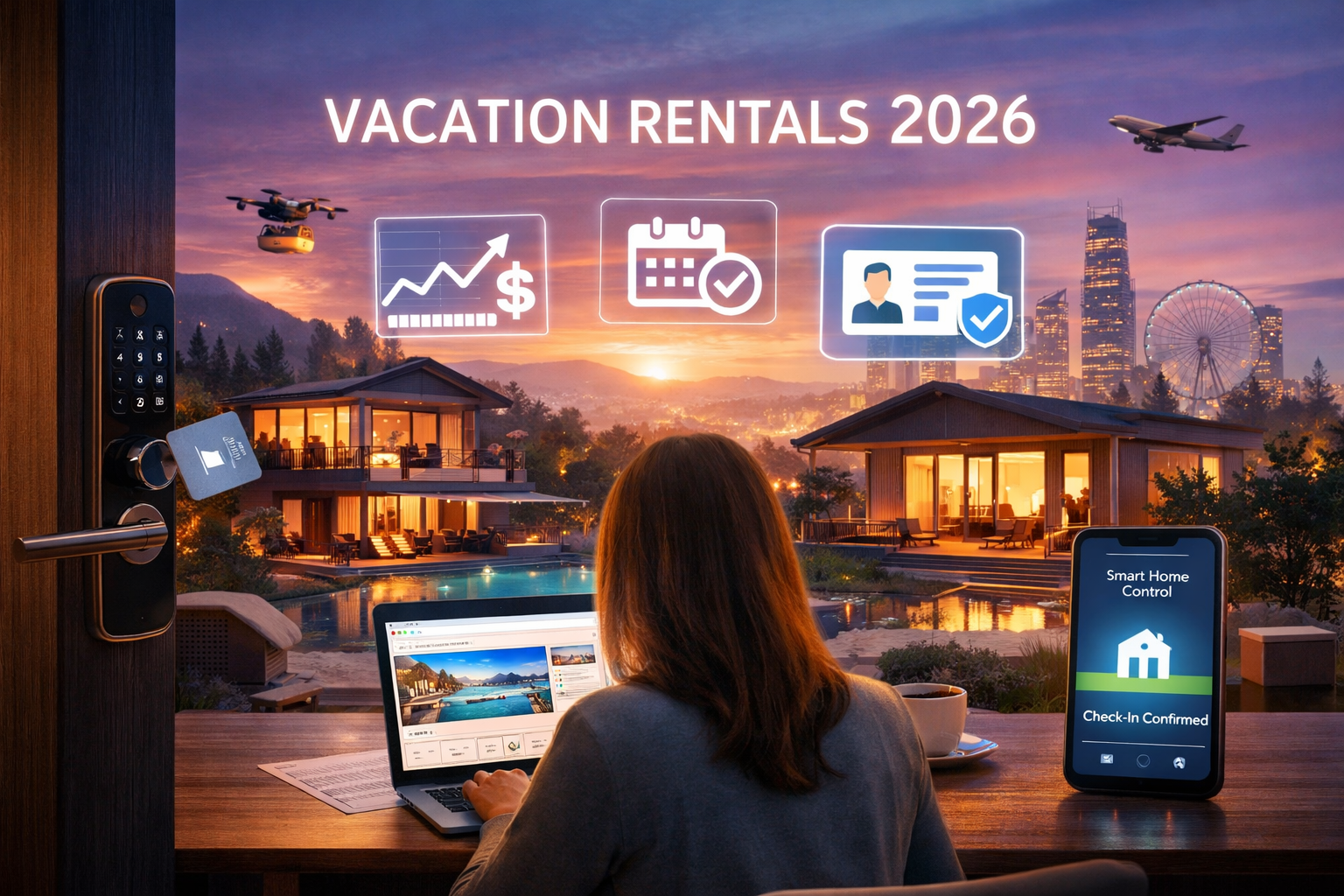
The vacation rental market in 2026 is moving out of its early-growth boom into a phase marked by disciplined scaling, stronger regulation, and rapid technology differentiation. Platforms built from an airbnb clone script or via custom airbnb clone development are no longer competing on pictures and price alone. They must deliver intelligent revenue management, frictionless guest experiences, robust compliance tools, and scalable host operations.
Operators launching an airbnb clone app or deploying a white label vacation rental app now face a market where professional managers, policy shifts, and guest expectations shape product decisions as much as engineering and design. This article explores the major development trends you must account for when planning or upgrading a vacation rental marketplace in 2026.
The vacation rental market in 2026: demand is stable, but expectations are rising
Vacation rentals remain one of the strongest segments of the travel economy because they fit modern traveler needs: more space, kitchen access, flexible check-in, privacy, and better suitability for families and groups. In 2026, demand is stable in most major markets, but the competitive bar is much higher than it was a few years ago.
This has a direct impact on airbnb clone development strategies. Instead of building a “basic booking marketplace,” new platforms must prove why they deserve user trust and why they are better for hosts. Travelers now compare platforms based on reliability, safety, pricing transparency, cancellation policies, and customer support quality. Hosts compare platforms based on payout speed, dispute handling, pricing support, and how well the platform drives bookings without constant discounting.
A modern airbnb clone app must therefore be designed as a full operational ecosystem, not just a listing website.
Regulatory compliance becomes a core product feature, not a legal afterthought
One of the biggest trends shaping vacation rental platforms in 2026 is stricter regulation. Many cities and tourist-heavy regions are tightening rules for short-term rentals. These rules commonly include:
-
Mandatory registration numbers displayed on listings
-
Limits on nights rented per year
-
Requirements for host residency or primary residence status
-
Tourist taxes or occupancy fees
-
Safety requirements such as fire equipment, emergency contacts, and insurance
-
Zoning restrictions and neighborhood bans
This affects the product directly. If you are building with an airbnb clone script, you must ensure the platform can store and validate registration details. If you are doing custom airbnb clone development, compliance tools should be part of the architecture from the beginning.
Compliance features that are becoming standard in 2026
A serious airbnb clone app in 2026 should include:
-
Host registration and license upload workflow
-
Listing-level compliance fields (fire safety, emergency contacts, insurance proof)
-
Admin review and approval queues
-
Geo-based rule enforcement (different rules for different cities)
-
Automated tax calculation support
-
Reporting exports for internal audits and legal requests
Platforms that ignore compliance often lose inventory suddenly when new rules arrive, and that can kill marketplace liquidity overnight.
AI-driven revenue management becomes essential for host retention
Dynamic pricing is no longer a premium feature. In 2026, it is becoming the default expectation, especially for hosts managing multiple properties.
Most hosts struggle with:
-
Seasonal demand changes
-
Local events and holidays
-
Competition pricing
-
Minimum stay optimization
-
Day-of-week price variation
-
Last-minute discounts that do not damage long-term revenue
An airbnb clone app that provides AI-based pricing guidance improves host profitability and reduces churn. It also increases the platform’s overall booking conversion because prices remain competitive without constant manual intervention.
What “AI pricing” should actually mean in a vacation rental marketplace
A strong revenue system in airbnb clone development should include:
-
Automated base price suggestions
-
Smart weekend and holiday multipliers
-
Occupancy-driven adjustments
-
Competitor benchmarking
-
Minimum stay optimization recommendations
-
Host controls for caps, floors, and manual overrides
-
Transparent explanation of price changes
The key is not only automation, but trust. Hosts will reject pricing systems that feel random or overly aggressive.
Search and discovery shifts toward personalization and intent-based ranking
Search is one of the biggest conversion levers in a vacation rental platform. In 2026, guests expect search to feel intelligent, not just filter-based.
A modern airbnb clone app should understand user intent. For example:
-
A business traveler searching for 3 nights needs Wi-Fi, quiet, and fast check-in
-
A family searching for 7 nights needs kitchen, washer, safety, and space
-
A couple booking a weekend wants aesthetics, location, and privacy
-
A group booking a celebration wants capacity, rules clarity, and noise tolerance
Airbnb clone development in 2026 increasingly relies on ranking models that consider:
-
Guest preferences and previous behavior
-
Booking likelihood based on historical data
-
Host response speed and cancellation history
-
Listing quality scores (photos, descriptions, amenities)
-
Price competitiveness relative to similar listings
-
Seasonal performance signals
Why filters alone are no longer enough
Filters still matter, but they are no longer the primary way users discover listings. Guests want:
-
Curated results that feel “right”
-
Highlighted best-fit properties
-
Smarter sorting that prioritizes quality, not just price
If you are using an airbnb clone script, ensure it supports flexible search ranking rules and not only static sorting. Otherwise, you will hit a ceiling quickly.
Contactless and smart-stay experiences define premium guest expectations
In 2026, guests increasingly expect the stay to be “digitally supported.” The experience is no longer limited to booking and check-in.
Key expectations include:
-
Keyless entry (smart locks)
-
Self check-in with clear instructions
-
Digital house manuals
-
In-app messaging with fast response
-
Automated support for common questions
-
Emergency contact access
-
Wi-Fi and amenity details clearly displayed
A strong airbnb clone app should support both host-managed stays and manager-managed stays. This is especially important for professional operators who run multiple units.
Smart integrations that improve both guest satisfaction and host efficiency
Modern airbnb clone development often includes integrations for:
-
Smart locks
-
Noise monitoring devices
-
Thermostat automation
-
Cleaning schedule systems
-
Maintenance ticketing
-
Guest identity verification tools
These integrations reduce operational costs and improve review scores.
Messaging evolves into a service layer, not just chat
Messaging is one of the most underestimated parts of an airbnb clone app. In 2026, messaging is not simply a chat box. It is an operational channel.
A modern platform should support:
-
Automated quick replies for common questions
-
Templates for check-in instructions
-
Scheduled messages (before arrival, after check-in, before checkout)
-
Multi-agent inbox for property managers
-
Escalation to customer support when needed
-
Attachment support for guides and images
-
Message translation for cross-border travelers
If you are building from an airbnb clone script, verify whether the messaging system is built for real operations or just basic communication.
The host side is no longer “a dashboard,” it is a business console
The host experience has become the deciding factor for platform growth. Many platforms fail not because guests dislike them, but because hosts do not find them profitable or easy to use.
In 2026, hosts expect:
-
Booking and calendar management
-
Payout tracking
-
Automated invoicing and tax exports
-
Pricing recommendations
-
Performance analytics
-
Review management
-
Cleaning and maintenance workflows
-
Multi-property management
This is why airbnb clone development is increasingly focused on host tooling.
Portfolio and property manager features become critical
Professional managers need:
-
Bulk listing creation
-
Multi-user roles and permissions
-
Centralized inbox across properties
-
Owner statements and accounting exports
-
Automated payout splitting for owners and managers
-
SLA tracking (response time, maintenance completion)
A white label vacation rental app that supports these features can win in regional markets where property managers dominate supply.
Multi-currency payments, split payouts, and tax logic become mandatory
Payments in vacation rentals are more complex than typical marketplace payments. A mature airbnb clone app in 2026 must support:
-
Multiple currencies
-
Multiple payment methods
-
Refund workflows
-
Chargeback handling
-
Fraud detection
-
Security deposits
-
Damage fees
-
Split payouts (platform fee + host payout + cleaning fees)
-
Partial refunds and rebooking credits
Why payout speed is now a competitive advantage
Hosts increasingly compare platforms by payout reliability and speed. Faster payouts improve host loyalty, especially for professional managers with cash-flow needs.
Airbnb clone development should prioritize:
-
Automated payout scheduling
-
Payout history transparency
-
Payout issue resolution workflows
-
Accurate reconciliation logs for support teams
Fraud prevention and trust systems become more advanced
As the market matures, fraud attempts increase. Vacation rentals face unique fraud patterns such as:
-
Fake listings
-
Stolen cards used for bookings
-
Chargeback abuse
-
Identity fraud
-
Party bookings with damage risk
-
Review manipulation
In 2026, trust and safety is not optional. It is part of platform survival.
Trust features expected in a modern airbnb clone app
A complete trust system should include:
-
Guest identity verification options
-
Risk scoring for bookings
-
Security deposit handling
-
Host cancellation penalties
-
Review authenticity controls
-
Admin fraud monitoring dashboards
-
Dispute resolution workflows
If you launch with a basic airbnb clone script and skip these features, the operational burden will grow quickly as bookings increase.
The shift toward subscription and membership models
A major monetization trend in 2026 is diversification beyond commission-only revenue.
Vacation rental platforms are experimenting with:
-
Host subscription plans (monthly fee for premium features)
-
Property manager enterprise plans
-
Guest membership for discounts or perks
-
Bundled services (insurance, cleaning, photography)
-
Lead generation packages for hosts
For airbnb clone development, this means you should build a billing layer that supports:
-
Recurring payments
-
Tiered plans
-
Feature gating
-
Usage-based pricing (per booking, per property, per user)
A white label vacation rental app that includes multi-plan billing can accelerate monetization significantly.
UX trends: transparency beats flashy design
In 2026, the best vacation rental UX is not the most decorative. It is the most transparent and predictable.
Guests want:
-
Total price clarity (including taxes and fees)
-
Clear cancellation terms
-
Accurate location information
-
Honest amenity lists
-
Realistic photos
-
Verified reviews
A successful airbnb clone app prioritizes:
-
Pricing breakdown screens
-
Clear policy summaries
-
Verified host badges
-
Clean and fast booking flow
-
Trust-first UI components
App performance and scalability: speed is a ranking factor
Mobile performance impacts conversion. Slow listing pages, delayed search results, and laggy calendars lead to drop-offs.
Airbnb clone development in 2026 increasingly uses:
-
API-first architecture
-
Microservices for booking, payments, and messaging
-
Caching layers for search and listing pages
-
CDN-based media delivery for listing photos
-
Real-time event systems for booking updates
-
Automated testing and CI/CD pipelines
If you are using an airbnb clone script, confirm that it can scale without breaking booking integrity. Many clone scripts fail under real traffic due to poor concurrency handling.
Admin panels evolve into operations and compliance command centers
Admin panels used to be simple dashboards for approving listings and viewing bookings. In 2026, admin panels must support operational scale.
A strong admin console for an airbnb clone app should include:
-
Listing quality scoring and moderation
-
Fraud detection alerts
-
Refund and dispute management
-
Compliance and licensing tracking
-
Tax and payout reconciliation
-
Customer support ticket integration
-
Host performance monitoring
This is where a white label vacation rental app can either help or limit you. If the admin panel is not flexible, scaling becomes painful.
Localization and regionalization: growth comes from focused markets
Many new vacation rental platforms in 2026 succeed by focusing on a specific niche:
-
A region (single city, state, or country)
-
A property type (villas, cabins, luxury stays)
-
A traveler segment (remote workers, families, medical travel)
-
A cultural market (language-first platform with local payment methods)
Airbnb clone development for niche platforms requires:
-
Localization of language and currency
-
Local payment methods
-
Local legal compliance
-
Local customer support workflows
-
Region-specific filters and property rules
A generic airbnb clone script may not support deep localization. If your business depends on regional fit, custom development may be the smarter long-term option.
Sustainability and “eco-stays” become a measurable category
Sustainability is becoming a real decision factor for many travelers. In 2026, platforms are adding structured eco-stay attributes such as:
-
Solar power
-
Water-saving systems
-
Recycling policies
-
EV charging
-
Eco-friendly cleaning products
-
Low-impact construction materials
For an airbnb clone app, this means sustainability should not be vague marketing text. It should be structured data that can be filtered, verified, and displayed clearly.
Why white label vacation rental app solutions are growing in 2026
A white label vacation rental app is becoming a preferred option for startups, local agencies, and property managers because it reduces time-to-market. In 2026, the speed advantage matters more than ever because:
-
Regulations change quickly
-
Market windows can close fast
-
Competition in local niches is increasing
-
Investors expect early traction
When white label works best
A white label vacation rental app is ideal when:
-
You are launching in one region first
-
Your differentiation is marketing and partnerships
-
You want a tested booking flow and host panel
-
You need fast deployment with limited engineering risk
When white label becomes limiting
White label becomes limiting when:
-
You need custom pricing logic
-
You want advanced search ranking personalization
-
You require unique compliance workflows
-
You plan multi-region scaling with different rules
-
You want proprietary revenue management tools
The smartest approach for many businesses in 2026 is a hybrid: launch quickly with a white label vacation rental app, then gradually replace components with custom modules as traction grows.
Implementation checklist for building a competitive Airbnb clone app in 2026
To build a platform that can survive and scale, ensure your airbnb clone development roadmap includes:
Product essentials
-
Search, filters, and ranking logic
-
Booking flow with clear pricing breakdown
-
Host onboarding and listing management
-
Calendar and availability control
-
Reviews and ratings
-
Messaging and notifications
-
Customer support workflows
Business and operations essentials
-
Commission configuration
-
Subscription billing (optional but trending)
-
Split payouts and payout tracking
-
Tax and fee calculation
-
Refund and dispute management
Trust and compliance essentials
-
Identity verification options
-
Listing moderation
-
Fraud monitoring
-
Compliance fields and registration support
-
Rule enforcement by region
Scalability essentials
-
Modular backend architecture
-
Secure media delivery
-
Performance monitoring and uptime alerts
-
Automated testing and deployment pipelines
Whether you start with an airbnb clone script or build from scratch, these pillars determine long-term success.
Conclusion
The vacation rental market in 2026 is still full of opportunity, but it is no longer forgiving to platforms that launch without operational depth. Travelers expect premium digital experiences. Hosts expect revenue tools and business-level dashboards. Regulators expect compliance and transparency.
If you are planning an airbnb clone app, your success will depend on how well your airbnb clone development strategy balances speed, differentiation, and scalability. A strong airbnb clone script or a white label vacation rental app can accelerate launch, but long-term growth comes from smart customization, trust-first design, and a platform built for real-world operations.
Frequently Asked Questions
What is an airbnb clone script?
An airbnb clone script is a pre-built software solution that includes core vacation rental marketplace features such as listing creation, search, booking, payments, and basic host and admin dashboards. It is typically used to launch quickly without building everything from scratch.
Is airbnb clone development better than buying a ready-made solution?
Airbnb clone development is better when you need strong differentiation, advanced compliance tools, custom revenue logic, and long-term scalability. A ready-made solution is better when speed-to-market is the priority and your initial scope is focused.
What is the difference between an airbnb clone app and a white label vacation rental app?
An airbnb clone app typically refers to a marketplace app that replicates Airbnb-style functionality, whether built from scratch or from a clone base. A white label vacation rental app usually refers to a ready-made product you can rebrand and deploy quickly, often with limited customization compared to full custom development.
What features should an airbnb clone app include in 2026?
A competitive airbnb clone app should include dynamic pricing support, strong search and personalization, contactless check-in readiness, secure payments with split payouts, host business dashboards, compliance tools, fraud prevention, and scalable admin operations.
Can I start with a white label vacation rental app and upgrade later?
Yes. Many businesses in 2026 start with a white label vacation rental app to launch quickly and validate the market, then gradually customize or replace modules as the platform grows. This approach balances speed with long-term flexibility.

 English
 Arabic
 French
 Spanish
 Portuguese
 Deutsch
 Turkish
 Italiano
 Russian
 Romaian
 Portuguese (Brazil)
 Greek
Greek
