


Vehicle RC to Mobile Number API vs Manual Owner Verification
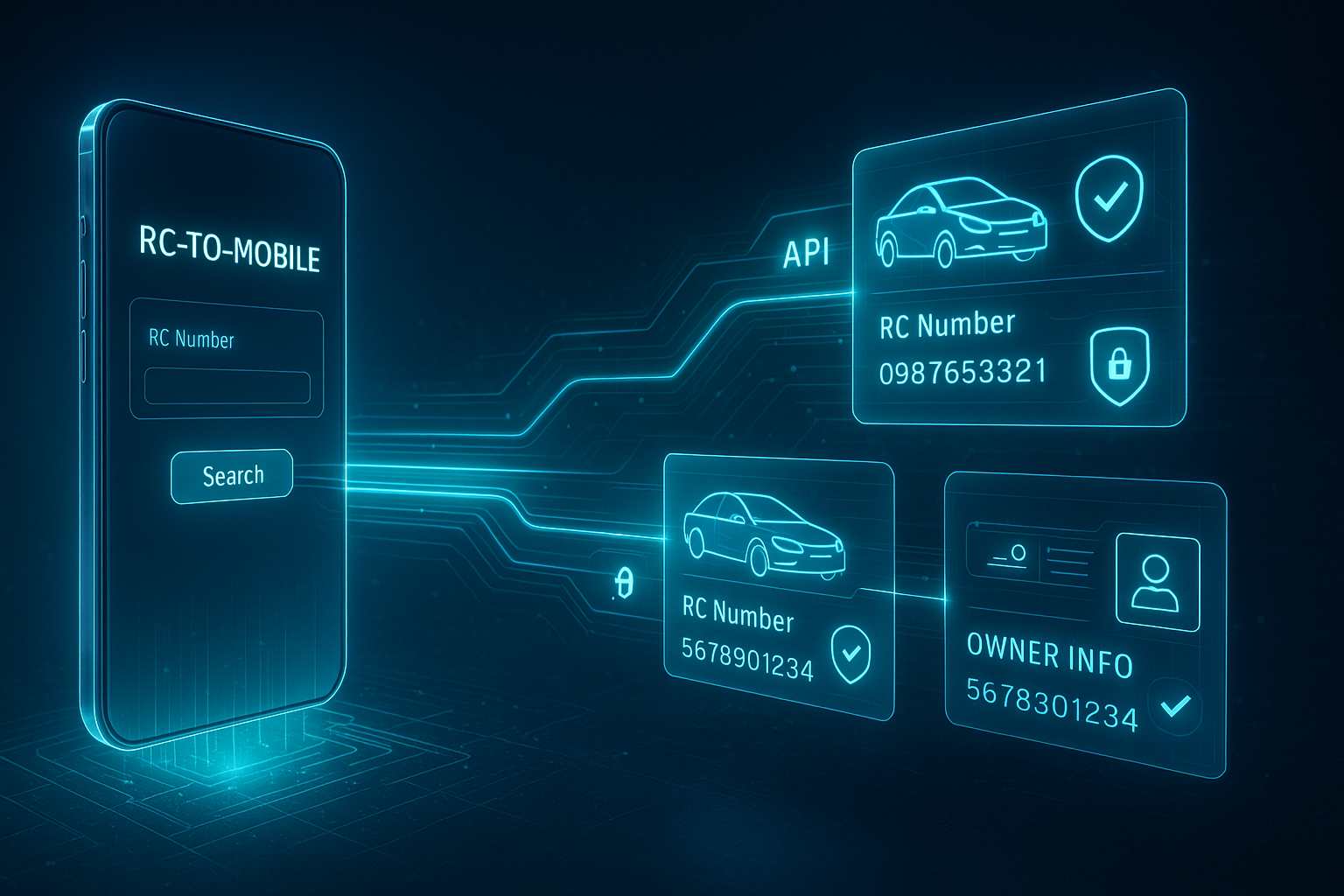
Vehicle owner verification is a critical step for industries such as insurance, NBFC lending, fleet management, logistics, and used vehicle marketplaces. Verifying whether a person is genuinely linked to a vehicle helps prevent fraud, reduce disputes, and ensure regulatory compliance. Traditionally, this verification was handled through manual processes. Today, many businesses are shifting to Vehicle RC to Mobile Number API for faster and more reliable verification.
Understanding the difference between these two approaches helps organizations choose the right method for scalable and trustworthy vehicle owner verification.
What Manual Owner Verification Involves
Manual owner verification typically depends on physical or digital copies of the vehicle Registration Certificate. Users are asked to upload RC documents, enter owner details, or share screenshots from official portals.
Verification teams then review the documents manually, check for inconsistencies, and sometimes contact the owner for confirmation. While this approach may work for low volumes, it becomes inefficient and error-prone as transaction volume increases.
Limitations of Manual Owner Verification
Manual processes introduce several challenges. Document uploads may be unclear or outdated. Human review increases the risk of errors and inconsistent decisions. Follow-up calls add delays and frustrate users.
Fraudsters often exploit these gaps by submitting altered documents or impersonating vehicle owners. As businesses scale, manual owner verification becomes costly, slow, and difficult to manage.
What Vehicle RC to Mobile Number API Means
Vehicle RC to Mobile Number API verifies whether a mobile number is linked to a specific vehicle registration record. Instead of relying only on documents, the API checks the association between the RC and the mobile number using verified data.
This creates a stronger verification layer by connecting vehicle records with a trusted contact point. It reduces dependence on self-declared information and improves confidence in owner verification.
How RC to Mobile Number API Works
The API processes a vehicle registration number along with a mobile number and checks whether both are associated in verified records. The response confirms whether the linkage exists and may include additional structured indicators.
Because this process is automated and real time, verification is completed within seconds without requiring manual review or physical documents.
Speed Comparison: API vs Manual Verification
Manual owner verification can take hours or even days, depending on document quality and follow-up requirements. This slows down onboarding, loan approvals, or policy issuance.
RC to Mobile Number API completes verification almost instantly. Faster checks improve turnaround time and enable fully digital workflows across platforms.
Accuracy and Reliability of Verification
Manual verification depends heavily on document authenticity and reviewer judgment. Errors and inconsistencies are common, especially at high volumes.
RC to mobile verification improves accuracy by validating data against verified records. This reduces reliance on scanned documents and ensures consistent verification outcomes.
Fraud Prevention and Risk Control
Manual processes are vulnerable to fraud, including fake RCs, altered images, and impersonation. Detecting such fraud requires skilled reviewers and additional time.
RC to Mobile Number API strengthens fraud prevention by identifying mismatches between vehicle records and mobile numbers early. Suspicious cases can be flagged automatically for review.
Scalability for Growing Platforms
As transaction volumes grow, manual verification requires more staff, training, and quality checks. This increases operational costs and limits scalability.
RC to Mobile Number API scales easily. The same automated process can handle thousands of verification requests without increasing operational overhead.
Impact on Customer Experience
Manual verification often adds friction to user journeys. Users may be asked to re-upload documents or wait for approval.
API-based verification improves customer experience by reducing steps and speeding up verification. Faster onboarding leads to higher completion rates and satisfaction.
Compliance and Audit Readiness
Regulatory compliance requires accurate and traceable records. Manual verification often results in inconsistent documentation.
RC to Mobile Number API provides standardized and verifiable data that improves audit readiness and supports compliance requirements.
Use Cases Across Industries
Insurance companies use RC to mobile verification to confirm policyholder details. NBFCs rely on it for vehicle loan ownership checks. Fleet and logistics platforms use it to onboard verified vehicles.
Used car and bike marketplaces use the API to authenticate sellers and reduce fake listings. In each case, API-based verification outperforms manual methods.
When Manual Verification Is Still Used
Manual checks may still be required in rare edge cases where API data is unavailable or ownership changes are very recent. However, these should be treated as exceptions rather than the default process.
A hybrid approach works best, with API verification as the primary method and manual review as a fallback.
Future of Vehicle Owner Verification
As vehicle-related services continue to digitize, manual owner verification will become less practical. Automated verification using RC to Mobile Number API will become the standard.
Businesses that adopt API-based verification early will benefit from faster operations, reduced fraud, and stronger trust.
Conclusion
Vehicle RC to Mobile Number API offers clear advantages over manual owner verification. It delivers faster verification, higher accuracy, better fraud prevention, and improved scalability.
For businesses handling vehicle data at scale, manual verification is no longer sufficient. RC to Mobile Number API provides a future-ready solution for reliable and efficient vehicle owner verification.

 English
 Arabic
 French
 Spanish
 Portuguese
 Deutsch
 Turkish
 Dutch
Dutch
 Russian
 Romaian
 Portuguese (Brazil)
 Greek
Greek
