


Bare Metal Cloud Integration with Kubernetes and DevOps Tools
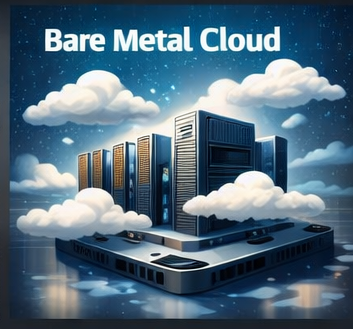
Bare Metal Cloud: Performance-Driven Infrastructure for the Next Wave of Digital Growth
As enterprises continue to modernize IT environments, infrastructure decisions are increasingly shaped by performance predictability, security control, and deployment flexibility. In this context, the bare metal cloud has emerged as a compelling alternative to traditional virtualized public cloud models. By combining the raw power of physical hardware with cloud-like provisioning and automation, organizations can support demanding workloads without sacrificing agility.
Why Bare Metal Is Gaining Momentum
Unlike virtual machines that share underlying resources, bare metal servers allocate an entire physical server to a single tenant. This eliminates the “noisy neighbor” problem and delivers consistent performance for latency-sensitive applications. Industries such as financial services, gaming, media streaming, healthcare, and AI-driven analytics are adopting bare metal hosting to handle workloads that require high I/O throughput, predictable latency, and strict compliance.
Another major driver is the rise of hybrid and multi-cloud strategies. Enterprises want the freedom to place workloads where they perform best—whether on virtual cloud platforms or on dedicated hardware. Bare metal cloud solutions fit neatly into this strategy by offering APIs, on-demand provisioning, and usage-based pricing while retaining the benefits of physical isolation.
Technology Trends Shaping the Bare Metal Cloud Landscape
One of the most significant trends is the integration of bare metal environments with cloud-native tooling. Providers now support Kubernetes, container platforms, and infrastructure-as-code frameworks directly on bare metal servers. This allows DevOps teams to run microservices and containerized applications on dedicated hardware without redesigning workflows.
Hardware innovation is also playing a crucial role. The availability of high-core-count CPUs, NVMe storage, and GPU-accelerated configurations makes bare metal hosting attractive for AI training, machine learning inference, and data-intensive workloads. At the same time, advanced networking technologies such as RDMA and high-speed Ethernet are reducing latency and improving east-west traffic performance in data centers.
Security is another key factor. With increasing regulatory scrutiny and data sovereignty requirements, many organizations prefer dedicated bare metal cloud deployments that provide full control over hardware, firmware, and data locality. This model simplifies compliance with standards such as HIPAA, PCI DSS, and regional data protection regulations.
Dedicated Bare Metal Cloud in Enterprise Strategy
The concept of a dedicated bare metal cloud goes beyond single-server deployments. Enterprises are now deploying clusters of bare metal servers that function as private cloud environments, but with elastic scaling and centralized management. This approach supports mission-critical workloads such as core banking platforms, large-scale databases, and ERP systems that cannot tolerate performance variability.
Cost optimization is also influencing adoption. While virtual cloud instances are convenient, long-running, high-utilization workloads can become expensive over time. Bare metal hosting often provides a more predictable cost structure, especially when workloads run continuously and fully utilize available resources.
The strong demand for performance-centric infrastructure is reflected in market projections. The global bare metal cloud market size is projected to reach USD 52.66 billion by 2033, growing at a CAGR of 21.4% from 2026 to 2033, according to Grand View Research. This growth underscores how enterprises are rebalancing their cloud strategies to include dedicated physical infrastructure alongside virtualized services.
In essence, the market outlook highlights a shift toward hybrid architectures where bare metal servers play a strategic role in supporting advanced workloads, edge computing deployments, and data-intensive applications.
The Road Ahead
Looking forward, bare metal cloud platforms are expected to become even more automated and developer-friendly. Faster provisioning times, deeper integration with AI operations (AIOps), and enhanced observability tools will further narrow the gap between virtual cloud convenience and physical server performance. As organizations prioritize efficiency, security, and scalability, bare metal hosting is set to remain a foundational component of modern digital infrastructure—bridging the best of cloud flexibility and dedicated hardware power.

 English
 Arabic
 French
 Portuguese
 Deutsch
 Turkish
 Dutch
Dutch
 Italiano
 Russian
 Romaian
 Portuguese (Brazil)
 Greek
Greek
