


Autonomous Driving Systems and the Push Toward Safer Roads
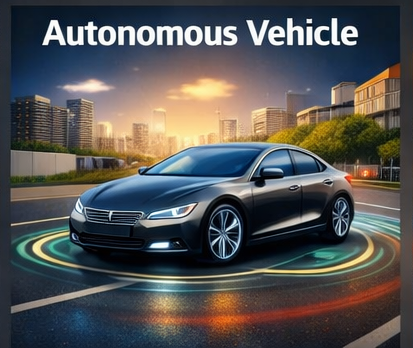
The Rapid Evolution of Autonomous Vehicles
Autonomous vehicles are no longer a distant vision confined to research labs or science fiction. They are steadily transitioning into real-world mobility solutions, reshaping how people and goods move across cities and highways. Driven by advances in artificial intelligence, sensor fusion, and connectivity, the global push toward automation is accelerating. Governments, automotive manufacturers, and technology providers are aligning efforts to improve safety, reduce congestion, and enhance transportation efficiency through automation.
Self-driving cars are emerging in various forms, from advanced driver-assistance features in consumer vehicles to fully autonomous shuttles operating in controlled environments. While widespread deployment still faces regulatory and infrastructure challenges, the pace of innovation suggests that autonomy will become a core pillar of future mobility ecosystems.
Breakthroughs in Autonomous Vehicle Technology
At the heart of this transformation is autonomous vehicle technology, which combines machine learning, computer vision, radar, lidar, and high-definition mapping. Recent trends show a strong shift toward software-defined vehicles, where intelligence is continuously upgraded through over-the-air updates. This approach allows autonomous driving systems to improve performance over time without requiring hardware changes.
Another key development is the integration of edge computing and vehicle-to-everything (V2X) communication. By enabling vehicles to exchange data with traffic signals, road infrastructure, and other vehicles, these systems enhance situational awareness and decision-making. This connectivity is particularly important in dense urban environments, where real-time responsiveness is critical for safe and efficient autonomous operations.
Automakers are also refining perception systems to handle complex scenarios such as poor weather, unpredictable pedestrian behavior, and mixed traffic conditions. These advancements are pushing autonomous vehicles closer to higher levels of automation, where human intervention is minimal or unnecessary.
Beyond technology, commercial adoption is shaping the trajectory of self-driving cars. Logistics and freight transport are among the earliest adopters, as autonomous driving systems offer clear economic benefits through reduced fuel consumption, optimized routing, and lower labor costs. Robotaxis and autonomous delivery vehicles are also gaining traction in pilot programs worldwide, particularly in smart city initiatives.
This momentum is reflected in market forecasts. The global autonomous vehicle market size is projected to reach USD 214.32 billion by 2030, growing at a CAGR of 19.9% from 2025 to 2030, according to Grand View Research. This growth underscores increasing investment from both traditional automakers and technology companies seeking to capture value across hardware, software, and mobility services.
As adoption expands, collaboration between stakeholders is becoming more prominent. Partnerships between automotive OEMs, AI startups, and semiconductor firms are accelerating innovation while spreading development risks.
Safety, Regulation, and the Road Ahead
While the promise of autonomous vehicles is compelling, safety and regulation remain central to their long-term success. Regulators are working to balance innovation with public trust by establishing testing frameworks, cybersecurity standards, and liability models. Transparency in how autonomous driving systems make decisions is increasingly viewed as essential for public acceptance.
A critical advantage of autonomous vehicle technology lies in its potential to significantly reduce accidents caused by human error. Advanced perception and predictive analytics enable vehicles to react faster than humans in many scenarios, contributing to safer roads over time. However, achieving this potential requires rigorous validation and continuous learning from real-world data.
In summary, autonomous vehicles are progressing from experimental concepts to commercially viable solutions. With continuous improvements in autonomous driving systems, expanding use cases, and strong market growth signals, the path toward automated mobility is becoming clearer. As technology matures and regulatory clarity improves, autonomous vehicles are poised to play a transformative role in the future of transportation.

 English
 Arabic
 French
 Spanish
 Portuguese
 Deutsch
 Turkish
 Dutch
Dutch
 Italiano
 Romaian
 Portuguese (Brazil)
 Greek
Greek
