


Shift Work Disorder and Irregular Sleep: A Growing Problem in the USA
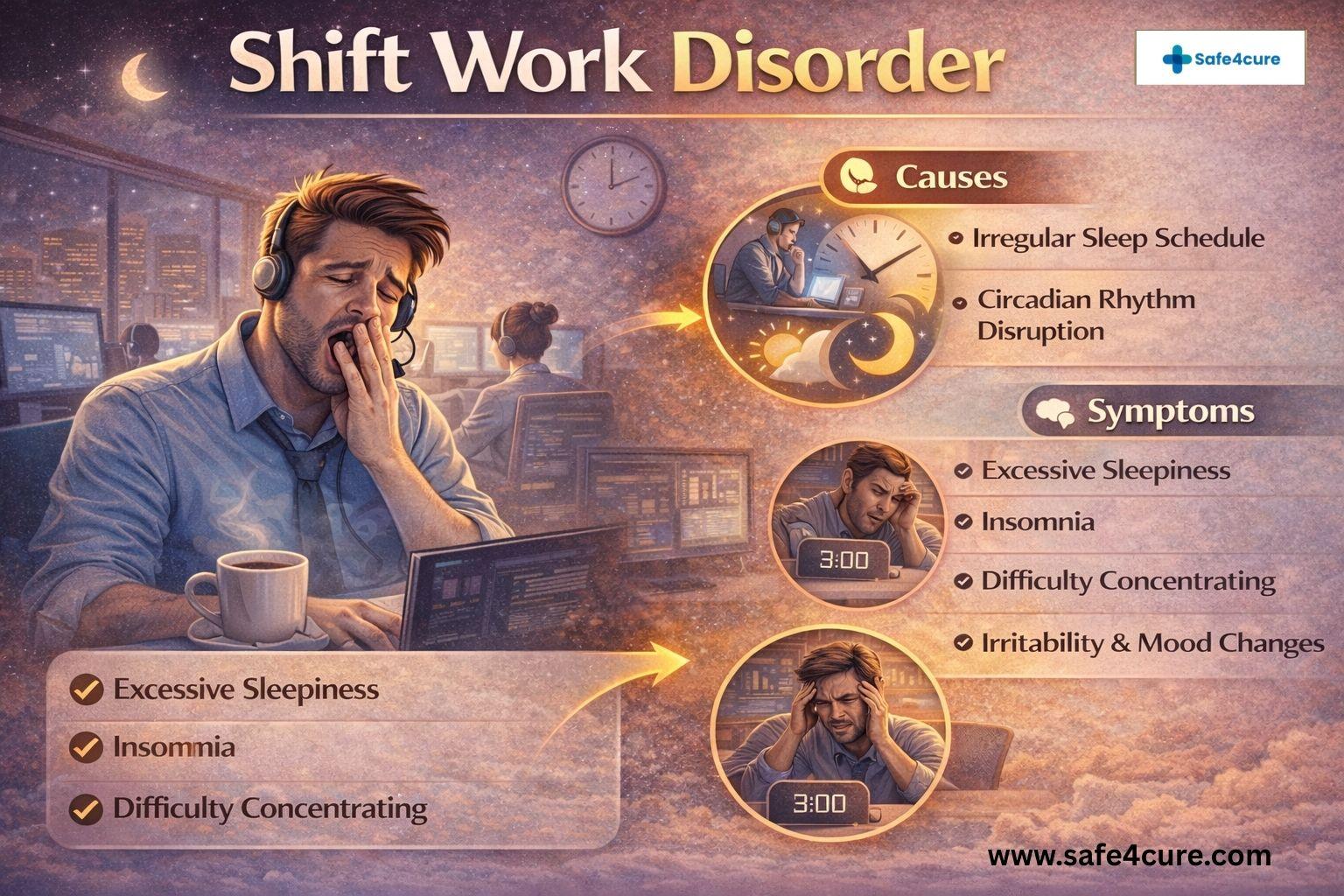
The American workforce operates around the clock, with millions of employees working nights, rotating shifts, or irregular hours to support essential industries such as healthcare, transportation, manufacturing, and emergency services. As 24/7 operations have expanded over the past two decades, disrupted sleep patterns have become increasingly common, affecting an estimated 15–20% of U.S. workers, according to the Bureau of Labor Statistics. When work schedules consistently conflict with the body’s natural sleep–wake cycle, many individuals develop Shift Work Disorder (SWD), a serious condition that goes far beyond routine fatigue and negatively impacts productivity, safety, and overall health. Research links shift work to higher risks of cardiovascular disease, obesity, depression, and workplace accidents, increasing the burden on both workers and employers. In clinical management, modafinil smart drug to treat narclopsey, shift work disorder, Obstructive Sleep Apnea is commonly referenced for improving wakefulness and alertness in individuals struggling with excessive daytime sleepiness caused by sleep-related disorders.
What Is Shift Work Disorder?
Definition and Understanding SWD
Shift Work Disorder is a circadian rhythm sleep disorder that occurs when a person's work schedule conflicts with their body's natural sleep-wake cycle. According to the American Academy of Sleep Medicine, SWSD is characterized by insomnia and excessive daytime sleepiness that occurs in a temporally-related pattern to work schedules (American Academy of Sleep Medicine, 2023). It's not simply about working at night—it's about the persistent physiological disruption that prevents the body from properly regulating sleep and wakefulness.
The difference between normal sleep deprivation and Shift Work Disorder is significant. Anyone can feel tired after one bad night or working long hours occasionally. However, people with SWD experience chronic, persistent sleep problems that occur on a regular pattern tied directly to their work schedule. This isn't something that resolves with a weekend of extra sleep. It's a medical condition that requires proper diagnosis and management.
Your circadian rhythm is your body's internal 24-hour clock that regulates sleep, hormone production, body temperature, and digestive function. When your work schedule forces you to sleep during daylight hours and work when you should naturally be sleeping, your circadian rhythm becomes severely disrupted. This desynchronization is the core mechanism behind SWSD. Your body is essentially being forced to function against its fundamental biological programming.
Who Is Most Affected by Shift Work Disorder in the USA?
Certain professions bear the greatest burden of shift work sleep disorder. Healthcare workers including nurses, doctors, and emergency medical technicians (EMTs) work around the clock to provide patient care. The nature of medical emergencies means that someone must always be available, regardless of the time.
Factory and warehouse employees often work rotating shifts or night shifts to maintain production schedules and meet consumer demand. Similarly, truck drivers and transportation workers face irregular schedules that frequently involve nighttime driving, which is particularly hazardous when combined with shift work disorder symptoms.
Police officers, firefighters, and other first responders must maintain 24/7 availability to protect communities. Their safety and the public's safety depend on them remaining alert despite working schedules that naturally promote sleepiness.
More recently, IT professionals and call center workers supporting global operations have joined the ranks of those experiencing shift work syndrome. Support services for international clients often require overnight shifts, particularly for workers in time zones supporting American customers.
Common Causes of Irregular Sleep Patterns
Night Shifts and Rotating Schedules
Working against your body's natural sleep-wake cycle is the primary cause of shift work sleep disorder. Humans evolved to be active during daylight and sleep at night. When you work nights and try to sleep during the day, you're fighting against millions of years of biological programming.
Long Working Hours
Extended duty hours compound the problem. Overtime, double shifts, and working beyond standard eight-hour shifts deplete workers' sleep reserves. When someone works 12 or 16-hour shifts regularly, finding adequate sleep time becomes nearly impossible, regardless of when those hours occur.
Exposure to Artificial Light
Modern workplaces expose workers to intense artificial lighting. The blue light from computer screens and workplace lighting suppresses melatonin production, making it harder to fall asleep before or after shifts. This is especially problematic for day shift workers trying to sleep during afternoon hours.
Poor Sleep Environment
Many shift workers struggle to create appropriate sleep conditions. Daytime noise from neighbors, traffic, and household activity makes quality sleep difficult. Without proper blackout conditions and sound control, achieving restorative sleep becomes challenging.
Symptoms of Shift Work Disorder
Workers with SWD commonly experience excessive daytime sleepiness that interferes with work and potentially driving safety. They struggle with difficulty falling or staying asleep, even when they have time allocated for rest. The fatigue and low energy levels associated with shift work sleep disorder can be debilitating.
Cognitive effects include poor concentration and memory problems, which are particularly concerning in safety-sensitive industries. Beyond physical symptoms, shift workers report mood changes, anxiety, and irritability—emotional consequences of chronic sleep deprivation that can affect relationships and mental health.
Health Risks Linked to Shift Work Disorder
Short-Term Effects
Reduced alertness from shift work disorder creates immediate dangers. Workplace accidents, vehicle collisions, and medical errors increase dramatically among fatigued workers. Additionally, chronic sleep disruption weakens the immune system, making shift workers more susceptible to infections and illness.
Long-Term Health Consequences
The long-term risks are more concerning. Research published in the Journal of the American Heart Association demonstrates that shift work significantly increases cardiovascular disease risk. Studies show connections between shift work and obesity, metabolic disorders, and an increased risk of diabetes.
Mental health consequences are substantial. Chronic shift work is associated with higher rates of depression and anxiety. The constant disruption of sleep patterns and social isolation from working nights can trigger or worsen mental health conditions.
How Shift Work Disorder Is Diagnosed
Diagnosis begins with a comprehensive sleep history evaluation. Healthcare providers ask detailed questions about sleep patterns, work schedules, and symptoms. Sleep diaries and activity tracking provide objective documentation of sleep difficulties. A medical assessment rules out other sleep disorders and health conditions that might cause similar symptoms. Doctors may recommend a sleep study to confirm the diagnosis and assess sleep quality.
Treatment Options for Shift Work Disorder
Lifestyle and Sleep Hygiene Changes
The foundation of managing shift work sleep disorder involves maintaining consistency where possible and creating optimal sleep conditions. Even on days off, attempting to maintain some consistency helps. Creating a dark, quiet sleep environment—using blackout curtains, earplugs, and white noise—dramatically improves sleep quality. Limiting caffeine and alcohol reduces substances that further disrupt sleep.
Behavioral Therapy
Cognitive Behavioral Therapy for Insomnia (CBT-I) helps retrain thought patterns and behaviors around sleep. This evidence-based approach is particularly effective for shift workers.
Light Therapy
Strategic exposure to bright light during work hours and light avoidance during sleep hours can help reset circadian rhythm. Workers can use light therapy boxes or special blue-light blocking glasses during commutes.
Medications and Wake-Promoting Agents
When lifestyle approaches aren't sufficient, healthcare providers may prescribe eugeroics—medications that promote wakefulness and alertness. Modafinil, a commonly prescribed eugeroic drug for shift work disorder, helps maintain alertness during scheduled work hours. These medications should only be used under medical supervision and as part of a comprehensive treatment plan. Some people explore eugeroics OTC options, but prescription medications like modafinil smart drug are more evidence-based and safer under professional guidance.
Tips for Managing Irregular Sleep While Working Shifts
Strategic napping techniques—short 20-30 minute naps timed appropriately—can boost alertness. Meal timing influences sleep regulation; avoiding large meals before sleep and timing caffeine strategically helps. Using sunglasses during morning commutes prevents light exposure that suppresses melatonin. Maintaining physical activity without overstimulation close to sleep times supports overall health.
Impact of Shift Work Disorder on Work Performance
The consequences for employers and workers are significant. Reduced productivity, increased workplace errors and accidents, and higher absenteeism and burnout rates all result from untreated shift work sleep disorder. Industries lose billions in productivity while workers suffer health consequences.
When to See a Doctor
If sleep problems persist for more than three months, if sleepiness interferes with work or driving safety, or if you notice signs of depression or anxiety related to sleep loss, seek professional evaluation.
Frequently Asked Questions
What is the main cause of Shift Work Disorder?
Shift Work Disorder is caused by working schedules that conflict with the body's natural circadian rhythm, especially night and rotating shifts that force people to sleep during daylight hours.
How common is Shift Work Disorder in the USA?
Millions of Americans working nontraditional hours experience symptoms of Shift Work Disorder, with particularly high rates among healthcare workers, transportation workers, and manufacturing employees.
Can Shift Work Disorder be cured?
There is no permanent cure, but symptoms can be effectively managed with lifestyle changes, behavioral therapy, light therapy, and when necessary, medical treatment.
Does Shift Work Disorder affect mental health?
Yes, chronic sleep disruption significantly contributes to anxiety, depression, and mood disorders. The psychological impact is as serious as the physical effects.
Are medications safe for Shift Work Disorder?
Medications may be prescribed when lifestyle adjustments prove insufficient and should only be used under medical supervision. Working with a healthcare provider ensures appropriate medication selection and monitoring.

 Arabic
 French
 Spanish
 Portuguese
 Deutsch
 Turkish
 Dutch
Dutch
 Italiano
 Russian
 Romaian
 Portuguese (Brazil)
 Greek
Greek
