


AI Testing Tools: Revolutionizing Quality Assurance in Software Development
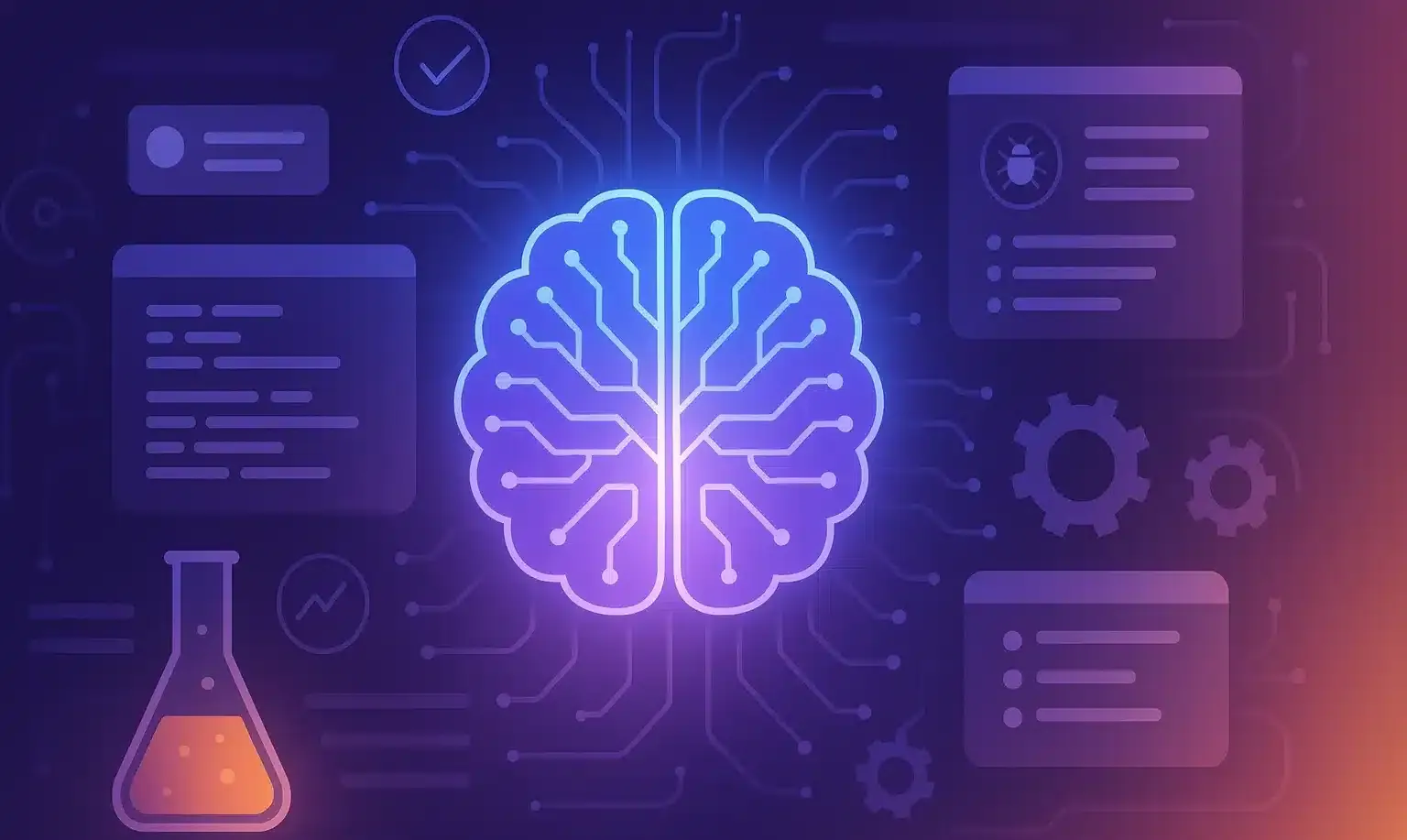
In today’s fast-paced software development landscape, AI testing tools are transforming how teams ensure software quality. These tools leverage artificial intelligence and machine learning to automate and enhance various aspects of software testing, from generating test cases to identifying defects that traditional methods often miss.
AI-powered testing tools are rapidly becoming essential for modern development workflows, especially in environments with frequent releases and complex applications.
What Are AI Testing Tools?
AI testing tools are software solutions designed to support, automate, and improve the testing process using AI capabilities. Unlike conventional testing tools that rely on manual input and hard-coded scripts, AI testing tools analyze application behavior, user patterns, and historical data to make intelligent decisions about test generation, optimization, and execution.
By doing so, they help teams catch more bugs, reduce maintenance time, and deliver higher-quality software.
Key Benefits of AI Testing Tools
-
Automated Test Generation
AI tools can automatically create test cases based on user behavior, application flows, or historical defects—dramatically reducing the time and effort needed for manual test creation. -
Smart Defect Detection
AI can identify patterns and anomalies that may indicate subtle or hidden bugs that traditional testing might overlook. -
Test Maintenance Simplified
When application changes occur, AI tools can update or retire obsolete tests automatically, reducing flaky tests and maintenance overhead. -
Improved Test Coverage
AI-driven analysis helps teams ensure that testing covers a wide range of scenarios, including edge cases and unusual workflows. -
Faster Feedback Loops
With AI-assisted automation, testers can get faster insights into software quality, supporting continuous integration and continuous delivery (CI/CD) pipelines.
How AI Testing Tools Work
AI testing tools often use machine learning models and intelligent algorithms to perform tasks such as:
-
Analyzing user journeys and identifying key test scenarios
-
Predicting which areas of an application are most prone to defects
-
Generating data-driven and behavior-based test cases
-
Prioritizing tests based on risk and impact
These tools can work across different testing types, including functional, regression, performance, and API testing.
Integration with Modern Development Practices
AI testing tools are especially valuable in DevOps, agile, and continuous testing environments. They help teams keep pace with rapid development cycles without compromising quality. By integrating with version control systems, CI/CD pipelines, and test management platforms, AI testing tools enable smarter automation and real-time feedback.
For more insights on how AI testing tools are reshaping the software testing landscape, check out this comprehensive guide:
👉 AI Testing Tools
Challenges and Best Practices
While AI testing tools offer significant advantages, teams should consider the following for successful adoption:
-
Validate AI-generated tests before executing them in production
-
Combine AI automation with human exploratory testing
-
Monitor AI tool performance and accuracy over time
-
Maintain a balance between AI-driven and traditional testing approaches
Conclusion
AI testing tools are transforming the future of software quality assurance. By automating repetitive tasks, improving test accuracy, and enabling intelligent analysis, they help teams deliver reliable software faster than ever. Adopting AI-driven testing is no longer a luxury—it's a competitive advantage in modern software development.

 English
 Arabic
 French
 Spanish
 Portuguese
 Deutsch
 Turkish
 Dutch
Dutch
 Italiano
 Russian
 Romaian
 Greek
Greek
