


How Integrated Systems Improve Air Traffic Control Operations
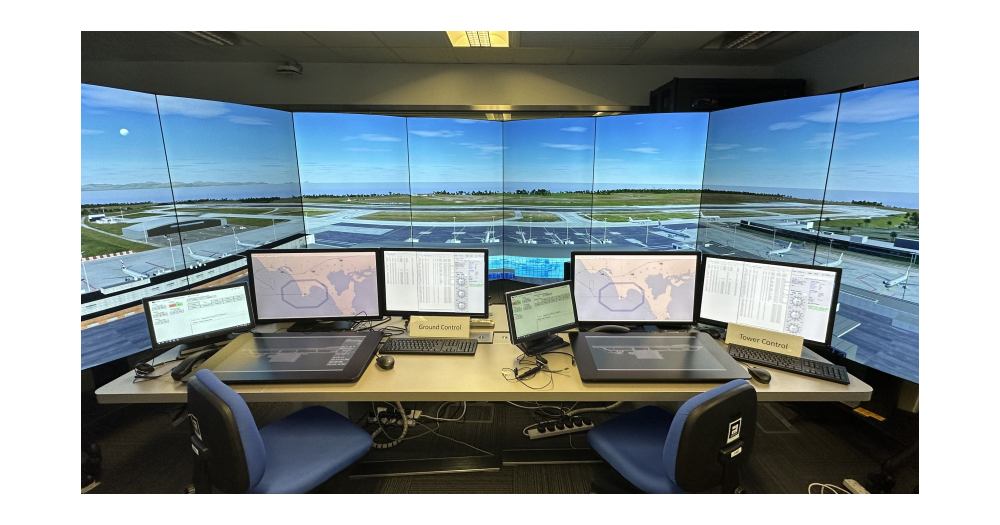
Modernization of Air Traffic Control Infrastructure
Airspace around the world is becoming increasingly complex as passenger traffic rebounds, cargo operations expand, and unmanned aerial systems begin to share controlled skies. To manage this complexity safely and efficiently, airports and aviation authorities are accelerating investments in advanced air traffic control equipment. The focus is no longer limited to basic monitoring and voice communication; instead, it encompasses intelligent, data-driven systems designed to improve situational awareness, reduce delays, and enhance overall flight safety.
One of the most significant shifts in recent years is the transition from analog to digital platforms. Modern air traffic control equipment integrates software-defined architectures, cloud-based data processing, and real-time analytics. These technologies allow controllers to manage higher traffic volumes with greater precision while minimizing human error. As a result, air navigation service providers are prioritizing scalable and interoperable solutions that can evolve alongside traffic growth.
Advances in Radar and Surveillance Technologies
At the core of air traffic management lies air traffic control radar, which continues to undergo major technological upgrades. Traditional primary and secondary radar systems are increasingly complemented by satellite-based solutions such as ADS-B (Automatic Dependent Surveillance–Broadcast). These systems offer more accurate aircraft position data, especially in remote or oceanic regions where ground-based radar coverage is limited.
Alongside radar, air traffic surveillance systems are becoming more integrated and intelligent. Multilateration, space-based surveillance, and sensor fusion technologies enable controllers to track aircraft movements with higher accuracy and lower latency. By combining multiple data sources into a single operational picture, these systems support better decision-making during peak traffic periods or adverse weather conditions. This enhanced surveillance capability is also critical for accommodating new airspace users, including drones and advanced air mobility vehicles.
Evolution of Air Traffic Communication Systems
Clear and reliable communication remains essential to safe flight operations. Modern air traffic communication systems are evolving beyond traditional voice-based channels to include data link communications, which reduce congestion on voice frequencies and improve message clarity. Controller–pilot data link communications (CPDLC), for example, allow routine instructions to be transmitted digitally, freeing up voice channels for time-critical exchanges.
These advancements are particularly valuable in busy terminal airspace and long-haul operations. Integrated communication platforms also support seamless coordination between control towers, approach control, and en-route centers. As cybersecurity becomes a growing concern, vendors are embedding robust encryption and redundancy features into air traffic communication systems to ensure continuity and data integrity.
Outlook and Strategic Implications
The growing adoption of advanced air traffic control equipment is closely tied to broader trends in global aviation. Airports are under pressure to handle rising passenger numbers without compromising safety or punctuality, while governments aim to modernize national airspace systems. In this context, market growth reflects both technological innovation and long-term infrastructure planning.
Industry projections highlight this momentum clearly. The global air traffic control equipment market is anticipated to expand steadily over the coming years, driven by modernization programs and increased air travel demand. According to Grand View Research, the market is expected to reach USD 15.88 billion by 2030, advancing at a compound annual growth rate of 8.3% from 2023 to 2030. This outlook underscores the strategic importance of investments in radar, communication, and surveillance technologies as aviation ecosystems evolve.
Looking ahead, interoperability and sustainability will shape procurement decisions. Energy-efficient systems, modular upgrades, and compliance with international standards will be critical success factors. As airspace becomes more crowded and technologically diverse, advanced air traffic surveillance systems and communication platforms will play a central role in maintaining safety, efficiency, and resilience across global aviation networks.

 English
 Arabic
 French
 Portuguese
 Deutsch
 Turkish
 Dutch
Dutch
 Italiano
 Russian
 Romaian
 Portuguese (Brazil)
 Greek
Greek
