


How AI Chips Are Redefining Computing Performance Standards
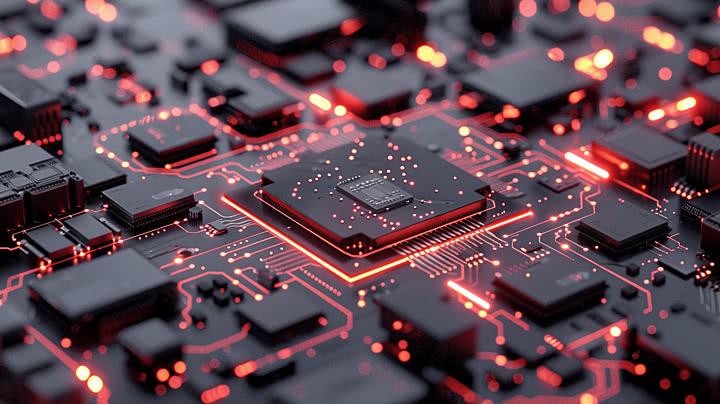
The Rapid Evolution of AI Hardware in the Modern Computing Era
AI hardware has become the backbone of today’s intelligent digital ecosystem, enabling everything from real-time language translation to autonomous vehicles and advanced medical diagnostics. As artificial intelligence models grow larger and more complex, traditional computing architectures are no longer sufficient. This has accelerated innovation in specialized ai hardware designed to handle massive parallel processing, high memory bandwidth, and energy efficiency. The focus has clearly shifted from general-purpose computing to purpose-built systems that can support intensive AI workloads at scale.
Advancements in AI Chips and Processing Architectures
At the core of this transformation are ai chips that are specifically engineered for machine learning and deep learning tasks. Unlike conventional CPUs, modern ai processors emphasize parallelism, enabling them to execute thousands of operations simultaneously. GPUs, TPUs, NPUs, and custom accelerators have become central to training and inference workloads, especially in data centers and edge environments.
One of the most notable trends is the push toward domain-specific architectures. These ai processors are optimized for particular tasks such as neural network inference, computer vision, or natural language processing. This specialization improves performance per watt, a critical metric as energy consumption becomes a growing concern. At the same time, chiplet-based designs and advanced semiconductor nodes are helping manufacturers deliver higher performance without exponential increases in cost or power usage.
Another key development is the integration of memory and compute. By reducing data movement between processing units and memory, next-generation ai chips significantly lower latency and improve efficiency. This architectural shift is particularly important for real-time applications such as robotics, autonomous driving, and industrial automation.
The competitive landscape of ai chip companies is intensifying as demand for AI capabilities expands across industries. Established semiconductor leaders continue to invest heavily in research and development, while emerging startups are introducing innovative architectures tailored for specific AI use cases. This dynamic environment is fostering rapid experimentation and shortening innovation cycles.
Cloud service providers are also entering the arena by designing custom ai hardware for internal use. These in-house ai processors are optimized for large-scale data centers, allowing providers to reduce dependency on third-party vendors and improve performance for AI-driven cloud services. Meanwhile, edge-focused ai chip companies are targeting low-power solutions that bring intelligence closer to data sources, enabling faster decision-making and improved privacy.
This surge in innovation is supported by strong market fundamentals. In one integrated outlook on industry growth, it is noted that, according to Grand View Research. The global AI hardware market size is projected to reach USD 691.04 billion by 2033, growing at a CAGR of 25.1% from 2025 to 2033. This expansion is driven by increasing enterprise adoption, the proliferation of AI-enabled devices, and ongoing breakthroughs in semiconductor technologies.
Future Outlook: From Data Centers to the Edge
Looking ahead, ai hardware development is expected to balance performance, scalability, and sustainability. As AI models continue to scale, data centers will rely on increasingly powerful ai processors to support training workloads. At the same time, edge AI will gain momentum, requiring compact and energy-efficient ai chips that can operate in constrained environments such as smartphones, wearables, and industrial sensors.
Collaboration across the ecosystem will be critical. Hardware designers, software developers, and system integrators are working more closely to ensure that ai hardware and software are co-optimized. This holistic approach reduces bottlenecks and allows organizations to extract maximum value from their AI investments.
In summary, the evolution of ai hardware reflects a broader shift in computing priorities. With specialized ai chips, innovative ai processors, and a rapidly growing field of ai chip companies, the industry is laying the foundation for the next generation of intelligent systems. As these technologies mature, they will not only power advanced AI applications but also redefine how computing performance is measured and delivered across the digital economy.

 English
 Arabic
 French
 Spanish
 Deutsch
 Turkish
 Dutch
Dutch
 Italiano
 Russian
 Romaian
 Portuguese (Brazil)
 Greek
Greek
