


Cold Chain Market trends around sustainable refrigerants adoption
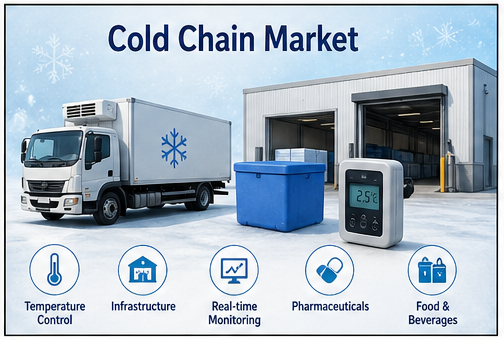
Cold Chain Trends Reshaping Global Supply Networks in 2026
Cold Chain systems are becoming one of the most critical foundations of modern trade, healthcare, and food security. As consumer expectations rise and regulations tighten, businesses are investing heavily in smarter cold storage facilities, faster refrigerated transport networks, and highly visible monitoring systems. In 2026, the Cold Chain sector is no longer limited to frozen foods or pharmaceuticals—it now supports e-commerce groceries, biologics, fresh exports, meal kits, and temperature-sensitive industrial materials.
The rapid growth of online grocery delivery, direct-to-consumer meal brands, and global healthcare distribution has increased the demand for reliable temperature-controlled logistics. Companies are redesigning supply chains so products can move seamlessly from production centers to cold warehouse hubs, retail shelves, hospitals, and homes without temperature deviations. This shift is helping reduce spoilage, extend shelf life, and maintain product quality across longer distances.
Smart Cold Storage and Automation Lead Investment
One of the biggest trends in Cold Chain operations is the transformation of traditional cold storage sites into automated facilities. Robotics, AI-driven inventory systems, and sensor-based monitoring are replacing manual workflows. These technologies improve picking speed, reduce energy waste, and maintain more consistent temperatures inside storage zones.
Modern cold warehouse facilities are increasingly designed with modular expansion models, allowing operators to scale capacity during seasonal demand spikes. Energy efficiency is another major priority, with operators using solar integration, advanced insulation, and smart compressors to lower operating costs. Because cold environments consume substantial power, sustainability is now directly tied to profitability.
Food manufacturers and retailers are also using predictive analytics to understand inventory movement. This helps reduce overstocking while ensuring high-demand items remain available. As a result, cold storage is evolving from passive warehousing into an intelligent logistics asset.
Refrigerated Transport Becomes Faster and More Connected
The performance of refrigerated transport is now central to supply chain competitiveness. Whether moving seafood internationally, dairy regionally, or medicines locally, transport providers must maintain precise temperatures while meeting faster delivery windows. In 2026, fleets are adopting GPS-linked telematics, route optimization software, and real-time temperature sensors.
Electric reefer vehicles and low-emission trailer units are gaining traction, especially in urban delivery networks where environmental rules are becoming stricter. These upgrades help logistics firms reduce fuel costs while maintaining compliance standards.
Cross-border trade is another growth driver. Exporters of fruits, meat, and seafood increasingly rely on multimodal refrigerated transport systems that combine road, rail, air, and ocean freight. Each transfer point requires strong coordination, making digital documentation and live shipment visibility more important than ever.
When disruptions occur—such as weather delays or customs congestion—AI systems can recommend rerouting options to preserve cargo quality. This capability is especially valuable for premium perishables and life-saving medical products.
Vaccine Logistics and Pharma Cold Chain Expansion
Healthcare remains one of the most specialized segments of Cold Chain management. The rise of biologics, specialty medicines, and temperature-sensitive vaccines has accelerated investment in vaccine logistics infrastructure. Hospitals, clinics, and global health agencies require uninterrupted storage conditions, often with strict audit trails.
Portable cooling systems, validated packaging, and connected monitoring devices are helping improve last-mile vaccine logistics, especially in emerging markets and remote regions. Many governments are also strengthening emergency preparedness stockpiles, which increases the need for dependable cold storage capacity.
The pharma cold chain has become more complex as newer therapies often require narrower temperature ranges than conventional medicines. Some biologic products must remain within highly controlled conditions from manufacturing through patient delivery. To meet this demand, logistics providers are creating dedicated pharma cold chain lanes with specialized handling procedures, trained staff, and continuous data logging.
Trust and traceability are now as important as speed. A delayed package may be recoverable, but a temperature excursion can destroy product value immediately.
Growth Outlook and What Comes Next
Cold Chain growth is expected to remain strong as global consumption patterns shift toward fresh foods, premium nutrition, and advanced healthcare products. Report published by Grand View Research. the global cold chain market size is projected to reach USD 1,611.0 billion by 2033, growing at a CAGR of 20.5% from 2026 to 2033. This outlook reflects how essential temperature-controlled logistics has become across industries.
Looking ahead, blockchain-backed traceability, autonomous warehouse systems, and AI demand forecasting are likely to become mainstream. Businesses will continue integrating cold warehouse operations with transportation data so decisions can be made in real time. Companies that build resilient cold storage networks and responsive refrigerated transport capacity will be best positioned to compete.
For consumers, these improvements mean fresher groceries, safer medicines, and more reliable product availability. For businesses, Cold Chain excellence now represents a strategic advantage rather than a back-end logistics function. As technology, sustainability, and healthcare needs converge, the next phase of Cold Chain development will define how sensitive products move around the world.

 English
 Arabic
 French
 Spanish
 Portuguese
 Deutsch
 Dutch
Dutch
 Italiano
 Russian
 Romaian
 Portuguese (Brazil)
 Greek
Greek
