


Australia Pork Meat Market: Production Trends, Demand, and Outlook
Australia Pork Meat Market Overview
According To Renub Research Australia pork meat market plays a vital role in the nation’s broader meat and protein industry, supported by strong domestic production, evolving dietary preferences, and a well-established retail and foodservice ecosystem. Pork is one of the most widely consumed meats globally and has secured a stable position in Australian diets due to its versatility, nutritional value, and suitability across multiple cuisines. It is available in a wide range of cuts such as loin, belly, shoulder, and leg, as well as in processed forms including bacon, ham, sausages, and cured meats, making it adaptable for everyday cooking and premium culinary applications.
In Australia, pork consumption continues to rise as consumers increasingly seek protein-rich food options that balance taste, nutrition, and affordability. High food safety standards, strong animal welfare practices, and strict regulatory oversight enhance consumer confidence in locally produced pork. As eating habits shift toward convenience, variety, and multicultural flavors, pork remains an essential component of Australian meat consumption patterns.
Australia Pork Meat Market Size and Forecast 2025–2033
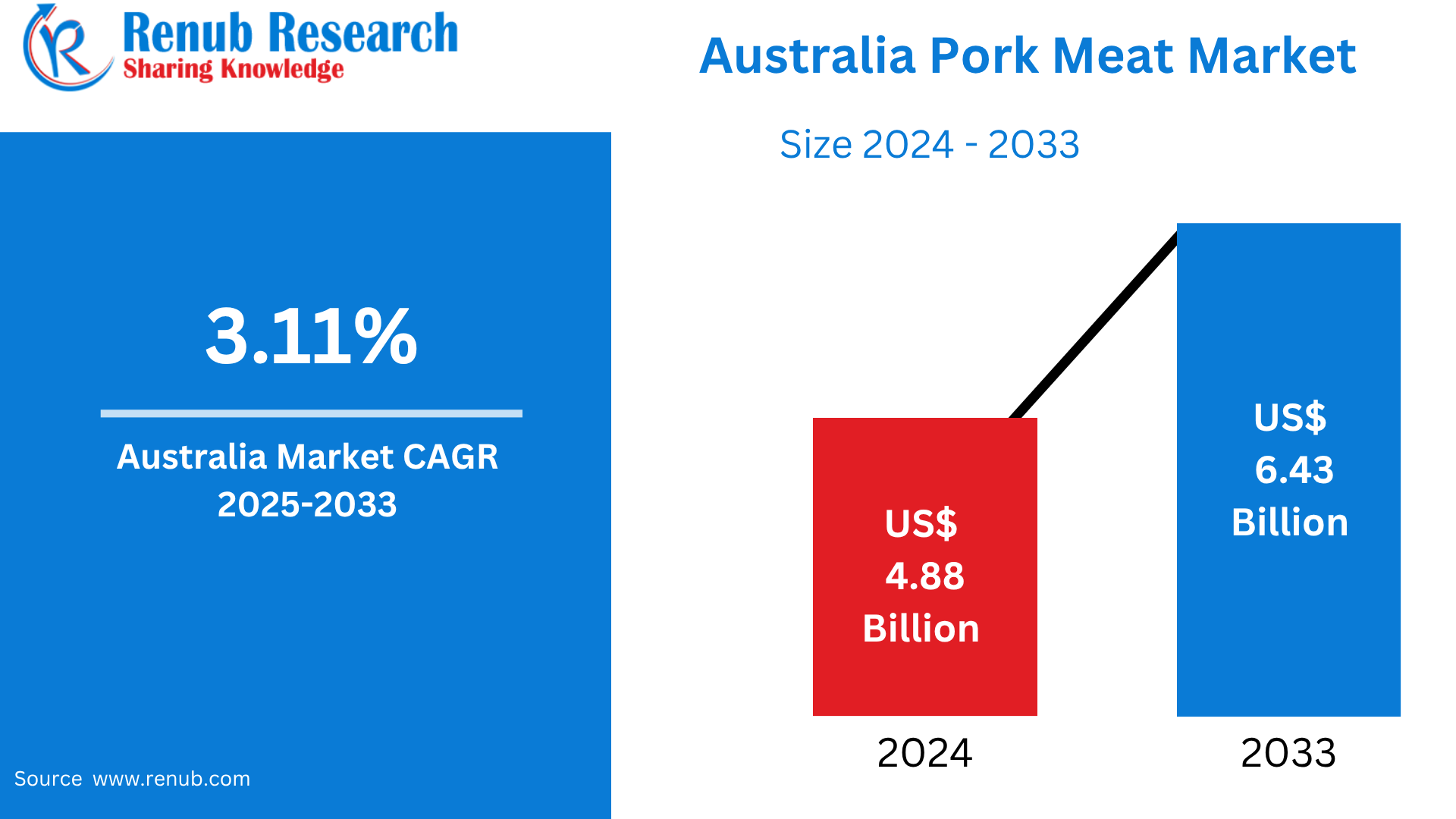
The Australia pork meat market was valued at US$ 4.88 billion in 2024 and is projected to reach US$ 6.43 billion by 2033. The market is expected to expand at a compound annual growth rate of 3.11% during the forecast period from 2025 to 2033. This growth reflects steady demand across household and commercial applications, supported by population growth, rising protein consumption, and continued innovation in meat processing and distribution.
Urbanization and changing lifestyles are contributing to higher consumption of pork-based products in both metropolitan and regional areas. Increased availability through supermarkets, specialty stores, and online platforms is further strengthening market reach, while value-added products are enhancing overall revenue generation within the sector.
Importance of Pork in the Australian Food Sector
Pork holds a significant place in Australia’s food culture due to its adaptability across cooking styles and cuisines. It is commonly used in roasting, grilling, barbecuing, stir-frying, and slow cooking, making it suitable for both traditional Australian meals and international dishes. Asian and European cuisines, which feature pork as a staple protein, are especially popular across Australian households and foodservice establishments.
From a nutritional perspective, pork is recognized as a high-quality protein source rich in essential vitamins such as thiamine (vitamin B1), as well as minerals including iron and zinc. These attributes align well with the growing consumer focus on balanced diets and functional nutrition. As awareness of pork’s nutritional profile increases, it continues to gain acceptance as a healthy alternative to other red meats.
Download Free Sample Report:https://www.renub.com/request-sample-page.php?gturl=australia-pork-meat-market-p.php
Growth Driver: Rising Preference for High-Protein Diets
One of the primary drivers of growth in the Australia pork meat market is the increasing preference for high-protein diets. Health-conscious consumers are actively seeking protein sources that support muscle development, weight management, and overall wellness. Pork is viewed as a nutrient-dense and versatile protein that fits well into modern dietary plans.
Fitness trends, sports participation, and wellness-focused lifestyles—particularly among younger demographics—are encouraging regular consumption of protein-rich foods. Government dietary guidelines promoting protein diversity have also supported pork consumption by positioning it as a viable alternative to beef and poultry. As a result, meat consumption patterns in Australia continue to shift in favor of pork.
Growth Driver: Influence of Multicultural Cuisine
Australia’s multicultural population has had a strong influence on food preferences and consumption habits, significantly benefiting the pork meat market. Many Asian and European cuisines rely heavily on pork as a core ingredient, driving demand for specialized cuts and preparation styles. The popularity of dishes such as dumplings, ramen, schnitzels, cured meats, and stir-fries has expanded pork usage across households and restaurants.
Retailers and foodservice operators are increasingly responding to this demand by offering region-specific pork cuts, marinades, and ready-to-cook products. This culinary diversity not only boosts pork consumption but also creates opportunities for premium and specialty pork offerings tailored to different cultural preferences.
Growth Driver: Expansion of Processed and Value-Added Pork Products
Innovation in processed and value-added pork products is playing a crucial role in market growth. Busy lifestyles and demand for convenience have increased interest in ready-to-cook, pre-marinated, and portion-controlled pork products. These offerings reduce preparation time while maintaining flavor and nutritional value, making them attractive to modern consumers.
Advancements in meat processing technologies, packaging solutions, and cold-chain logistics have improved product quality, shelf life, and safety. Enhanced branding and targeted marketing campaigns are further supporting growth across both chilled and frozen pork segments. The expansion of value-added pork products is strengthening margins and driving repeat purchases across retail and foodservice channels.
Challenge: Import Competition and Price Sensitivity
Despite strong domestic production, the Australian pork meat market faces competition from imported pork, particularly frozen products. Imported pork is often priced lower, making it appealing to cost-conscious consumers and foodservice operators. This price competition can impact the market share and profitability of local producers.
Fluctuations in feed costs, energy prices, and global trade conditions further influence pricing dynamics within the market. Maintaining competitiveness while preserving quality and animal welfare standards remains a key challenge for domestic producers, particularly in a price-sensitive consumer environment.
Challenge: Environmental and Animal Welfare Concerns
Environmental sustainability and animal welfare have become increasingly important considerations for Australian consumers. Concerns related to carbon emissions, waste management, and intensive farming practices have placed additional scrutiny on the pork industry. Advocacy campaigns and shifting consumer values are encouraging greater transparency and accountability from producers.
Meeting higher welfare and sustainability standards often requires significant investment in infrastructure, technology, and operational processes. While these efforts enhance long-term credibility and consumer trust, they also increase production costs, posing challenges for smaller producers and processors.
Australia Chilled Pork Meat Market
The chilled pork meat segment holds a strong position in Australia due to consumer preference for freshness, quality, and immediate usability. Chilled pork is widely available through supermarkets, butcher shops, and specialty meat retailers, catering to daily meal preparation and special occasions.
Improvements in refrigeration, packaging, and distribution have ensured consistent quality and food safety, supporting widespread adoption across retail and foodservice sectors. Chilled pork remains particularly popular among households that value taste, texture, and cooking flexibility.
Australia Frozen Pork Meat Market
Frozen pork meat plays an important role in ensuring supply stability and accessibility, especially in regional and remote areas. It offers extended shelf life and convenience, making it suitable for bulk purchasing and large-scale foodservice operations.
Frozen pork is also commonly used in processed food manufacturing and institutional catering. Technological advancements in freezing and thawing methods have minimized quality loss, increasing consumer acceptance and supporting steady growth within this segment.
Australia Household Pork Meat Market
Household consumption represents a significant share of the Australian pork meat market. Pork is commonly prepared at home in various forms, including roasts, barbecues, stir-fries, and slow-cooked meals. Increased awareness of its nutritional benefits and culinary versatility has strengthened its presence in domestic kitchens.
Accessible packaging sizes, competitive pricing, and wide availability through supermarkets and local butchers contribute to consistent household demand. Cooking shows, recipe platforms, and social media have also played a role in encouraging experimentation with pork-based dishes.
Australia Specialty Stores Pork Meat Market
Specialty stores such as local butchers and gourmet meat retailers play a key role in offering premium pork products. These outlets cater to consumers seeking high-quality cuts, traceability, and personalized service. Ethically produced, organic, and free-range pork options are particularly popular within this channel.
Specialty stores often emphasize local sourcing, animal welfare, and craftsmanship, strengthening consumer loyalty and supporting premium pricing strategies. Their expertise and customized offerings enhance pork’s image as a high-value protein choice.
Australia Online Pork Meat Market
Online pork meat sales are expanding rapidly as consumers increasingly adopt digital grocery shopping. Online platforms provide access to a wide range of fresh and frozen pork products, often accompanied by home delivery, subscription services, and bulk discounts.
The shift toward online purchasing accelerated during the COVID-19 period and has continued due to convenience and improved logistics. Clear labeling, secure packaging, and flexible delivery options have boosted consumer confidence in online meat purchases, supporting long-term growth in this channel.
New South Wales Pork Meat Market
New South Wales represents one of the largest pork meat markets in Australia, driven by its large population, diverse demographics, and strong foodservice sector. Sydney, in particular, generates high demand for both fresh and processed pork through restaurants, retail chains, and specialty stores.
Multicultural communities, high disposable incomes, and extensive supermarket coverage further contribute to strong consumption levels. The state’s well-developed distribution network supports efficient supply across urban and regional areas.
Victoria Pork Meat Market
Victoria is a major contributor to Australia’s pork production and consumption. Melbourne’s dynamic food culture and multicultural population drive consistent demand for pork across retail and hospitality channels.
The state benefits from advanced supply chain infrastructure and a strong emphasis on locally sourced food. Innovation, quality differentiation, and ethical farming practices continue to shape the evolution of Victoria’s pork meat market.
South Australia Pork Meat Market
South Australia maintains a solid pork meat market supported by its strong agricultural base and regional production capabilities. Consumers in the state place high value on freshness and locally produced meat, supporting regional producers and processors.
Pork features prominently in local food festivals, specialty products, and regional cuisines. Government support for agri-business development further strengthens South Australia’s role in the national pork market.
Tasmania Pork Meat Market
Tasmania’s pork meat market is characterized by small-scale, high-quality production that emphasizes sustainability, traceability, and animal welfare. The island’s clean and environmentally conscious image resonates with health-focused and ethically minded consumers.
Tasmanian pork is often sold through farmers’ markets, boutique retailers, and specialty outlets. While the consumer base is relatively small, strong loyalty and premium positioning support stable demand.
Market Segmentation Overview
The Australia pork meat market is segmented by product into chilled and frozen pork, by application into household and commercial use, and by distribution channel into supermarkets and hypermarkets, specialty stores, online platforms, and other outlets. Each segment contributes uniquely to overall market growth, reflecting diverse consumer needs and purchasing behaviors across regions.
Competitive Landscape and Key Players
The Australian pork meat market features a competitive landscape with both domestic and international players operating across production, processing, and distribution. Market participants focus on quality assurance, innovation, sustainability initiatives, and strategic partnerships to strengthen their market position. Ongoing investment in value-added products, ethical practices, and supply chain efficiency remains central to long-term competitiveness in this evolving market.

 English
 Arabic
 French
 Spanish
 Portuguese
 Deutsch
 Turkish
 Italiano
 Russian
 Romaian
 Portuguese (Brazil)
 Greek
Greek
