


Passive Authentication Market Trends Favor Smart Session Monitoring Models
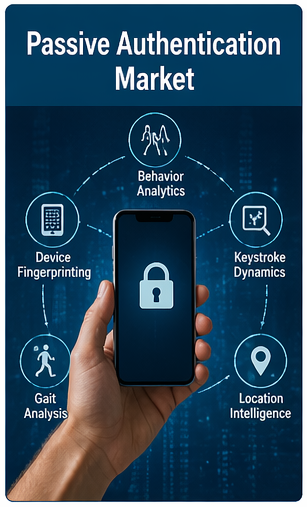
Passive authentication is rapidly reshaping how organizations secure digital interactions without disrupting user experience. As cyber threats grow more sophisticated and users demand seamless access, traditional authentication methods—such as passwords and one-time codes—are increasingly seen as insufficient. In response, enterprises are adopting advanced, invisible security layers that rely on context, behavior, and intelligent risk assessment. This shift is positioning passive authentication as a foundational component of modern identity and access management strategies.
The Rise of Invisible Security Layers
At its core, passive authentication operates without requiring explicit user input during verification. Instead of interrupting users with login prompts, it continuously evaluates identity through behavioral biometrics, device fingerprinting, and contextual signals. This evolution reflects a broader trend toward frictionless security, where protection is embedded into the user journey rather than imposed upon it.
Behavioral biometrics, for instance, analyzes patterns such as typing rhythm, swipe gestures, and mouse movements. These subtle indicators create a unique user profile that is difficult for attackers to replicate. Meanwhile, device fingerprinting captures attributes like browser configurations, operating systems, and IP addresses to establish trusted device identities. When combined, these techniques enable continuous authentication, ensuring that users are verified not just at login but throughout the entire session.
This continuous monitoring is particularly valuable in high-risk sectors such as banking, healthcare, and e-commerce, where unauthorized access can lead to severe financial and reputational damage. By operating silently in the background, passive authentication reduces friction while enhancing security—a balance that is increasingly critical in digital ecosystems.
Behavioral Intelligence Driving Modern Authentication
A defining trend in passive authentication is the growing reliance on artificial intelligence and machine learning to interpret behavioral data. These technologies enable systems to distinguish between legitimate users and anomalies in real time. For example, if a user suddenly exhibits unusual navigation patterns or logs in from an unfamiliar location, the system can trigger additional verification steps or restrict access.
This is where risk-based authentication becomes essential. Instead of applying uniform security measures, risk-based models dynamically adjust authentication requirements based on the level of perceived threat. Low-risk activities may proceed uninterrupted, while high-risk scenarios prompt stronger verification. This adaptive approach not only improves security but also enhances user satisfaction by minimizing unnecessary interruptions.
Another emerging trend is the integration of passive authentication with broader identity ecosystems. Organizations are increasingly combining behavioral biometrics with traditional credentials and multi-factor authentication (MFA) to create layered security frameworks. This hybrid model ensures robustness while maintaining usability, addressing one of the longstanding challenges in cybersecurity.
Expanding Use Cases Across Digital Platforms
The application of passive authentication is expanding beyond traditional enterprise environments into consumer-facing platforms. Mobile banking apps, online retail portals, and digital payment systems are leveraging these technologies to secure transactions and prevent fraud. In particular, device fingerprinting is proving effective in identifying repeat users and detecting suspicious devices attempting unauthorized access.
In addition, the rise of remote work and cloud-based services has accelerated the adoption of passive authentication. With employees accessing corporate resources from various locations and devices, continuous authentication provides a reliable mechanism to maintain security without hindering productivity. This is especially relevant in zero-trust security models, where no user or device is automatically trusted.
Another noteworthy development is the use of passive authentication in fraud prevention. By analyzing behavioral patterns in real time, organizations can detect account takeovers, bot attacks, and identity theft attempts before they escalate. This proactive capability is transforming how businesses approach cybersecurity, shifting from reactive defenses to predictive and preventive strategies.
Amid these advancements, market momentum continues to build. According to Grand View Research, the global passive authentication market size is projected to reach USD 6.77 billion by 2030, growing at a CAGR of 22.8% from 2024 to 2030. This growth reflects increasing demand for secure, user-friendly authentication solutions across industries.
Challenges and the Road Ahead
Despite its advantages, passive authentication is not without challenges. Privacy concerns remain a key consideration, as the collection and analysis of behavioral data must comply with strict data protection regulations. Organizations must ensure transparency and implement robust safeguards to maintain user trust.
Additionally, the accuracy of behavioral biometrics can be influenced by factors such as device changes or user behavior variations. Continuous refinement of algorithms is necessary to minimize false positives and negatives. However, advancements in AI and data analytics are steadily addressing these limitations, making passive authentication more reliable and scalable.
Looking ahead, the convergence of passive authentication with emerging technologies such as decentralized identity and blockchain is expected to further enhance security frameworks. These innovations could enable users to maintain greater control over their digital identities while benefiting from seamless authentication experiences.
In conclusion, passive authentication is redefining the landscape of digital security by combining convenience with advanced protection mechanisms. Through the integration of behavioral biometrics, continuous authentication, risk-based authentication, and device fingerprinting, organizations are building resilient systems that adapt to evolving threats. As adoption continues to grow, passive authentication will play a pivotal role in shaping the future of secure and user-centric digital interactions.

 English
 Arabic
 French
 Spanish
 Portuguese
 Deutsch
 Turkish
 Dutch
Dutch
 Italiano
 Russian
 Romaian
 Greek
Greek
