


What Are the Essential Dental Instruments Every Clinic Needs?
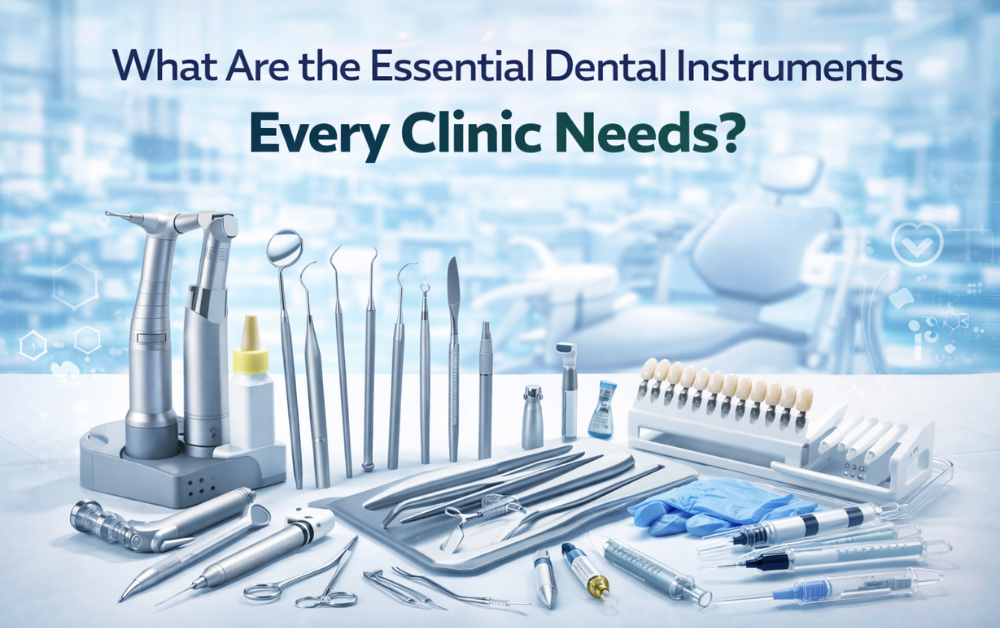
Dental clinics rely on a wide range of instruments to provide safe, effective, and comfortable treatment for patients. From routine checkups to complex procedures, having the right tools is crucial. Essential dental instruments not only make treatments easier for dentists but also improve patient care and hygiene.
In this article, we will explain the essential dental instruments every clinic needs in simple words, so that anyone can understand why they are important and how they are used.
Why Dental Instruments Are Important

Dental instruments are the backbone of dental care. They help dentists diagnose problems, clean teeth, perform surgeries, and provide cosmetic treatments. Without proper instruments, dental procedures would be slower, less accurate, and more uncomfortable for patients.
Using high-quality and well-maintained dental instruments also helps prevent infection and ensures safe treatment. Every dental clinic, no matter its size, needs a set of essential instruments to function efficiently.
Basic Examination Instruments
Before any treatment, a dentist needs to examine the teeth and gums. Basic examination instruments help in identifying problems early and planning the right treatment.
Mouth Mirrors
Mouth mirrors are small, handheld mirrors that allow dentists to see inside the mouth clearly. They help inspect hard-to-see areas like the back teeth and gums.
Probes and Explorers
Dental probes are thin, pointed instruments used to check for cavities, tooth decay, and gum issues. Explorers are similar tools that help detect irregularities on the tooth surface.
Tweezers and Cotton Pliers
Tweezers or cotton pliers are used to handle small objects like cotton rolls, gauze, or tiny dental materials inside the mouth. They help maintain hygiene during procedures.
Instruments for Cleaning and Preventive Care
Maintaining oral hygiene is an important part of dentistry. Dentists use specialized instruments to clean teeth and prevent disease.
Scalers and Curettes
Scalers are used to remove plaque and tartar from teeth, especially around the gum line. Curettes are similar but designed for deeper cleaning below the gums.
Polishing Tools
After cleaning, polishing tools smooth the teeth surface. Polishing reduces roughness, making it harder for plaque to stick and improving the appearance of teeth.
Suction Devices
Suction tools remove saliva, water, and debris during procedures. This keeps the treatment area clean and helps patients remain comfortable.
Instruments for Restorative Dentistry
Restorative dentistry involves repairing damaged teeth. For these treatments, dentists rely on precision instruments.
Dental Drills
Dental drills remove decayed parts of the tooth and prepare it for fillings or crowns. Modern drills are fast, accurate, and designed to minimize discomfort.
Filling Instruments
Filling instruments, also called amalgam carriers or condensers, help place filling material into cavities and shape it properly.
Carvers and Burnishers
These tools are used to shape and smooth the surface of fillings or restorations, ensuring they fit comfortably and look natural.
Instruments for Oral Surgery
Some dental procedures involve minor surgeries, such as extractions or gum treatments. Surgical instruments make these procedures safe and efficient.
Forceps
Forceps are used to extract teeth carefully. They come in different shapes and sizes depending on the tooth and location in the mouth.
Elevators
Elevators help loosen teeth before extraction. They reduce the risk of damaging surrounding tissues during surgery.
Scalpels and Sutures
Scalpels are used to make precise incisions during surgery. Sutures help close the wound after the procedure to promote healing.
Instruments for Endodontic Procedures
Endodontic treatments, like root canals, require specialized instruments to treat the inside of teeth.
Endodontic Files
Files are thin, flexible tools used to clean and shape the root canal. They remove infected tissue and prepare the canal for filling.
Irrigation Syringes
These syringes flush the root canal with disinfectant solutions to eliminate bacteria and prevent infection.
Gutta-Percha Points
These points are used to fill the cleaned and shaped root canal, sealing it to prevent future infection.
Instruments for Orthodontics
Orthodontic procedures, such as braces, require specific tools to adjust teeth alignment.
Bracket Placement Tools
These instruments help place brackets on teeth accurately. Correct placement ensures effective treatment and comfort.
Wire Cutters and Bending Pliers
Wire cutters trim excess wire, and bending pliers shape the orthodontic wires for proper teeth alignment.
Ligature Tying Tools
These tools help secure wires to brackets safely and efficiently.
Instruments for Cosmetic Dentistry
Cosmetic dental treatments, like teeth whitening and veneers, also need specialized instruments.
Composite Placement Tools
These tools help place cosmetic filling material evenly and accurately.
Polishing and Finishing Tools
After cosmetic procedures, polishing and finishing tools make teeth smooth, shiny, and natural-looking.
Shade Guides
Shade guides help match the color of fillings, veneers, or crowns with the patient’s natural teeth for a seamless appearance.
Why Proper Maintenance of Dental Instruments Matters
Dental instruments need regular cleaning, sterilization, and maintenance to remain safe and effective. Proper care prevents infections, ensures durability, and improves performance. Clinics should follow strict hygiene protocols to protect both patients and staff.
Conclusion
Every dental clinic needs a wide range of essential dental instruments to provide safe, accurate, and efficient care. From basic examination tools to specialized surgical and cosmetic instruments, each tool plays a crucial role in modern dentistry.
Investing in high-quality dental instruments ensures better patient care, improved efficiency, and a safer treatment environment. Clinics that maintain their instruments properly can deliver top-quality dental services and build trust with their patients.
For more insightful articles related to this topic, feel free to visit : zepky.com

 English
 Arabic
 French
 Spanish
 Portuguese
 Turkish
 Dutch
Dutch
 Italiano
 Russian
 Romaian
 Portuguese (Brazil)
 Greek
Greek
