


The Evolution of Spheroid Culture in Life Science Labs
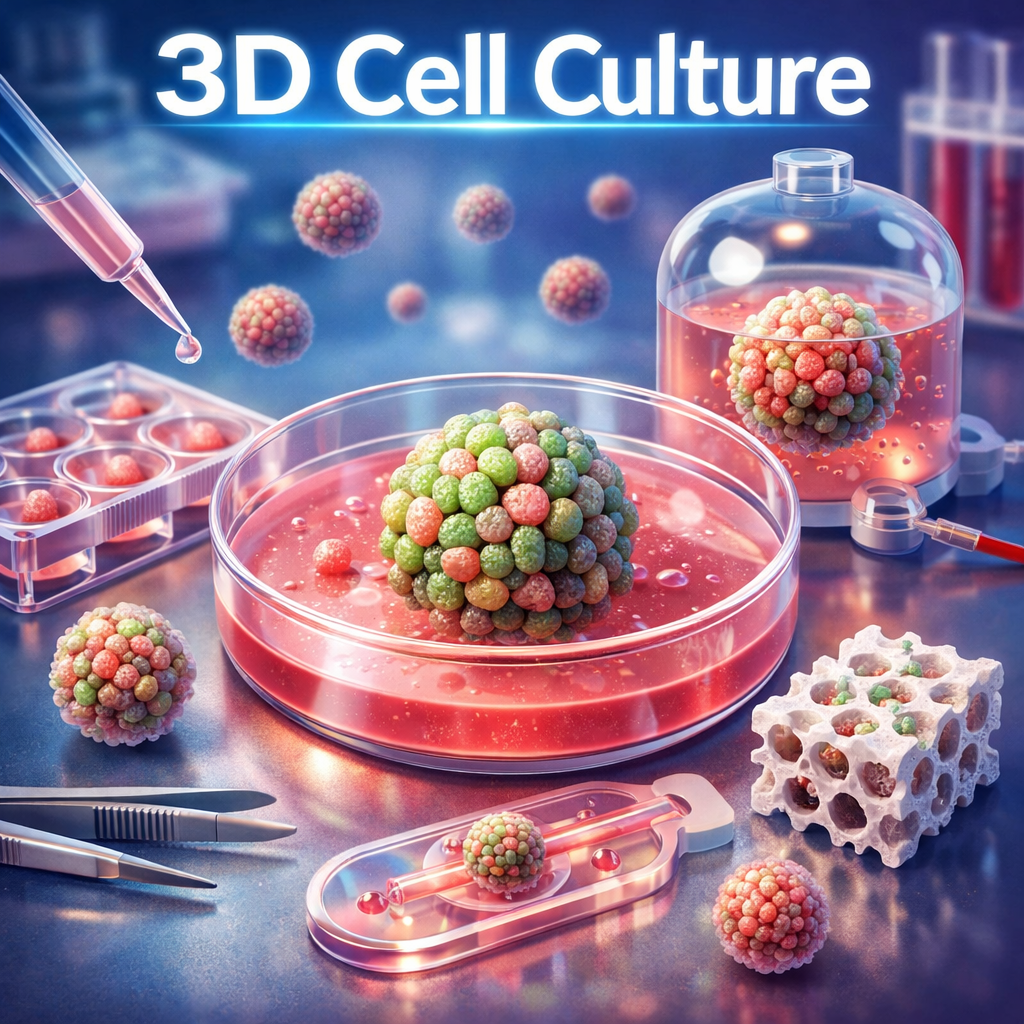
Evolving Landscape of 3D Cell Culture in Modern Life Sciences
3D cell culture has rapidly moved from a niche laboratory technique to a foundational tool in modern biomedical research. Unlike traditional two-dimensional models, this approach enables cells to grow in architectures that more closely resemble living tissues, allowing researchers to observe realistic cell–cell and cell–matrix interactions. As life sciences shift toward precision medicine and predictive research models, 3D cell culture is increasingly recognized as a more physiologically relevant alternative for drug discovery, toxicology, and disease modeling.
Technological Shifts Driving Adoption
One of the most significant trends shaping 3D cell culture is the refinement of scaffold based systems. These systems use biomaterials such as hydrogels, collagen, or synthetic polymers to provide a structural framework that mimics the extracellular matrix. Advances in material science have improved scaffold biocompatibility and tunability, enabling researchers to control stiffness, porosity, and biochemical cues. This has made scaffold based platforms particularly valuable in tissue engineering, regenerative medicine, and cancer research, where microenvironmental context plays a decisive role.
In parallel, scaffold free approaches are gaining strong momentum. These methods rely on the innate ability of cells to self-assemble into three-dimensional structures without an external matrix. Techniques such as hanging drop methods, low-adhesion plates, and microfluidic systems are enabling more uniform and reproducible results. Scaffold free models are often favored for high-throughput screening because they reduce variability introduced by biomaterials and simplify downstream analysis.
Rise of Spheroid and Organoid Models
Among scaffold free techniques, spheroid culture has emerged as a dominant model system. Spheroids replicate key features of native tissues, including nutrient gradients, hypoxic cores, and heterogeneous cell populations. This makes spheroid culture especially relevant in oncology, where tumor spheroids provide more accurate insights into drug penetration, resistance mechanisms, and metastatic behavior. Pharmaceutical companies are increasingly integrating spheroid models into preclinical pipelines to reduce late-stage drug failures.
Beyond spheroids, more complex organoid systems are being developed from stem cells and patient-derived samples. While organoids build upon the principles of 3D cell culture, they represent a step closer to functional tissue mimicry. The convergence of spheroid culture, stem cell biology, and gene-editing technologies is enabling researchers to model genetic diseases and evaluate personalized therapeutic responses with unprecedented fidelity.
The expanding application base of 3D cell culture is reflected in its strong commercial outlook. According to Grand View Research. The global 3D cell culture market size is projected to reach USD 2.27 billion by 2033, growing at a CAGR of 7.84% from 2026 to 2033. This growth trajectory is supported by increasing investment in life science research, rising demand for alternatives to animal testing, and regulatory encouragement for more predictive in vitro models.
This market expansion also mirrors a broader shift in research priorities. Academic institutions are adopting 3D cell culture to improve translational relevance, while contract research organizations are offering specialized 3D assay services. Meanwhile, technology providers are focusing on automation, imaging integration, and standardized consumables to address reproducibility challenges and scalability requirements.
Future Directions and Research Integration
Looking ahead, the future of 3D cell culture lies in convergence. Integration with artificial intelligence, advanced imaging, and multi-omics analysis is transforming static models into dynamic, data-rich systems. Hybrid platforms that combine scaffold based and scaffold free principles are also emerging, offering customizable environments tailored to specific research questions. As these systems become more accessible and standardized, their adoption is expected to accelerate across drug development, toxicology, and clinical research.
In essence, 3D cell culture is no longer simply an alternative to 2D models; it is becoming the preferred foundation for biologically meaningful experimentation. With ongoing innovation in spheroid culture techniques, material science, and analytical tools, this field is poised to play a central role in shaping the next generation of life science discovery and therapeutic development.

 English
 Arabic
 French
 Spanish
 Portuguese
 Deutsch
 Turkish
 Dutch
Dutch
 Italiano
 Russian
 Romaian
 Greek
Greek
