


Timing Belt Kits: NMR Bearing’s Guide to Engine Longevity
In the world of automotive maintenance, few components are as critical yet as frequently overlooked as the timing belt. Often referred to as the "heartbeat" of the internal combustion engine, this reinforced rubber band ensures that the crankshaft and camshaft rotate in perfect synchronization. When this harmony is disrupted, the results are often catastrophic.
At NMR Bearing, we understand that for both professional mechanics and vehicle owners, reliability isn't just a preference—it’s a requirement. This article explores the mechanical necessity of timing belt kits, the science behind their components, and why a proactive replacement strategy is the only way to safeguard your engine's lifespan.
What is a Timing Belt Kit?
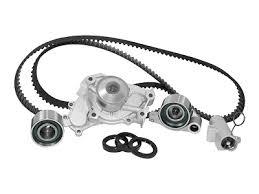
A common mistake in vehicle maintenance is replacing only the belt itself. However, the timing system is a complex ecosystem of moving parts. A comprehensive timing belt kit from nmrbearing.com typically includes:
-
The Timing Belt: The primary component that synchronizes valve opening and closing.
-
Idler Pulleys: These guide the belt and prevent excessive vibration or "slapping."
-
Tensioners: These maintain the exact amount of pressure on the belt to prevent slipping or tooth jump.
-
Water Pump (Optional but Recommended): In many engine designs, the timing belt drives the water pump. Replacing them together prevents a secondary teardown later.
The Physics of Synchronization
To understand why precision matters, one must look at the "Interference Engine" design used in most modern vehicles. In these engines, the space between the valves and the pistons is minimal.
If the timing belt snaps or skips a tooth, the valves will remain open when the piston rises to the top of the cylinder. The resulting collision can bend valves, shatter pistons, and destroy the cylinder head—repairs that often cost thousands of dollars. By utilizing high-grade materials in our kits, NMR Bearing ensures that these tolerances are strictly maintained under extreme thermal stress.
Critical Signs of Timing Belt Wear
A timing belt rarely gives a warning before it snaps, which is why it is known as a "silent killer" of engines. However, subtle symptoms can indicate that your system is nearing its limit:
-
Ticking Noises: This often suggests a loss of tension or a failing pulley bearing within the kit.
-
Engine Misfires: If the belt stretches, it can slip on the camshaft drive, causing the cylinders to open and close out of sync.
-
Oil Leaks: Oil from the front of the engine can degrade the rubber compound of the belt, leading to premature failure.
-
Visual Glazing: A shiny or "glazed" appearance on the back of the belt indicates high friction and heat, suggesting the tensioner is no longer aligned.
Why Choose NMR Bearing Solutions?
The market is flooded with budget-grade rubber components, but industrial-grade reliability requires a different level of engineering. NMR Bearing specializes in the friction-reduction technology that sits at the core of every tensioner and idler pulley.
1. Advanced Material Science
Our belts are constructed from High-Saturated Nitrile (HSN) or EPDM rubber, which offers superior resistance to temperature fluctuations ranging from -40°C to 150°C. This prevents the rubber from becoming brittle in winter or softening in summer.
2. Precision Bearing Integration
The pulleys in an NMR Bearing kit are fitted with high-precision ball bearings. These are lubricated with synthetic greases designed to last the entire service life of the belt, reducing drag and improving fuel efficiency.
3. Optimized Tooth Profile
Our kits feature teeth profiles designed to match OEM specifications exactly. This ensures a "lock-in" fit with the gears, eliminating the micro-slippage that causes timing drift over time.
The Problem-Solution Framework: Avoiding Premature Failure
Most timing belt failures aren't caused by the belt breaking, but by a "seized" idler or tensioner. When a pulley bearing fails, it stops spinning. The belt then slides over a stationary metal surface, creating immense heat through friction. Within minutes, the belt melts and snaps.
The Solution: Always replace the full kit. Replacing just the belt is a "half-fix" that leaves old, worn bearings in a high-stress environment. At nmrbearing.com, our kits are bundled specifically to ensure that every component in the path of the belt is brand new and rated for the same mileage.
Maintenance Intervals and Professional Advice
Most manufacturers recommend replacement between 60,000 and 100,000 miles. However, environmental factors play a massive role. If you operate in a high-dust environment or a region with extreme salt usage on roads, the "dry rot" effect can accelerate.
We recommend a physical inspection every 30,000 miles. Look for cracking on the "ribs" of the belt. If you see more than three cracks in a one-inch space, the belt's structural integrity is compromised.
Conclusion
Investing in a high-quality timing belt kit is the most cost-effective insurance policy you can buy for your vehicle. By choosing NMR Bearing, you are opting for components engineered with the same precision used in heavy-industrial machinery.
Don't wait for a mechanical failure to realize the importance of your timing system. Visit nmrbearing.com today to find the specific kit for your engine model and ensure your vehicle stays on the road, synchronized and safe. Proper maintenance isn't just about fixing what’s broken—it’s about preventing the break before it happens.

 English
 Arabic
 French
 Spanish
 Portuguese
 Deutsch
 Turkish
 Dutch
Dutch
 Italiano
 Romaian
 Portuguese (Brazil)
 Greek
Greek
