


How Teachers Can Use Observational Learning to Improve Student Performance?
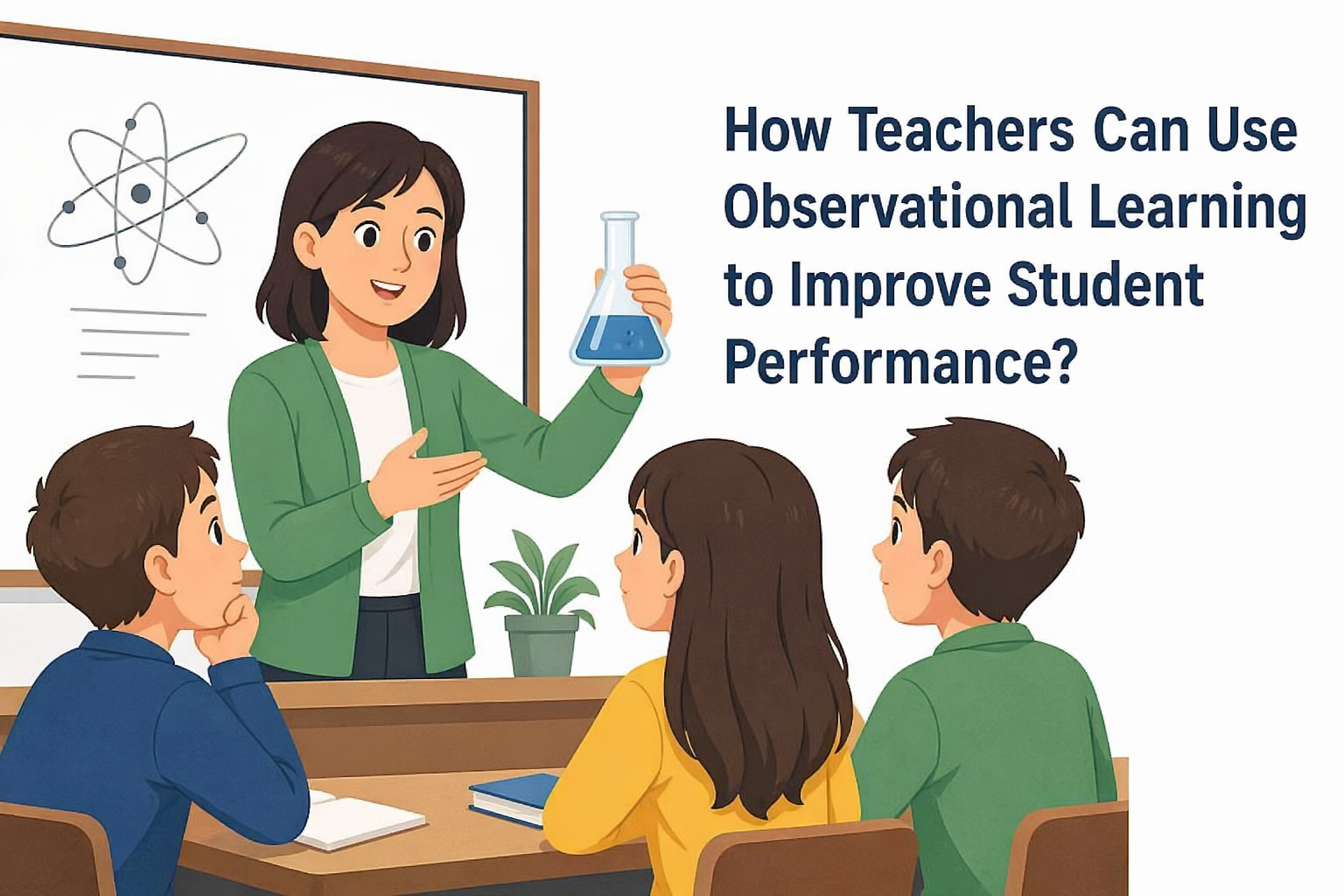
Teachers are constantly searching for smarter, more effective ways to enhance student outcomes. One powerful yet often underutilized approach is Observational Learning—a method where students learn by watching others. Rooted in the principles of Cognitive Learning Theory, this strategy allows students to absorb knowledge, behaviors, and skills through demonstration, modeling, and real-life examples.
When combined with modern tools like a School Portal, Course Management System, and Hybrid Learning environments, observational learning becomes even more impactful in improving student performance.
What is Observational Learning?
Observational Learning is a process where individuals learn new behaviors or skills by observing others. Instead of relying solely on direct instruction, students gain insights by watching teachers, peers, or even digital content.
This concept was popularized by Albert Bandura, who emphasized that learning occurs through attention, retention, reproduction, and motivation.
Why Observational Learning Matters in Schools
In modern classrooms, students are not just passive learners—they actively interpret and replicate what they observe. Here’s why observational learning is essential:
- Enhances understanding through real-life examples
- Improves retention by visual engagement
- Encourages active participation and curiosity
- Builds social and collaborative skills
- Bridges the gap between theory and practice
By integrating observational learning into daily teaching practices, educators can create a more dynamic and student-centered environment.
How Teachers Can Apply Observational Learning Effectively
1. Demonstrate Concepts in Action:
Instead of just explaining theories, teachers should demonstrate them. For example, solving a math problem step-by-step or conducting a live science experiment helps students visually grasp the concept.
When students observe the process, they are more likely to understand how and why something works.
2. Use Peer Learning Strategies:
Students often learn better from their peers. Teachers can encourage group activities where students demonstrate solutions, present ideas, or role-play scenarios.
This not only reinforces observational learning but also boosts confidence and communication skills.
3. Leverage Digital Tools and School Portal:
Modern education platforms like a School Portal allow teachers to upload video lessons, recorded demonstrations, and interactive content. Students can revisit these materials anytime, strengthening their understanding through repeated observation.
A well-integrated portal ensures:
- Easy access to learning resources
- Continuous learning beyond the classroom
- Personalized learning experiences
4. Integrate Course Management System for Structured Learning:
A Course Management System plays a vital role in organizing observational learning. Teachers can structure lessons with:
- Video demonstrations
- Step-by-step tutorials
- Interactive assignments
This ensures that students not only observe but also practice what they learn, leading to better academic performance.
5. Apply Observational Learning in Hybrid Learning Environments:
With the rise of Hybrid Learning, students learn both online and offline. Teachers can use this model to maximize observational learning by combining:
- In-class demonstrations
- Online video content
- Virtual simulations
This blended approach allows students to learn at their own pace while still benefiting from real-time guidance.
6. Encourage Modeling of Positive Behavior:
Observational learning is not limited to academics—it also influences behavior. Teachers serve as role models, and students often imitate their communication style, discipline, and problem-solving approach.
By demonstrating:
- Critical thinking
- Respectful communication
- Time management
Teachers can shape both academic and personal development.
7. Use Visual and Interactive Content:
Visual aids such as charts, videos, infographics, and animations enhance observational learning. Students process visual information faster and retain it longer.
Interactive content also keeps students engaged, making learning more enjoyable and effective.
8. Provide Feedback and Reinforcement:
Observation alone is not enough—students need feedback to refine their understanding. Teachers should:
- Offer constructive feedback
- Encourage questions
- Reinforce correct behaviors and solutions
This helps students transition from observation to mastery.
Benefits of Observational Learning for Student Performance
When implemented effectively, observational learning delivers measurable improvements:
✔ Better Academic Results:
Students understand concepts more clearly, leading to improved grades and test performance.
✔ Increased Engagement:
Interactive and visual learning methods keep students interested and motivated.
✔ Stronger Critical Thinking Skills:
Observing problem-solving processes helps students develop analytical thinking.
✔ Improved Collaboration:
Group-based observational activities foster teamwork and communication.
✔ Long-Term Knowledge Retention:
Learning through observation ensures concepts stay with students for a longer time.
Challenges and How to Overcome Them
While observational learning is powerful, it comes with challenges:
Passive Observation:
Some students may watch without actively engaging.
Lack of Proper Guidance:
Without direction, students may misunderstand concepts.
Limited Resources:
Not all schools have access to advanced digital tools.
The Future of Observational Learning in Education
As technology continues to evolve, observational learning will become even more significant. With AI-powered tools, virtual classrooms, and advanced Course Management Systems, students will have access to immersive learning experiences.
The integration of Hybrid Learning models ensures that observational learning is no longer limited to physical classrooms—it extends to digital platforms, making education more accessible and flexible.
Conclusion
Observational Learning is a powerful teaching strategy that can significantly improve student performance when applied effectively. By combining traditional teaching methods with modern tools like a School Portal, Course Management System, and Hybrid Learning, teachers can create an engaging and impactful learning environment.
When students learn by observing, they not only understand concepts better but also develop essential life skills. For educators aiming to enhance student outcomes, adopting observational learning is not just an option—it’s a necessity in today’s education system.

 English
 Arabic
 French
 Spanish
 Deutsch
 Turkish
 Dutch
Dutch
 Italiano
 Russian
 Romaian
 Portuguese (Brazil)
 Greek
Greek
