


Light Tower Market Outlook with Rising Demand for Eco-Friendly Solutions
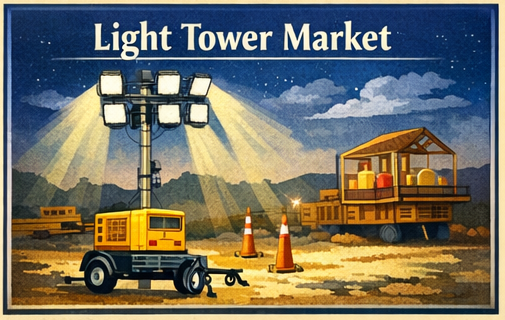
Evolving Role of Light Towers in Modern Infrastructure
The modern light tower has become a critical asset across infrastructure, emergency response, and industrial applications. As projects extend into nighttime hours and remote geographies, the demand for reliable illumination has intensified. From road construction to disaster recovery, the portable light tower is no longer just a support tool—it is a core operational requirement that directly impacts productivity, safety, and project timelines.
A key shift in recent years is the transition from conventional lighting systems to more energy-efficient and intelligent solutions. The traditional diesel-powered tower light is steadily being replaced or upgraded with hybrid and electric alternatives. This evolution is driven by stricter environmental regulations, rising fuel costs, and a broader push toward sustainability in construction and infrastructure sectors.
Technology Advancements Driving Adoption
One of the most prominent trends shaping the industry is the rapid adoption of the LED light tower. Compared to legacy halide lamps, LED systems consume significantly less energy, offer longer operational lifespans, and require minimal maintenance. These benefits translate into lower total cost of ownership, making LED-based solutions increasingly attractive for contractors and rental companies.
Additionally, smart features are transforming how a construction light tower is deployed and managed. Advanced models now include remote monitoring, automated scheduling, and telematics integration. These capabilities allow operators to track fuel usage, runtime, and maintenance needs in real time, optimizing efficiency across large project sites.
Another emerging innovation is solar-powered and hybrid light towers. These systems combine solar panels with battery storage and backup generators, ensuring uninterrupted lighting while reducing carbon emissions. In regions with abundant sunlight, solar-powered portable light tower units are becoming particularly popular due to their low operating costs and environmental benefits.
Automation is also playing a growing role. Light towers equipped with sensors can adjust brightness based on ambient lighting conditions or motion detection, further enhancing energy efficiency. This level of adaptability is especially valuable in urban construction zones and temporary event setups.
Expanding Applications Across Industries
The versatility of the light tower has significantly expanded its application scope. While construction remains the dominant sector, other industries are increasingly leveraging these systems. Mining operations, oil and gas exploration, and military deployments rely heavily on robust tower light solutions for safe and continuous operations in low-light environments.
Emergency and disaster response is another critical area where portable light tower units prove indispensable. During natural disasters such as floods or earthquakes, rapid deployment of lighting infrastructure enables rescue teams to operate effectively around the clock. Similarly, municipalities use construction light tower systems for road repairs, public works, and large-scale outdoor events.
Events and entertainment industries are also contributing to demand growth. Festivals, concerts, and sports events require temporary yet powerful lighting setups, where LED light tower systems offer both performance and energy efficiency.
Market Growth and Strategic Outlook
A research report by Grand View Research highlights the steady expansion of this sector, noting that the global light tower market size is projected to reach USD 3,597.3 million by 2033, growing at a CAGR of 4.7% from 2025 to 2033. This growth trajectory reflects increasing infrastructure investments, particularly in developing economies, along with the ongoing modernization of construction equipment fleets.
In essence, the market is evolving beyond basic illumination toward integrated, sustainable, and intelligent lighting ecosystems. Manufacturers are focusing on product differentiation through innovation, offering features such as noise reduction, compact designs, and enhanced mobility. The emphasis on user-friendly design is making the portable light tower more accessible for a wider range of applications, from small contractors to large-scale industrial operators.
Furthermore, rental services are playing a crucial role in market expansion. Many companies prefer renting a construction light tower rather than purchasing, as it reduces upfront costs and provides access to the latest technology without long-term commitment. This trend is encouraging manufacturers to develop durable and versatile tower light units that can withstand frequent transportation and varied operating conditions.
In the middle of this evolving landscape, it is important to contextualize the broader growth narrative. The global light tower market is on a steady upward path, driven by rising demand across construction, mining, and emergency services. Increasing adoption of energy-efficient technologies, along with expanding infrastructure projects worldwide, is reinforcing the importance of advanced lighting solutions. As sustainability and operational efficiency become central priorities, the transition toward LED and hybrid systems is expected to accelerate further.
Future Outlook: Sustainability Meets Performance
Looking ahead, the future of the light tower industry will be defined by the convergence of sustainability, digitalization, and performance optimization. Battery technology improvements are expected to extend the runtime of electric and hybrid systems, reducing reliance on fossil fuels. Meanwhile, integration with IoT platforms will enable predictive maintenance and data-driven decision-making.
The LED light tower will likely remain at the forefront of this transformation, supported by ongoing advancements in lighting efficiency and durability. At the same time, the demand for compact, easy-to-deploy portable light tower solutions will continue to grow, particularly in urban environments where space and noise constraints are critical considerations.
In conclusion, the evolution of the construction light tower reflects broader industrial trends toward smarter, cleaner, and more efficient equipment. As industries adapt to new operational challenges and environmental standards, the role of the tower light will only become more central—illuminating not just worksites, but the path toward a more sustainable and technologically advanced future.

 English
 Arabic
 French
 Spanish
 Portuguese
 Deutsch
 Turkish
 Italiano
 Russian
 Romaian
 Portuguese (Brazil)
 Greek
Greek
