


Conoscope Lens Guide: Precise View Angle Measurement 2026
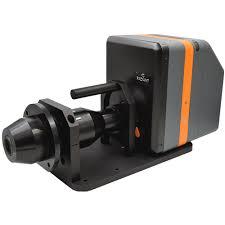
In the high-stakes world of display manufacturing and optoelectronics, "good enough" visuals no longer cut it. Whether you are developing the next flagship smartphone or an industrial AR headset, how a screen looks from an angle is just as important as how it looks from the front. This is where the conoscope lens becomes an indispensable tool.
At ARVR Optical, we specialize in the precision instruments that make "spatial computing" possible. A conoscope lens isn't just a piece of glass; it is a sophisticated Fourier optical system that transforms light direction into measurable data. This guide will walk you through why this technology is the secret weapon for outranking competitors in display quality.
What is a Conoscope Lens?
To understand a conoscope lens, you have to think differently about photography. A standard camera lens captures where light is coming from in space (creating a picture of an object). A conoscope lens, however, captures the angle at which light is emitted.
By using a mathematical principle known as a Fourier transform, the lens maps all light rays emitted at a specific angle to a specific point on an image sensor. This allows engineers to see a full "map" of a display's viewing angle—up to ±80 degrees—in a single snapshot.
Why Display Manufacturers Need Conoscopic Optics
If you have ever looked at an older laptop screen from the side and noticed the colors shifting or the screen getting dark, you have witnessed viewing angle distortion. For modern buyers, especially in the medical and automotive fields, this is unacceptable.
The conoscope lens allows ARVR Optical and our partners to measure:
-
Luminance Uniformity: Does the screen stay bright when viewed from the side?
-
Color Shift: Do the whites turn yellow or blue at a 45-degree angle?
-
Contrast Ratio: Does the "black" stay black, or does it wash out?
Conoscope Lens vs. Standard Lens: The Technical Difference
| Feature | Standard Imaging Lens | Conoscope Lens |
| Primary Goal | Capture spatial position (an image) | Capture angular distribution |
| Mapping | Point-to-point | Angle-to-point |
| Speed | Requires moving the camera to measure angles | Captures all angles in one shot |
| Main Use | Photography / Surveillance | Display Quality Control / R&D |
Key Applications in 2026
As we move through 2026, the conoscope lens has found its way into several high-growth industries:
1. AR/VR Headset Inspection
Testing near-eye displays (NEDs) is notoriously difficult. Because the display is so close to the eye, the lens must replicate the human pupil's position. Specialized conoscopes allow manufacturers to ensure that the edges of a VR world look just as sharp as the center.
2. MicroLED and OLED Panel Testing
With the rise of MicroLED technology, measuring individual pixel output at varying angles is vital. ARVR Optical modules are designed to handle the high brightness of these new panels without losing accuracy.
3. Automotive HUDs (Head-Up Displays)
A pilot or driver needs to see data projected on a windshield clearly, regardless of their height or seating position. Conoscopic measurement ensures the projection is visible across the entire "eye box."
Technical Specs to Watch For
When you are ready to invest in a conoscope lens, don't just look at the price. Focus on these three professional metrics:
-
Field of View (FOV): Most high-end units offer ±60° or ±70°. For wide-angle VR, look for systems that push toward ±80°.
-
Angular Resolution: This determines how many "data points" you get per degree. A resolution of 0.05° per pixel is standard for high-accuracy lab work.
-
Working Distance: In display testing, you often need to get very close to the panel (sometimes 2mm to 3mm). Ensure the lens housing is designed for these tight tolerances.
The ARVR Optical Advantage
Why partner with ARVR Optical for your conoscopic needs? Because we understand the full optical stack. We don't just provide a conoscope lens; we provide the technical expertise to integrate it into your automated testing lines.
Our lenses are engineered with high-index glass and multi-layer coatings to minimize "ghosting" and internal reflections, ensuring that the data you see on the sensor is a perfect representation of your display’s performance.
Future Trends: Real-Time Conoscopy
The next frontier for the conoscope lens is real-time production line integration. In the past, these measurements were slow and kept in the R&D lab. Today, thanks to faster sensors and improved optical designs, we can perform viewing angle checks on every single panel that comes off the assembly line. This "zero-defect" approach is how the world's leading tech brands maintain their market dominance.
Conclusion
The conoscope lens is the ultimate truth-teller in the optoelectronics industry. It strips away the guesswork and provides a clear, mathematical map of how a light source behaves in the real world.
Whether you are trying to perfect the "sweet spot" in a new VR headset or ensuring a smartphone screen remains vivid at every angle, this lens is your most powerful ally. At ARVR Optical, we are committed to pushing the boundaries of what is possible in optical measurement. Let us help you bring your display technology into focus with the precision and clarity that only professional conoscopy can provide.

 English
 Arabic
 French
 Spanish
 Portuguese
 Deutsch
 Turkish
 Dutch
Dutch
 Italiano
 Russian
 Romaian
 Greek
Greek
