


How to Spot a High-Quality Luxury Clone Watch
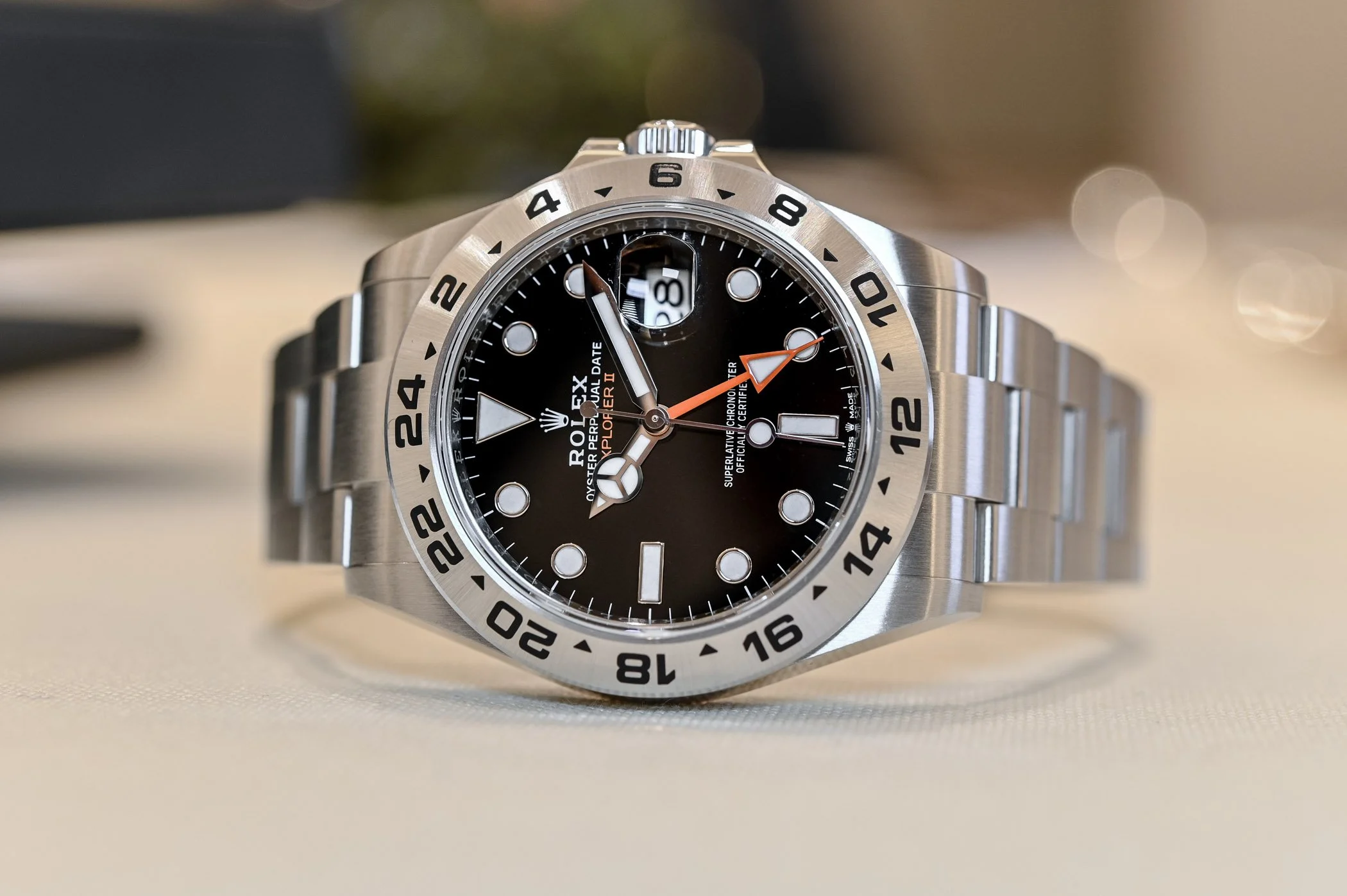
Most people think spotting a good clone is about checking the logo. It's not. The logo is usually the easiest part to get right. What actually separates a well-made luxury clone from something that'll embarrass you under a dinner table light is everything around it — the finishing, the weight, the way the bracelet moves, the sound the crown makes when you thread it back in.
This guide breaks down exactly what to look for, piece by piece. Whether you're evaluating a watch before buying or you've already received one and want to know what you actually got, these are the checkpoints that matter.
1. The Movement — Start Here, Not at the Dial
The movement is the first thing experienced buyers ask about, and for good reason. It determines how the watch feels on the wrist far more than how it looks.
A high-quality luxury clone uses a Swiss clone movement — a purpose-built caliber engineered to replicate the architecture of the original. For Rolex pieces, that means a cloned 3235 or 4130. For AP Royal Oak, a cloned 3120. These movements aren't generic Asian knockoffs dropped into a nice-looking case. They're built to match the beat rate, hand stack height, and complication layout of the genuine article.
The most obvious test is the seconds hand. A quality clone runs at 28,800 beats per hour — eight ticks per second — which produces a smooth, near-continuous sweep. If the seconds hand ticks once per second in a jerky quartz-style motion, you're looking at a cheap replica, not a super clone. That's the fastest way to tell.
Beyond that, feel the winding. A well-built automatic movement has a specific resistance when you wind it — not too stiff, not hollow. The rotor should turn with a subtle, smooth sound. A rattling or grinding rotor is a red flag regardless of how good the dial looks.
2. Case Finishing — Where Most Fakes Give Themselves Away
This is where the real difference shows up under close inspection. Luxury watches use a combination of brushed and polished surfaces on the same case — brushed flanks on the lugs, mirror-polished bevels along the edges. Getting that transition sharp and consistent requires proper CNC machining and hand finishing. Cheap clones skip or blur this step entirely.
Run your finger along the case edges. On a well-made piece, the brushed surface and the polished surface meet at a clean, defined line. On a poor clone, that line is soft, uneven, or sometimes just absent — the whole case comes out with the same flat matte finish or the same flat shine.
The same applies to the bracelet. Pick it up and flex it. The links on a quality clone have weight, articulate smoothly, and hold their shape under tension. Cheap bracelets feel springy, rattle when shaken, and often have visible gaps between the links at the clasp end.
3. Crystal Clarity and AR Coating
Genuine luxury watches use sapphire crystal — rated 9 on the Mohs hardness scale, meaning almost nothing in daily life will scratch it. High-quality clones use the same material, cut to the correct profile for the specific reference.
Hold the watch face-down under a light source and look at the crystal at an angle. A proper sapphire crystal with anti-reflective coating will show a faint blue or green tint as light passes through it — that's the AR coating doing its job. A mineral glass crystal (used in cheaper replicas) either reflects clearly without that tint or shows a milky, inconsistent sheen.
On Rolex clones specifically, check the Cyclops lens over the date window. The genuine article magnifies at 2.5x. A well-made clone matches this. If the date looks small, flat, or hard to read through the lens, the crystal is undersized or incorrectly curved.
4. Dial Printing and Indices
Zoom in — literally. Use your phone camera or a loupe if you have one. On a high-quality clone, the dial text is sharp-edged, evenly spaced, and sits at the correct depth. The font weight matches the original reference. Nothing looks slightly blurry or inconsistently kerned.
The applied indices — the hour markers — should be clean metal with no adhesive bleeding out from the base. On cheaper pieces, you'll often see small gaps where the marker meets the dial, or a slight lean that becomes obvious when you look across the face at an angle.
Lume is another reliable indicator. On a well-made clone, the luminescent fill sits level within each index, glows evenly in the dark, and matches the specific color of the genuine model. Uneven fill, drips, or lume that spills past the edges of the marker points to rushed assembly.
5. Weight and Wrist Presence
This one you feel rather than see. Luxury watches have a specific density to them — the result of solid 904L stainless steel cases, heavy bracelets, and sapphire crystals. When you pick up a properly made clone, it should feel immediately substantial.
High-quality clones use the same 904L steel that Rolex uses across their entire range. It's harder to work with than the 316L steel found in cheaper pieces, but it polishes better, holds its finish longer, and gives the watch that familiar heft that collectors recognize the moment a genuine piece hits their wrist.
If a watch feels noticeably light — like it could blow off the table — that's the quickest physical tell. Weight can't be faked easily, and factories that try to cut costs on steel give themselves away immediately.
6. Crown and Pusher Action
Screw-down crowns are a defining feature of tool watches like the Submariner and GMT-Master. Thread the crown in. On a quality piece, it turns smoothly for several rotations before seating firmly against the case. Pull it out to the time-setting position and it should click into place with a subtle detent — not flop around loosely or require force to move.
On chronograph clones, press the pushers. Each one should have a consistent, defined throw — firm enough to feel deliberate, smooth enough to not feel mechanical in a bad way. Sticky pushers, mushy pushers, or pushers that bottom out with a clunky feel are signs of poor movement installation regardless of how good the case looks.
7. Factory Transparency From the Seller
This one isn't about the watch itself — it's about who you're buying from. A legitimate seller of high-quality luxury clones will tell you which factory made the piece. Clean Factory, VSF, ZF, APS — each has specific strengths by model, and knowing the source tells you a lot about what to expect before the watch even arrives.
Sellers who refuse to name the factory, use generic phrases like "Swiss movement" without specifics, or post only stock catalogue images are hiding something. The community standard for trusted sellers now includes real QC photos and video of your specific watch before shipment — not photos of a similar model, and not images pulled from the original brand's website.
If a seller can't tell you what's inside the case and won't show you the actual piece before it ships, that's a reason to walk away regardless of how good the price looks.
The Short Version
A high-quality luxury clone earns its reputation through things most buyers never think to check: the sweep of the movement, the sharpness of the case finishing, the weight in the hand, the way the crown threads, the clarity of the crystal. The dial and the logo are almost always fine. It's everything else that separates a well-made piece from something that looks the part until someone who knows watches picks it up.
Take your time, ask the right questions, and buy from sellers who are transparent about what they're selling.

 English
 Arabic
 French
 Spanish
 Portuguese
 Turkish
 Dutch
Dutch
 Italiano
 Russian
 Romaian
 Portuguese (Brazil)
 Greek
Greek
