


Automation Trends Reshaping Food Processing Industry
The Rise of Intelligent Systems in Modern Food Operations
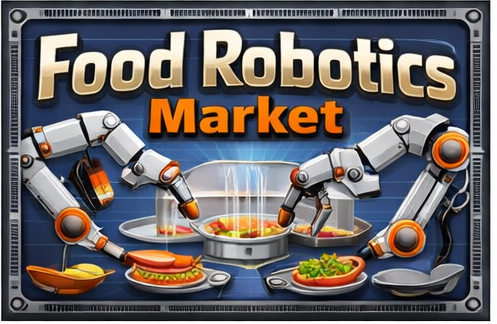
The integration of food robotics into daily operations is reshaping how food is prepared, processed, and delivered across the globe. From quick-service restaurants to large-scale food manufacturing plants, robotic food service solutions are increasingly becoming essential for improving efficiency, consistency, and safety. As consumer expectations evolve toward faster service and higher hygiene standards, businesses are turning to food automation robots to bridge the gap between demand and operational capability.
One of the most notable developments in kitchen robotics is the adoption of AI-driven systems that can learn, adapt, and optimize workflows. These systems are no longer limited to repetitive tasks; they are now capable of handling complex cooking procedures, managing inventory, and even predicting demand patterns. This shift is particularly visible in urban markets, where robotic kitchens are being deployed to ensure speed and precision without compromising quality.
Transforming Kitchens with Automation and Precision
Kitchen robotics is fundamentally changing the structure of food preparation environments. Traditional kitchens rely heavily on manual labor, which can introduce variability and inefficiencies. In contrast, robotic food handling systems bring a level of standardization that is difficult to achieve manually. Robots can measure ingredients with exact precision, cook at controlled temperatures, and replicate recipes flawlessly every time.
Another significant trend is the rise of collaborative robots, or cobots, designed to work alongside human staff. These food automation robots are enhancing productivity rather than replacing workers entirely. For example, robots can take over physically demanding or repetitive tasks such as chopping, frying, or packaging, allowing human workers to focus on creativity, customer service, and quality control.
In addition, robotic food service is expanding beyond kitchens into front-of-house operations. Automated kiosks, robotic servers, and AI-powered ordering systems are improving customer experience by reducing wait times and minimizing errors. This seamless integration of technology is creating a more efficient and engaging dining environment.
Hygiene, Safety, and Sustainability Advantages
The importance of hygiene and food safety has never been greater, and food robotics is playing a crucial role in addressing these concerns. Robotic food handling minimizes human contact with food, reducing the risk of contamination and ensuring compliance with strict health regulations. This is particularly valuable in the post-pandemic landscape, where consumers are more conscious of cleanliness and safety.
Sustainability is another area where kitchen robotics is making a significant impact. Food automation robots can optimize resource usage by minimizing waste, controlling portion sizes, and improving energy efficiency. Advanced systems can even analyze data to identify inefficiencies in real time, enabling businesses to adopt more sustainable practices.
Moreover, robotic food service solutions are helping to tackle labor shortages, a persistent challenge in the food industry. By automating routine tasks, businesses can maintain consistent operations even with limited staff, ensuring reliability and scalability.
Emerging Trends and Future Outlook
The future of food robotics is being shaped by continuous innovation and technological convergence. Integration with Internet of Things (IoT) devices, cloud computing, and advanced analytics is enabling smarter and more connected systems. These technologies allow kitchen robotics to operate as part of a larger ecosystem, where data flows seamlessly between devices to optimize performance.
Another emerging trend is the customization of robotic food service solutions. Businesses are increasingly seeking tailored systems that align with their specific operational needs, whether it’s a robotic barista, an automated pizza maker, or a fully autonomous kitchen. This level of customization is driving adoption across diverse segments, from fast food chains to fine dining establishments.
Additionally, the use of machine vision and advanced sensors in robotic food handling is enhancing accuracy and adaptability. These technologies enable robots to पहचान ingredients, adjust to variations, and perform delicate tasks with high precision. As a result, food automation robots are becoming more versatile and capable of handling a wider range of culinary applications.
A research report by Grand View Research highlights the rapid expansion of this sector, noting that the global food robotics market size is projected to reach USD 6.81 billion by 2030, growing at a CAGR of 20.6% from 2024 to 2030. This growth reflects the increasing demand for automation, efficiency, and innovation in food-related operations. In simpler terms, the industry is witnessing strong momentum as businesses invest in advanced robotic systems to streamline processes, enhance productivity, and meet evolving consumer expectations.
Looking ahead, the adoption of food robotics is expected to accelerate as technology becomes more accessible and cost-effective. Startups and established companies alike are investing in research and development to push the boundaries of what kitchen robotics can achieve. From fully autonomous restaurants to AI-driven food production lines, the possibilities are vast and transformative.
In conclusion, food robotics is not just a technological advancement; it represents a fundamental shift in how food is prepared and served. By combining efficiency, precision, and innovation, robotic food service and food automation robots are redefining industry standards. As these technologies continue to evolve, they will play an increasingly central role in shaping the future of food, making operations smarter, safer, and more sustainable.

 English
 Arabic
 French
 Spanish
 Portuguese
 Turkish
 Dutch
Dutch
 Italiano
 Russian
 Romaian
 Portuguese (Brazil)
 Greek
Greek
