


10 Benefits of Using a Student Admission Management System
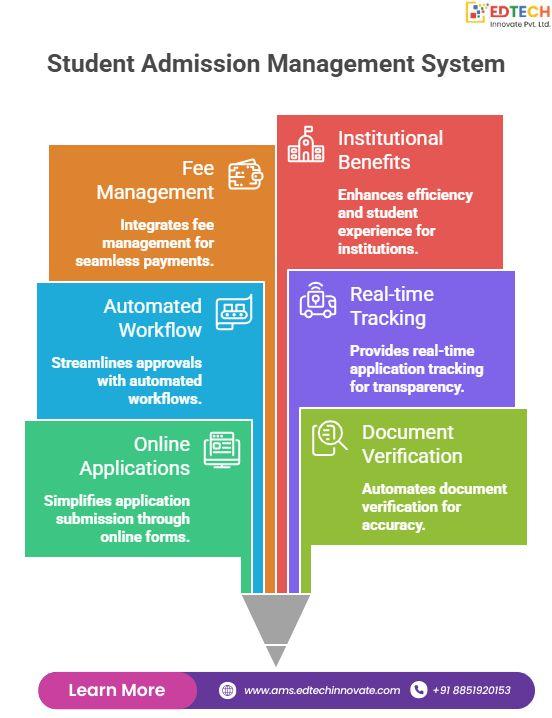
The landscape of educational enrollment grows more complex every year. Managing thousands of applications, verifying documents, and communicating with prospective families requires massive coordination. Relying on manual workflows or disjointed spreadsheets often leads to lost data, frustrated applicants, and exhausted staff. To overcome these hurdles, institutions are aggressively shifting from manual, paper-heavy processes to centralized digital systems.
Implementing a robust student admission management system is no longer just an operational upgrade; it is a strategic necessity. A centralized platform aligns recruitment efforts, simplifies the application experience, and provides administrators with critical data for institutional planning. By automating routine tasks and connecting cross-department workflows, schools and universities can focus on what truly matters: engaging with prospective students and building a strong academic community.
This comprehensive guide explores the top ten benefits of upgrading your enrollment infrastructure and how these systems drive strategic institutional growth.
1. Improved Administrative Efficiency
Administrative bottlenecks frequently delay enrollment cycles. Staff members spend countless hours processing paperwork, answering repetitive status inquiries, and organizing physical files. A student admission management system dramatically improves administrative efficiency by automating these high-volume tasks.
Instead of manually sorting through application packets, your admission staff can rely on automated workflows that trigger the next steps instantly. When a prospective student submits a document, the system automatically routes it to the appropriate evaluator. This seamless routing eliminates the physical transfer of files between desks and departments. Consequently, admission teams can process a much larger volume of applications in significantly less time. The focus shifts from administrative upkeep to strategic evaluation and meaningful applicant engagement.
2. Reduced Manual Workload and Operational Costs
Traditional admission cycles carry heavy hidden costs. Printing forms, mailing acceptance letters, and paying for physical storage space drain institutional budgets. Furthermore, the sheer volume of manual data entry requires extensive overtime during peak enrollment seasons.
Deploying an Admission Management System directly targets these inefficiencies. By transitioning to a fully digital environment, schools eliminate paper-based expenses and reduce postage costs. More importantly, automated data capture removes the need for manual data entry. Staff no longer need to type applicant information from paper forms into a local database. This reduction in manual workload lowers overtime costs and prevents staff burnout, allowing institutions to allocate their financial and human resources toward strategic initiatives like student retention and academic support.
3. Enhanced Data Accuracy and Centralized Record Management
Manual data entry inevitably leads to human error. Misspelled names, incorrect contact details, or misplaced academic records can cause serious compliance issues and damage an institution's reputation.
An effective student admission management system establishes a single source of truth for all applicant data. Because applicants enter their own information directly into an Online Admission Portal, the risk of transcription errors drops to near zero. The system centralizes document collection, storing transcripts, recommendation letters, and standardized test scores in a secure, unified profile. Administrators can trust that the data they review is accurate, current, and securely stored, mitigating compliance risks and ensuring equitable application evaluations.
4. Faster and More Structured Online Admission Process
Modern applicants expect a seamless digital experience. When faced with confusing instructions or multi-step physical mailings, highly qualified candidates often abandon their applications.
Transitioning to an Online Admission Process creates a structured, intuitive journey for prospective students. Utilizing an optimized Online application form, candidates can easily upload documents, save their progress, and submit their details from any device. The system guides them step-by-step, ensuring no mandatory fields are left blank before submission. This structured pathway significantly accelerates the application timeline. Administrators receive complete, standardized application profiles, enabling faster review cycles and quicker admission decisions.
5. Real-Time Tracking and Transparency Through an Admission Tracker
Uncertainty is a major source of anxiety for applicants and a primary trigger for an overwhelming volume of phone calls to the admission office. Families want to know exactly where their application stands.
Incorporating an admission tracker provides absolute transparency for both applicants and staff. Through their personalized dashboard, students can see precisely which documents have been received, which are pending, and when a final decision is expected. Internally, admission officers use the same real-time tracking features to monitor bottlenecks in the evaluation pipeline. If a specific department is falling behind on portfolio reviews, leadership can spot the delay instantly and reallocate resources to keep the cycle moving smoothly.
6. Improved Communication with Applicants and Parents
Strong communication builds trust and increases yield rates. However, manually emailing thousands of applicants with status updates is an impossible task.
Admission Management Software features automated communication tools that keep families engaged throughout the cycle. The system can trigger automated emails or SMS notifications when an application is received, when an interview is scheduled, or when a decision is ready. Furthermore, administrators can segment their communication, sending targeted messages to specific demographics or program applicants. This level of personalized, timely communication makes prospective students feel valued and supported, greatly enhancing the overall institutional brand perception.
7. Better Student Enrollment Tracking and Forecasting
Predicting how many accepted students will actually enroll is a massive challenge. Inaccurate estimates lead to under-enrolled programs or over-capacity classrooms, both of which strain institutional resources.
A digital admissions management platform provides sophisticated student enrollment tracking capabilities. By analyzing historical data and tracking real-time applicant behaviors—such as promptness of replies, event attendance, and portal logins—the system generates highly accurate enrollment forecasts. Administrators can monitor the funnel from initial inquiry to final deposit. These insights empower institutional leaders to adjust their recruitment strategies mid-cycle, ensuring they meet specific enrollment targets and revenue goals.
8. Integration with Systems Like Student Information System and Learning Management System
An admission department does not operate in a vacuum. Once a student is accepted and enrolled, their data must flow seamlessly into other academic departments.
A high-quality student admission management system ensures continuous data continuity. Upon a student's commitment, their profile integrates directly with the Student Information System. This eliminates the need for IT departments to perform massive data migrations. Furthermore, integrating with the Learning Management System ensures that new students are immediately provisioned with access to course materials, orientation modules, and academic schedules. This interconnected ecosystem guarantees a smooth transition from applicant to active student.
9. Scalability for Institutional Growth and Multi-Campus Operations
As institutions grow, add new programs, or open satellite campuses, their administrative systems must scale accordingly. A system built for a single small campus will buckle under the weight of regional or international expansion.
Adopting cloud-based online admission software provides infinite scalability. Whether your institution is processing five hundred applications or fifty thousand, the infrastructure scales dynamically to handle the load. For multi-campus operations, a centralized system allows upper management to maintain standardized admission criteria across all locations while granting individual campuses the flexibility to manage their specific applicant pools. This structural agility is essential for institutions focused on aggressive, long-term growth.
10. Stronger Governance, Compliance, and Reporting Capabilities
Educational institutions face stringent regulatory requirements regarding data privacy, accessibility, and equal opportunity reporting. Extracting this data from disjointed spreadsheets is labor-intensive and error-prone.
Admissions software for schools includes advanced data management software capabilities that simplify compliance. Administrators can generate comprehensive, customized reports with a few clicks. Whether leadership needs demographic breakdowns, geographical distributions, or diversity compliance metrics, the system delivers real-time, accurate reporting. Robust permission settings ensure that only authorized personnel can access sensitive student information, keeping the institution fully compliant with privacy regulations like FERPA or GDPR.
Workflow Transformation Perspective
Achieving these ten benefits requires a fundamental shift in how workflows are designed and executed. The transformation begins at the front end with a centralized Online Admission Portal. This portal serves as the digital front door for the institution, hosting structured Online application form systems that capture data consistently.
Behind the scenes, this data enters automated Online Admission Process workflows. Instead of staff manually pushing applications to the next phase, the software routes them based on predefined rules. Consolidation through comprehensive online admission software means that marketing, recruitment, document verification, and academic review all happen within a single interface. Finally, data aggregation using advanced data management software transforms raw application metrics into actionable intelligence. Together, these components create a streamlined, high-functioning admission ecosystem that requires far less manual intervention while delivering vastly superior results.
Ecosystem Integration Context
To unlock its full potential, a student admission management system must act as a connected hub within the broader institutional tech stack. Siloed data is a major roadblock to institutional efficiency.
Interoperability is crucial. When the admission platform links directly with the Student Information System, the institution guarantees lifecycle data continuity. The student's journey is tracked without interruption from their first inquiry through graduation. Integration with the Learning Management System aligns the admission timeline with academic onboarding, ensuring students are ready for day one. Crucially, connecting with School Accounting Software automates the financial aspects of enrollment. Application fees, enrollment deposits, and financial aid disbursements are tracked and reconciled instantly, bridging the gap between the admission office and the finance department through seamless cross-department collaboration.
Institutional Impact and Strategic Value
Beyond the day-to-day operational improvements, modernizing your admission infrastructure delivers profound strategic value. The wealth of data gathered during the digital enrollment cycle drives improved decision-making through data insights. Administrators can identify which recruitment channels yield the best candidates and allocate marketing budgets accordingly.
This operational clarity leads to enhanced institutional planning. When leadership has confidence in their enrollment numbers, they can make accurate decisions regarding faculty hiring, facility expansion, and budget allocation. Simultaneously, providing an admission made easy process results in a significantly stronger applicant experience, directly boosting the institution’s reputation. Ultimately, these systems foster the development of forward-looking admission ideas, transitioning the enrollment team from administrative processors to strategic architects of a long-term digital admissions management strategy.
Conclusion
Transitioning to a modernized enrollment infrastructure is a critical step for educational institutions looking to thrive in a highly competitive landscape. As a dedicated digital transformation partner, we understand the complexities of campus workflows. Our scalable student admission management system solutions are designed to align with your institution's strategic goals. By deploying integrated Online Admission Portal environments and offering real-time admission tracker visibility, we help you eliminate bottlenecks, reduce costs, and elevate the applicant experience. Empower your team with the tools they need to build a stronger, more connected academic community. ams edtech innovate
FAQ
What is a student admission management system?
It is a comprehensive digital platform designed to automate and streamline the entire student enrollment lifecycle. It handles tasks ranging from initial candidate inquiries and application processing to document verification, communication, and final enrollment, replacing manual workflows with centralized digital processes.
How does it improve admission efficiency?
By automating repetitive tasks like data entry, email follow-ups, and document routing, the software drastically reduces the administrative burden on staff. This allows admission officers to process applications much faster and focus their energy on evaluating candidates and engaging with prospective families.
Is it suitable for small and large institutions?
Yes. Modern admission systems are highly scalable. Small schools benefit from out-of-the-box workflows and reduced manual labor, while large universities and multi-campus institutions leverage advanced routing rules, robust data handling, and extensive ecosystem integrations to manage high volumes seamlessly.
Can it integrate with existing systems?
Absolutely. High-quality admission platforms are built with interoperability in mind. They connect effortlessly with your existing Student Information System, Learning Management System, and School Accounting Software through secure APIs, ensuring data flows continuously across all departments.
How does it impact student enrollment?
The system positively impacts enrollment by providing a smooth, structured application experience that reduces applicant drop-off rates. Additionally, built-in analytics provide accurate forecasting and tracking, allowing administrators to adjust recruitment strategies in real-time to hit specific cohort targets.
What are the long-term benefits?
Long-term benefits include sustained operational cost reductions, higher data accuracy, and improved institutional compliance. Strategically, it provides leadership with deep data insights for future planning, enhances the institution's digital reputation, and future-proofs the enrollment process against rapid growth and changing educational landscapes.

 English
 Arabic
 Spanish
 Portuguese
 Deutsch
 Turkish
 Dutch
Dutch
 Italiano
 Russian
 Romaian
 Portuguese (Brazil)
 Greek
Greek
