


Energy Storage Systems Market Outlook: Microgrid Development
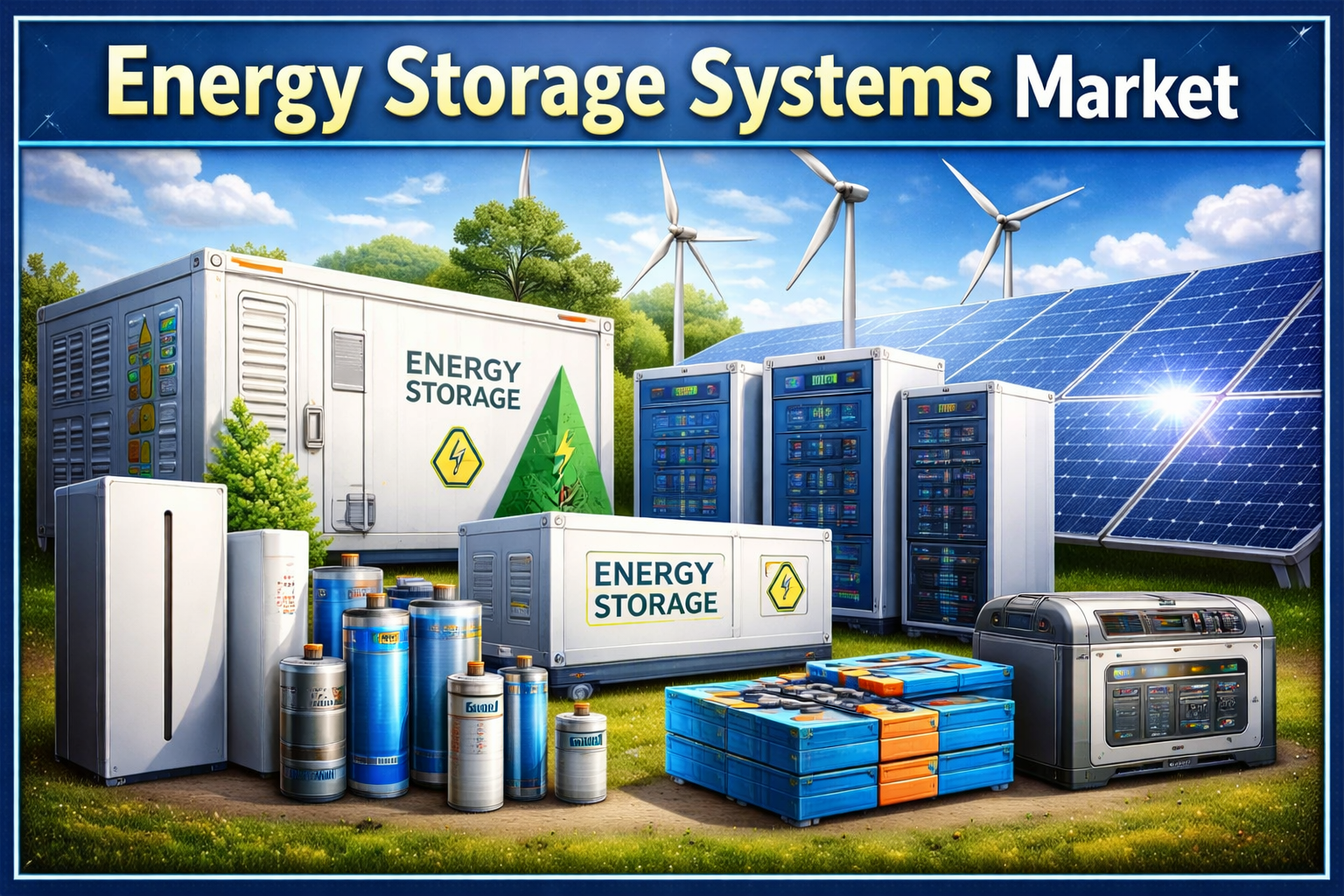
The rapid transformation of global energy infrastructure is placing energy storage systems at the center of the clean energy transition. As renewable energy sources such as solar and wind continue to expand, the need for efficient, scalable, and intelligent storage solutions has become critical. From stabilizing power grids to enabling decentralized energy ecosystems, modern battery energy storage technologies are reshaping how electricity is generated, stored, and consumed.
The Rising Role of Energy Storage in a Renewable-Driven Grid
One of the most defining trends in the current landscape is the integration of grid energy storage with renewable energy projects. Unlike conventional power generation, renewables are intermittent—solar panels generate electricity only when the sun shines, and wind turbines depend on wind availability. This variability has elevated the importance of energy storage systems as a balancing mechanism that ensures consistent power supply.
Utility-scale battery energy storage installations are rapidly expanding across developed and emerging economies. These systems store excess electricity during periods of high generation and discharge it during peak demand, effectively smoothing out fluctuations. Additionally, advancements in lithium-ion and next-generation battery chemistries are significantly improving energy density, lifecycle performance, and cost efficiency, making storage solutions more economically viable than ever before.
Technological Advancements Driving Innovation
Innovation remains a key growth driver in the energy storage space. While lithium-ion batteries dominate the market, alternative technologies such as solid-state batteries, flow batteries, and thermal energy storage systems are gaining traction. Each of these technologies offers unique advantages depending on the application.
For instance, thermal energy storage is increasingly being deployed in concentrated solar power plants and industrial applications. By storing energy in the form of heat, these systems can provide long-duration storage at a lower cost compared to conventional batteries. Meanwhile, flow batteries are emerging as a promising solution for large-scale grid energy storage due to their ability to deliver consistent performance over extended cycles.
Digitalization is also playing a transformative role. Artificial intelligence and advanced energy management systems are optimizing the performance of energy storage systems, enabling predictive maintenance, real-time monitoring, and improved energy dispatch strategies. These intelligent systems are particularly valuable in complex grid environments where multiple energy sources and storage units must operate in sync.
Expanding Applications Across Sectors
The application scope of battery energy storage is expanding beyond utilities into commercial, industrial, and residential sectors. Businesses are increasingly adopting storage systems to reduce electricity costs, manage demand charges, and enhance energy resilience. In regions with unreliable grid infrastructure, energy storage systems are providing a dependable backup solution, ensuring uninterrupted operations.
Electric mobility is another major contributor to the growth of storage technologies. The proliferation of electric vehicles (EVs) is driving demand for advanced battery systems, while also creating opportunities for vehicle-to-grid (V2G) integration. This concept allows EVs to act as mobile storage units, feeding electricity back into the grid when needed, thereby supporting grid energy storage capabilities.
In residential settings, homeowners are pairing rooftop solar installations with compact battery energy storage units. This combination not only reduces reliance on the grid but also empowers consumers to participate in decentralized energy networks. As energy independence becomes a priority, such distributed storage solutions are expected to gain significant momentum.
Market Momentum and Strategic Outlook
A notable shift in the market is the increasing involvement of governments and regulatory bodies in promoting energy storage adoption. Policy incentives, subsidies, and supportive frameworks are accelerating investments in energy storage systems worldwide. Countries are recognizing that achieving ambitious climate targets is nearly impossible without robust storage infrastructure.
In this context, the broader market trajectory reflects strong and sustained growth. The global energy storage systems market is expected to reach 512.41 GW by 2030, growing at a CAGR of 11.6% from 2023 to 2030. This projection underscores the critical role of storage technologies in the evolving energy ecosystem.
Further reinforcing this outlook, a report published by Grand View Research highlights the increasing deployment of grid energy storage solutions to enhance grid stability and support renewable integration. The report also emphasizes the growing importance of thermal energy storage in industrial decarbonization efforts, where high-temperature processes require reliable and cost-effective energy storage alternatives.
As competition intensifies, leading companies are focusing on strategic partnerships, vertical integration, and research and development to strengthen their market position. Investments in recycling and second-life battery applications are also gaining attention, addressing sustainability concerns associated with large-scale battery energy storage deployment.
Conclusion
The evolution of energy storage systems is fundamentally transforming the global energy landscape. With continuous advancements in battery energy storage, increasing adoption of grid energy storage, and the emergence of innovative solutions like thermal energy storage, the sector is poised for significant expansion. As energy systems become more decentralized, digitalized, and decarbonized, storage technologies will remain a cornerstone of this transition—bridging the gap between energy generation and consumption while enabling a more resilient and sustainable future.

 English
 Arabic
 French
 Spanish
 Portuguese
 Deutsch
 Turkish
 Dutch
Dutch
 Italiano
 Russian
 Romaian
 Greek
Greek
