


EPR Registration for Used Oil in India: Complete Guide for Businesses
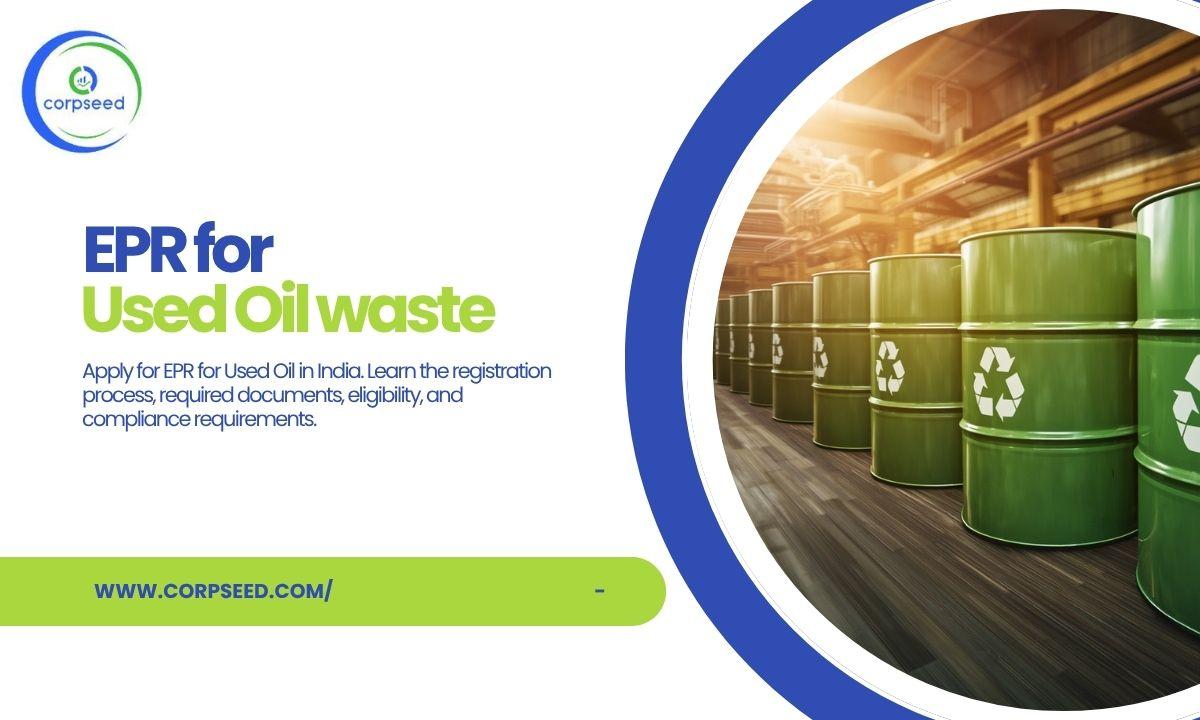
Managing hazardous waste is no longer optional—it is a regulatory necessity. EPR registration for used oil has become a key requirement for businesses in India dealing with oil production, import, or recycling. Improper disposal of used oil can lead to serious environmental damage, including soil contamination and water pollution.
To address this issue, the government introduced Extended Producer Responsibility (EPR), making businesses accountable for the safe handling of waste generated from their products. Understanding this framework is essential for companies aiming to stay compliant while also supporting sustainable practices.
What is EPR Registration for Used Oil?
Extended Producer Responsibility (EPR) is an environmental policy that holds producers responsible for managing the lifecycle of their products, including post-consumer waste.
Under EPR registration for used oil, businesses are required to:
- Ensure proper collection of used oil
- Channel waste to authorized recyclers
- Meet recycling targets defined by authorities
This system operates under the Hazardous and Other Wastes (Management and Transboundary Movement) Rules, 2016 and is regulated by the Central Pollution Control Board (CPCB).
Why EPR Registration for Used Oil Matters
Protecting the Environment
Used oil contains harmful contaminants such as heavy metals and toxic chemicals. Proper recycling helps prevent pollution and protects natural resources.
Ensuring Legal Compliance
Non-compliance with EPR regulations may result in:
- Heavy fines
- Legal proceedings
- Business restrictions or closure
Promoting Resource Efficiency
Recycling used oil reduces the need for fresh raw materials, conserving energy and natural resources.
Who Must Obtain EPR Registration?
EPR registration is mandatory for the following entities:
Producers
- Manufacturers of lubricants and oil-based products
- Businesses introducing oil into the Indian market
Importers
- Companies importing oil or oil-containing products
Recyclers and Re-refiners
- Facilities engaged in processing used oil into reusable forms
Collection Agencies
- Entities responsible for collecting used oil from industries or consumers
Core Elements of EPR for Used Oil
Recycling Targets
Businesses must achieve specific recycling percentages based on their production or import volume.
Collection Mechanism
A proper system must be established to collect used oil efficiently.
Authorized Recycling Channels
Only certified recyclers are permitted to process used oil.
Compliance Reporting
Periodic reporting and documentation submission are required for regulatory monitoring.
Step-by-Step Process for EPR Registration for Used Oil
Step 1: Determine Your Business Category
Identify whether you are a producer, importer, or recycler.
Step 2: Register on the CPCB Portal
Create an account on the official CPCB platform.
Step 3: Upload Required Documents
Submit all necessary documents for verification.
Step 4: Submit EPR Plan
Your plan should clearly define:
- Collection strategy
- Recycling targets
- Disposal methods
Step 5: CPCB Review and Approval
Authorities review the application and grant approval if all criteria are met.
Step 6: Maintain Ongoing Compliance
Track activities and submit periodic reports to maintain compliance status.
Documents Required for EPR Registration
- Company Registration Certificate (proof of incorporation)
- GST Certificate (tax registration proof)
- PAN Card (business identification)
- Import Export Code (IEC) for importers
- Authorization from State Pollution Control Board (SPCB)
- EPR Plan outlining waste management strategy
- Agreements with authorized recyclers
EPR Targets for Used Oil
EPR targets are defined based on the quantity of oil placed in the market.
Standard Target Progression:
- Year 1: 30% recycling obligation
- Year 2: 50% recycling obligation
- Year 3: 70% recycling obligation
These targets are subject to updates by regulatory authorities.
Benefits of EPR Registration for Used Oil
Regulatory Compliance
Helps businesses meet all legal environmental requirements.
Improved Brand Image
Shows commitment to sustainability and responsible operations.
Efficient Waste Management
Encourages structured and trackable waste handling processes.
Environmental Sustainability
Supports pollution control and resource conservation.
Challenges in EPR Compliance
Many businesses encounter challenges such as:
- Complex documentation requirements
- Evolving regulatory framework
- Limited access to authorized recyclers
- Difficulty in monitoring waste collection
Practical Solutions
- Keep documentation organized and updated
- Stay informed about regulatory changes
- Partner with certified recyclers
- Use digital tools for tracking and reporting
Best Practices for EPR Compliance
- Maintain accurate production and waste records
- Work only with authorized recycling partners
- Conduct regular internal compliance audits
- Implement technology for waste tracking
- Follow CPCB guidelines consistently
Authoritative References
- Central Pollution Control Board (CPCB)
- Ministry of Environment, Forest and Climate Change (MoEFCC)
- Hazardous and Other Wastes Rules, 2016
Frequently Asked Questions:
1. What is EPR registration for used oil?
It is a mandatory compliance process requiring businesses to manage the collection, recycling, and disposal of used oil responsibly.
2. Who regulates EPR for used oil in India?
The Central Pollution Control Board (CPCB) oversees and regulates EPR compliance.
3. How long does the EPR registration process take?
The process typically takes 15 to 30 working days, depending on document accuracy.
4. Is EPR registration compulsory for all businesses?
It is mandatory for producers, importers, recyclers, and collection agencies dealing with used oil.
5. What are the consequences of non-compliance?
Non-compliance may result in penalties, legal action, and suspension of operations.
Conclusion
EPR registration for used oil is a crucial requirement for businesses aiming to operate responsibly in today’s regulatory environment. It not only ensures legal compliance but also promotes sustainable waste management practices.

 English
 Arabic
 French
 Spanish
 Portuguese
 Deutsch
 Turkish
 Dutch
Dutch
 Italiano
 Romaian
 Portuguese (Brazil)
 Greek
Greek
