


CRM Solutions for Retail Businesses: Features, Benefits, and Implementation
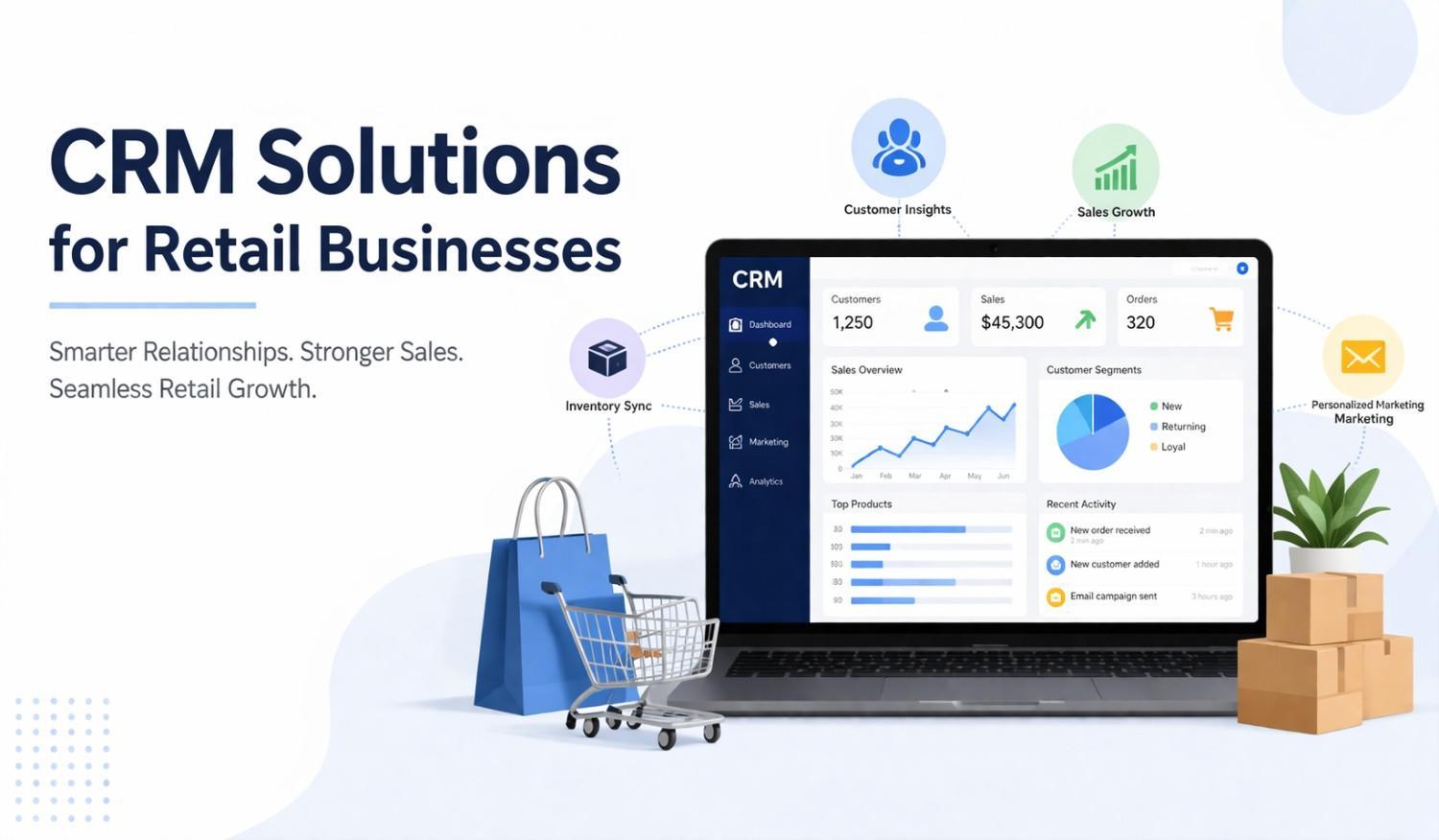
Retail today feels like a constant balancing act—customers expect instant responses, personalized offers, and seamless experiences all at once. Meanwhile, many businesses still juggle scattered spreadsheets and disconnected tools hardly a recipe for growth. This is where CRM steps in, quietly but effectively transforming chaos into clarity. Over the years, we have seen retailers move from reactive selling to proactive engagement and yes, the difference is dramatic. A well-designed CRM solution doesn’t just store data—it builds relationships. So, what makes CRM truly indispensable for retail businesses? Let’s explore.
Understanding CRM in Retail (Why It Matters)
CRM in retail is not just about managing contacts—it’s about understanding customers at every touchpoint. Unlike generic systems, retail-focused CRM solutions track purchase behavior, preferences, and engagement patterns across channels. This allows businesses to connect online browsing with in-store purchases (a connection many underestimate). The result is a unified customer view that drives smarter decisions. In a world where customers switch channels effortlessly, having that clarity is no longer optional. Naturally, this raises an important question—what features actually make a CRM system effective for retail?
Customer Data Management
At the heart of every successful CRM lies clean, centralized customer data. Retail businesses benefit from having detailed profiles that include purchase history, preferences, and interaction records—all in one place. This eliminates guesswork and replaces it with actionable insight (which is far more reliable than memory alone). When data is organized and accessible, teams can respond faster and serve customers better. It may sound simple, but centralized data often becomes the difference between missed opportunities and meaningful engagement—something every retailer quickly learns.
Sales Automation
Sales automation removes the repetitive tasks that slow teams down—follow-ups, reminders, and pipeline tracking become effortless. This allows retail teams to focus on what actually matters: building relationships and closing sales. Automation ensures no lead is forgotten (even on the busiest days), which can significantly improve conversion rates. It also introduces consistency in processes, reducing human error. While some worry about losing the “human touch,” the reality is quite the opposite—automation frees up time for more meaningful interactions, which customers genuinely appreciate.
Inventory Integration
Inventory and customer demand rarely align perfectly—but CRM integration brings them closer. By connecting sales data with inventory systems, retailers gain real-time visibility into stock levels and buying patterns. This reduces the chances of overselling or disappointing customers with out-of-stock items (an awkward scenario every retailer knows too well). It also helps forecast demand more accurately. When inventory decisions are guided by customer insights, businesses operate more efficiently—and customers leave more satisfied. That’s a win on both sides.
Omnichannel Communication
Modern retail spans multiple channels—email, social media, SMS, and in-store interactions. CRM solutions unify these touchpoints into a single communication hub, ensuring consistent messaging across platforms. Customers no longer feel like they’re interacting with different brands depending on the channel (which happens more often than expected). Instead, every interaction feels connected and intentional. This consistency builds trust over time. After all, customers don’t think in channels—they think in experiences, and CRM helps businesses meet them where they are.
Analytics and Reporting
Data is everywhere, but insight is what truly matters. CRM systems provide real-time analytics and reporting tools that turn raw data into meaningful patterns. Retailers can track sales trends, customer behavior, and campaign performance with ease. This eliminates reliance on guesswork and supports informed decision-making. Over time, these insights reveal opportunities that might otherwise go unnoticed (and sometimes, those opportunities are surprisingly obvious in hindsight). With the right analytics, businesses can move from reactive strategies to proactive growth.
Personalization Capabilities
Personalization is no longer a luxury—it’s an expectation. CRM solutions enable retailers to tailor offers, recommendations, and communications based on individual customer preferences. This creates a more engaging and relevant shopping experience. Customers are far more likely to respond when they feel understood (rather than targeted broadly). Personalization also strengthens brand loyalty over time. While it may seem complex, the right CRM makes it surprisingly manageable—and incredibly effective.
Improved Customer Experience
Customer experience sits at the core of retail success, and CRM plays a crucial role in enhancing it. Faster responses, personalized communication, and consistent service all contribute to a better overall experience. When customers feel valued, they are more likely to return—and recommend the brand to others. CRM systems ensure that no interaction feels random or disconnected. Instead, every engagement builds on the last, creating a seamless journey that customers appreciate (even if they don’t consciously notice it).
Increased Sales and Conversions
Better insights naturally lead to better sales outcomes. CRM systems help identify high-potential leads, optimize sales funnels, and deliver targeted campaigns. This increases conversion rates without necessarily increasing effort. Retailers can focus on the right customers at the right time—a simple concept that delivers powerful results. Many businesses leveraging crm software development services discover that even small improvements in targeting can lead to significant revenue growth. It’s not about working harder—it’s about working smarter.
Enhanced Customer Retention
Acquiring new customers is important, but retaining existing ones is often more valuable. CRM solutions support loyalty programs, track engagement, and identify at-risk customers before they churn. This allows businesses to take proactive steps to maintain relationships. Retention strategies become more precise and effective when backed by data. Over time, this leads to stronger customer loyalty and higher lifetime value. And in retail, loyal customers are often the most reliable source of growth.
Operational Efficiency
Efficiency improves when processes are streamlined and centralized. CRM systems reduce manual tasks, eliminate duplication, and improve workflow coordination across teams. This not only saves time but also reduces operational costs. Employees can focus on strategic activities instead of repetitive work. The result is a more agile and responsive organization. While efficiency gains may not always be immediately visible, they quickly add up—often becoming one of the most valuable benefits of CRM adoption.
Data-Driven Decision Making
Decisions based on data tend to outperform those based on intuition alone. CRM systems provide the insights needed to guide strategy, from marketing campaigns to inventory planning. Retailers can identify trends, measure performance, and adjust quickly. This reduces risk and improves outcomes. In a competitive market, having accurate data can be a significant advantage. It transforms decision-making from reactive to strategic—something every growing business aims to achieve.
Identify Business Needs
Successful CRM implementation begins with clarity. Retail businesses must define their goals—whether it’s improving sales, enhancing customer experience, or streamlining operations. Without clear objectives, even the best tools can fall short. Taking time to understand specific needs ensures the chosen solution aligns with business priorities. It also helps avoid unnecessary complexity. A focused approach at this stage sets the foundation for long-term success (and prevents costly adjustments later).
Choose the Right CRM Solution
Selecting the right CRM is a critical decision. Retailers must evaluate whether an off-the-shelf solution meets their needs or if a custom approach is required. This is where experienced CRM software developers can provide valuable guidance. The goal is to find a system that is scalable, user-friendly, and aligned with business workflows. A well-chosen CRM adapts as the business grows, rather than becoming a limitation. Making the right choice early can save significant time and resources.
Data Migration and Integration
Migrating existing data into a new CRM system requires careful planning. Customer records, transaction history, and operational data must be transferred accurately to avoid disruptions. Integration with existing systems—such as inventory and billing—is equally important. When done correctly, this creates a seamless flow of information across the organization. While the process can seem daunting, proper execution ensures a smooth transition and sets the stage for effective CRM usage.
Employee Training and Adoption
Even the most advanced CRM system is only as effective as the people using it. Training employees to understand and adopt the system is essential. This includes demonstrating how CRM simplifies their tasks and improves outcomes. Resistance to change is common, but clear communication and practical training can ease the transition. When teams see the benefits firsthand, adoption becomes much smoother. Ultimately, success depends on people as much as technology.
Testing and Optimization
CRM implementation doesn’t end at deployment—it evolves over time. Testing helps identify gaps, inefficiencies, and opportunities for improvement. Retail businesses should continuously monitor performance and make necessary adjustments. One retail client initially struggled with adoption, but after refining workflows and simplifying processes, the results improved significantly (a reminder that patience pays off). Optimization ensures the CRM remains aligned with business goals as those goals evolve.
Common Challenges and How to Overcome Them
CRM adoption comes with challenges—resistance to change, poor data quality, and overly complex systems are common hurdles. Addressing these issues requires a practical approach. Simplifying workflows, maintaining clean data, and involving employees early can make a significant difference. Budget constraints can also be managed by prioritizing essential features first. The key is to focus on usability and value rather than unnecessary complexity. After all, a simple system used well often outperforms a complex one ignored.
Best Practices for CRM Success in Retail
Success with CRM depends on consistent best practices. Keeping the system simple, focusing on customer needs, and regularly updating data are essential steps. Monitoring performance metrics helps identify what works and what doesn’t. Aligning CRM strategies with business goals ensures long-term relevance. Retailers should also remain flexible, adapting the system as needs evolve. When these practices are followed, CRM becomes a powerful tool rather than just another piece of software.
Future Trends in Retail CRM
The future of retail CRM is shaped by technology and customer expectations. AI-driven personalization, predictive analytics, and mobile-first solutions are becoming increasingly important. These advancements allow businesses to anticipate customer needs rather than simply respond to them. Integration with emerging technologies will further enhance capabilities. As retail continues to evolve, CRM systems will play an even greater role in driving innovation and growth. Staying ahead of these trends can provide a significant competitive advantage.
Conclusion
CRM solutions have moved from being optional tools to essential components of retail success. They bring structure to customer data, clarity to decision-making, and consistency to customer experiences. While implementation requires effort, the long-term benefits far outweigh the challenges. Retail businesses that embrace CRM thoughtfully often discover new opportunities for growth. In the end, it’s not just about managing customers—it’s about building lasting relationships and that, more than anything, defines success in retail.
FAQs
1. What is a CRM system in retail?
A CRM system in retail helps manage customer data, track interactions, and improve engagement across multiple channels.
2. How does CRM improve retail sales?
CRM improves sales by enabling targeted marketing, better lead management, and personalized customer interactions.
3. Is custom CRM better for retail businesses?
Custom CRM can be more effective when businesses have specific needs that standard solutions cannot address.
4. What features should a retail CRM include?
Key features include customer data management, sales automation, analytics, and omnichannel communication.
5. How long does CRM implementation take?
Implementation timelines vary but typically range from a few weeks to several months, depending on complexity.
6. Can small retail businesses benefit from CRM?
Yes, CRM systems are scalable and can help small businesses improve efficiency, customer relationships, and growth.

 English
 Arabic
 French
 Spanish
 Portuguese
 Deutsch
 Turkish
 Dutch
Dutch
 Russian
 Romaian
 Portuguese (Brazil)
 Greek
Greek
