


Your Complete Guide to Buying Wooden Flooring Tile
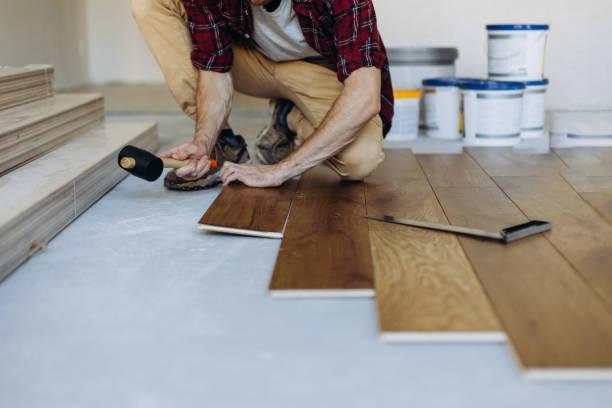
Shopping for floor tiles used to mean choosing between cold, clinical looks or the expense and fragility of real hardwood. That trade-off no longer exists in the way it once did. Wooden flooring tile has transformed what is possible in interior design, giving homeowners access to the warmth and character of timber combined with the longevity and practicality of tile. But with the category growing so rapidly, the number of choices available can feel genuinely overwhelming.
This guide is designed to cut through the noise. Whether you are tiling a single bathroom or planning a whole-home refurbishment, understanding what separates good wood-look tile from great wood-look tile will save you money and ensure you end up with a floor you are still proud of years from now. For additional context on how wooden flooring tile fits into the broader flooring landscape, our flooring materials overview is worth reading first.
Choosing Between Porcelain and Ceramic
The first decision in any tile purchase is the material itself. Both porcelain and ceramic tiles are available in wood-effect designs, and while they look similar on the shelf, their performance characteristics are quite different. Porcelain is denser, harder, and less porous than ceramic. It handles moisture better, resists surface scratching more effectively, and is generally considered the premium option.
Ceramic wood-look tile is softer, lighter, and easier to cut, which can reduce installation costs. It is a perfectly acceptable choice for lower-traffic areas and rooms without significant moisture exposure. For bathrooms, kitchens, hallways, and any space with heavy daily use, porcelain is the stronger investment despite its higher upfront cost.
Understanding Tile Ratings and Specifications
PEI Hardness Rating
The Porcelain Enamel Institute rating system classifies tiles from Class 1 to Class 5 based on their resistance to surface abrasion. Class 1 is suitable only for wall use. Class 3 covers light residential foot traffic. Class 4 is appropriate for normal residential and light commercial use, and Class 5 handles heavy commercial traffic. For most family homes, a Class 3 or 4 wooden flooring tile provides more than adequate durability, while households with pets or heavy footfall should consider Class 4 or 5.
R-Value Slip Resistance
Slip resistance is rated on an R scale from R9 to R13. R9 tiles have a smooth finish appropriate for dry indoor areas. R10 provides moderate slip resistance suitable for kitchens and living rooms. R11 and above is recommended for wet rooms, bathrooms, and outdoor applications. When purchasing wood-look tile for any wet environment, never go below R10, and R11 is the safer choice for peace of mind.
Water Absorption Rate
Tiles are classified by their water absorption rate. Porcelain tiles fall into the impervious category with absorption below 0.5 percent. Ceramic tiles absorb more water and fall into higher absorption categories. For bathroom floors, wet rooms, or any area with direct water exposure, choosing impervious or vitreous-rated tiles is essential to prevent long-term issues with water ingress.
Tile Dimensions and Layout Planning
Wooden flooring tile is produced in a wide range of plank-like dimensions. Common sizes include 150x600mm, 200x1200mm, and 300x1200mm. Larger format tiles create a more contemporary, seamless feel and are particularly striking in open-plan spaces. Smaller plank formats work well in period properties or compact rooms where oversized tiles might look out of proportion.
Before purchasing, sketch the room layout and calculate how the tiles will fall across the space. Avoid situations where cut tiles at the edges of the room are narrower than one-third of the full tile width — this creates an unbalanced appearance that is immediately noticeable. Starting from the centre of the room and working outward is a common technique to achieve symmetrical cuts on opposite walls.
Evaluating Visual Realism
The quality of the visual reproduction varies significantly between manufacturers and price points. Entry-level wood-effect tiles often have limited design variation, meaning you notice the same pattern repeating across the floor. Quality ranges use high-definition printing with multiple face variations — sometimes eight or more — so that no two adjacent tiles look identical. This random variation is what creates genuine visual credibility.
Surface texture matters just as much as the printed image. The best wooden flooring tile products use embossed-in-register technology, where the physical texture of the surface aligns precisely with the printed grain pattern. Running your hand across one of these tiles, you feel the ridges of the grain where you see them. This level of detail makes the difference between a floor that impresses and one that looks like an imitation.
Budgeting Accurately for Your Project
Material costs for wood-look tile range from around eight to sixty-plus pounds per square metre depending on quality, format, and brand. Installation by a professional tiler adds further cost — typically between twenty and forty pounds per square metre depending on location and job complexity. Adhesive, grout, tile spacers, and any subfloor preparation work should all be factored into your total budget.
Always order ten to fifteen percent more tile than your measured area to account for cuts, breakages, and future repairs. Using tiles from different batches can result in colour variation that is visible once laid, so purchasing all your tiles in a single order from the same production batch number is strongly advisable.
Conclusion
Buying wooden flooring tile well comes down to matching the right technical specifications to your specific room conditions, understanding the visual quality differences between price points, and planning the project thoroughly before a single tile is laid. The category rewards careful shoppers — the right tile will look exceptional and perform reliably for the lifetime of your home, while a rushed or uninformed purchase can lead to regret within a few years. Take your time, handle samples in your own light, and trust the specifications as much as the aesthetics.
Frequently Asked Questions
Q1: How much tile should I order for a 20 square metre room?
For a standard rectangular room, order your measured area plus fifteen percent for a straight lay pattern. For a 20 square metre room, order approximately 23 square metres. For diagonal or herringbone patterns, increase the overage to twenty percent to account for the additional cuts required at the perimeter.
Q2: What is the best grout colour for wood-look tile?
A grout colour that closely matches the mid-tone of the tile creates the most seamless result and allows the floor to read as a continuous surface. Contrasting grout draws attention to the tile grid, which can look striking but also emphasises any slight irregularities in the installation. For most wood-effect tiles, a warm beige or grey tone works well.
Q3: Can wooden flooring tile be laid over existing floor tiles?
In many cases, yes — provided the existing tiles are fully adhered, the surface is flat and sound, and the additional height increase is manageable at doorways and transitions. If any existing tiles are loose or hollow, they must be removed and the substrate repaired before new tiles are laid on top.

 English
 Arabic
 French
 Spanish
 Portuguese
 Deutsch
 Turkish
 Dutch
Dutch
 Russian
 Romaian
 Portuguese (Brazil)
 Greek
Greek
