


The Rise of Fashion Tech: AI, AR & Wearables
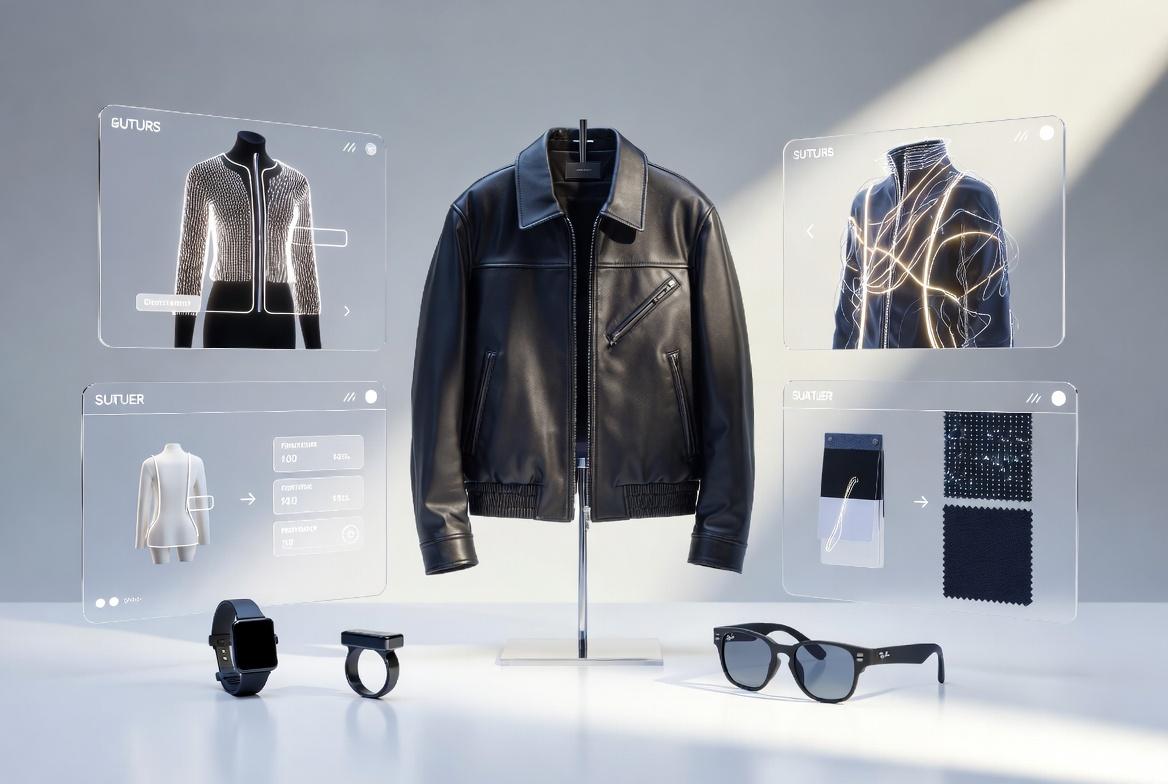
Fashion has always been about transformation, but in 2026, the transformation is not happening only on the runway. It is happening in the algorithm, the augmented reality mirror, and the fabric itself. The rise of fashion technology, spanning artificial intelligence, augmented reality, and wearable devices, is rewriting every rule the industry has lived by for a century.
This is not a future story. This is happening right now. The world's biggest fashion brands are deploying AI to design collections, AR to sell them, and smart textiles to wear them. In this guide, we break down exactly how AI, AR, and wearables are transforming fashion in 2026. What it means for brands, what it means for consumers, and where all of it is heading.
📌 Who This Is For: Fashion professionals tracking industry disruption, consumers curious about how technology affects their shopping, and business leaders assessing fashion-tech's commercial implications.
FASHION TECH: 2026 KEY STATISTICS
|
$1.2T |
Fashion-tech convergence market projected value by 2030 |
|
340% |
Growth in AI styling app downloads since 2023 |
|
67% |
Shoppers who say AR try-on increases purchase confidence |
|
$186B |
Global wearable technology market size projected for 2027 |
"Technology will not replace great fashion designers — but designers who use technology will replace those who do not."
PART ONE · ARTIFICIAL INTELLIGENCE IN FASHION
AI.01 AI Is Redesigning Fashion Design
The creative process in fashion has always been deeply human. But in 2026, AI has become an extraordinary creative collaborator not replacing the designer's vision, but amplifying it. AI tools now generate thousands of pattern variations in seconds, predict which colour combinations will resonate with specific demographics, and produce photorealistic fabric simulations that eliminate expensive physical sampling.
Major fashion houses including Balenciaga, Inditex, and H&M Group have all disclosed that AI is now embedded in their design and trend forecasting workflows. Independent designers access these tools through platforms like Adobe Firefly and CLO 3D making AI-assisted design available across the entire industry spectrum.
💡 INSIGHT: McKinsey's 2026 State of Fashion Technology report found that brands using AI in their design process reduced time-to-market by 35%, cut sample production costs by 28%, and saw a 19% improvement in sell-through rates — because AI-assisted designs are more precisely calibrated to consumer demand.
|
AI Application |
What It Does |
Industry Adoption 2026 |
|
Generative Pattern Design |
Creates thousands of print/pattern variations from a brief |
42% of mid-to-large brands |
|
Trend Forecasting |
Analyses social, runway & retail data to predict trends |
61% of major retailers |
|
3D Digital Sampling |
Photorealistic garment samples without physical fabric |
38% of fashion brands |
|
Demand-Led Design |
Designs based on real-time consumer purchasing signals |
29% of fast fashion brands |
📌 Key Difference: AI works best in fashion as a powerful tool in the hands of a creative director — not as a replacement for human vision. Brands winning with AI use it to eliminate friction in the creative process, not to automate creativity itself.
AI.02 AI-Powered Personal Styling & Shopping
The experience of discovering and buying fashion has been permanently altered by artificial intelligence. In 2026, the AI styling assistant, once a novelty, has become a standard expectation across retail platforms. AI systems now know your measurements, style preferences, purchase history, and budget, curating recommendations with a precision no human stylist could match at scale.
The most sophisticated platforms in 2026 are full-stack personal fashion advisors — building complete outfit systems from wardrobe audits, identifying gaps, and suggesting investment pieces based on cost-per-wear analysis. Personalised recommendations driven by AI now account for an estimated 35% of all online fashion purchases.
💡 INSIGHT: Stitch Fix reported that clients engaging with its AI recommendation engine spend 2.4x more per year than those who do not. Amazon's fashion AI division has filed over 300 patents related to clothing recommendation and virtual fitting technology since 2022.
📌 Consumer Benefit: AI styling has democratised access to premium personal styling guidance — a service once exclusive to high-net-worth individuals who could afford a dedicated human stylist. In 2026, anyone with a smartphone gets that level of personalisation for free.
AI.03 AI in Supply Chain & Sustainability
Perhaps the least visible but most commercially significant application of AI in fashion is in the supply chain. In 2026, AI systems optimise every link in the chain — from raw material sourcing and production scheduling to inventory management and end-of-life recycling.
AI-driven demand forecasting has reduced overproduction by up to 40% in brands that have fully implemented it — addressing fashion's most significant source of environmental waste. When a brand produces closer to what it will actually sell, the result is less unsold inventory, fewer markdowns, and dramatically less textile waste.
💡 INSIGHT: The Ellen MacArthur Foundation estimates that AI-optimised supply chains could reduce the fashion industry's carbon emissions by up to 45% by 2030 — making AI not just a business tool, but potentially the most impactful environmental intervention available to fashion brands.
PART TWO · AUGMENTED REALITY IN FASHION
AR.01 Virtual Try-On: The End of the Dressing Room Problem
AR try-on technology has completed its journey from tech demo to commercial standard in 2026. Using computer vision and body-mapping algorithms to overlay photorealistic garment simulations onto a live image of the user's body, the best systems now accurately represent how a specific garment will drape, fold, and fit — accounting for fabric weight and elasticity.
The commercial impact has been extraordinary. Brands with AR try-on report return rate reductions of 25-40% — one of the most significant cost levers available in e-commerce. Conversion rates for product pages with AR try-on features are consistently 2-3x higher than those without.
💡 INSIGHT: ASOS reported that its AR try-on feature reduced returns by 37% and increased add-to-cart rates by 31%. Similar results have been reported by Zara, Nike, and Warby Parker across their respective AR implementations.
|
AR Application |
Technology Used |
Commercial Benefit |
|
Full-body clothing try-on |
Body mapping + 3D garment rendering |
25-40% return rate reduction |
|
Glasses & accessories |
Facial recognition + AR overlay |
Up to 3x conversion lift |
|
Footwear AR fitting |
Foot scanning + size recommendation |
22% reduction in size-related returns |
|
Makeup & beauty AR |
Skin tone mapping + product simulation |
48% increase in beauty conversion |
AR.02 AR Fashion in Social Media & Digital Identity
The most culturally significant deployment of AR in fashion is on social media. In 2026, AR fashion filters on Instagram, TikTok, and Snapchat have created an entirely new category of fashion consumption: digital fashion worn in virtual and mixed-reality environments. Fashion brands now design explicitly for digital environments alongside their physical collections — creating AR filters and digital garments that carry genuine brand equity.
Platforms like DressX and The Fabricant have established commercial markets for digital-only garments — fashion items photographed or animated onto a digital image of the buyer for social media use. The consumer appetite for digital self-expression through fashion is real, measurable, and growing rapidly.
📌 What Digital Fashion Means: Digital fashion allows consumers to experiment with bold styles and luxury brands they might never purchase physically. For sustainability-conscious consumers, it provides a way to participate in fashion culture without generating physical textile waste.
AR.03 Spatial Computing & the Future of Fashion Retail
Spatial computing devices — led by Apple Vision Pro — have opened an entirely new frontier for fashion retail. Spatial computing blends physical and digital environments, allowing consumers to interact with virtual fashion content in their actual physical space. Imagine browsing a fully interactive virtual showroom in your living room, seeing every garment at 1:1 scale, examining fabric texture at close range, and placing an order — without leaving your home.
💡 INSIGHT: Apple reported that fashion and retail are among the top three use cases being developed by enterprise partners for Vision Pro. Gucci has already launched a fully spatial fashion experience that allows users to tour a virtual version of its Florentine archive in immersive 3D.
PART THREE · WEARABLE TECHNOLOGY & SMART TEXTILES
WT.01 Smart Wearables: Where Technology Meets the Body
Wearable technology has reached a level of sophistication in 2026 that is bringing it firmly into the domain of fashion, not just fitness technology. The defining shift is that the best wearables in 2026 are designed to be worn, not just used. They are crafted with the same attention to aesthetics and materiality as fine accessories.
The Apple Watch Ultra, Oura Ring, Ray-Ban Meta glasses, and Samsung Galaxy Ring represent a new generation of wearables where technology and design have achieved genuine integration. These are not devices with a fashion veneer — they are designed objects where technology and aesthetic are developed in parallel, each serving the other.
💡 INSIGHT: The global wearable technology market was valued at $116 billion in 2024 and is projected to reach $186 billion by 2027. The fastest-growing categories are smart rings (52% CAGR), smart glasses (47% CAGR), and hearables — smart earbuds with health monitoring capabilities (38% CAGR).
|
Wearable Category |
2026 Leaders |
Fashion Integration |
Key Function |
|
Smartwatches |
Apple Watch, Samsung Galaxy Watch |
High — luxury collaborations |
Health monitoring, payments |
|
Smart Rings |
Oura Ring, Samsung Galaxy Ring |
Very High — jewellery-level design |
Sleep, HRV, activity tracking |
|
Smart Glasses |
Ray-Ban Meta, Apple Vision Pro |
Developing — evolving aesthetically |
AR overlay, AI assistant |
|
Smart Footwear |
Nike Adapt, Puma Fi |
Medium — performance meets fashion |
Auto-lacing, gait analysis |
WT.02 Smart Textiles: When the Fabric Becomes Technology
Beyond wearable devices, the frontier of fashion technology extends into the fabric itself. Smart textiles — materials engineered with electronic components or reactive fibres — give clothing functional capabilities beyond simply covering the body. The most advanced in 2026 include temperature-regulating fabrics, UV-sensing materials, pressure-sensitive sportswear with real-time athletic feedback, and moisture-wicking textiles with embedded health sensors.
💡 INSIGHT: The smart textiles market, valued at $2.1 billion in 2023, is projected to reach $9.3 billion by 2027 at a 26% CAGR. MIT Media Lab unveiled a smart fabric in 2025 that charges small electronic devices through the wearer's kinetic energy — a breakthrough with significant implications for integrating electronics into everyday clothing.
📌 The Aesthetic Challenge: The primary obstacle to mainstream adoption of smart textiles is aesthetic, not technical. Most consumers will not compromise how their clothing looks and feels for functional benefits. The brands that crack smart textiles for mainstream fashion will make the technology completely invisible.
WT.03 The Leather Jacket in the Age of Fashion Tech
It is worth pausing within this discussion of fashion tech to acknowledge what technology has not changed — and has perhaps reinforced. Amidst all the AR dressing rooms, AI-generated collections, and sensor-embedded fabrics, the pieces that consistently perform best in both physical and digital fashion contexts are the timeless classics.
The black leather jacket is perhaps the most striking example of this paradox. In an era of constant technological disruption, the leather jacket has not only survived but thrived — appearing across AI-generated lookbooks, virtual try-on platforms, and digital fashion collections with the same authority it commands in physical wardrobes. Fashion AI systems consistently recommend leather jackets as high-ROI investment pieces because their cost-per-wear data is exceptional.
In an age where technology is accelerating change in every corner of fashion, the leather jacket stands as proof that some things do not need to be reinvented — they need to be owned. For those looking to invest in the definitive leather jacket for 2026 and beyond, Leather Jacket Black offers a curated selection of genuine leather jackets built to the standard that timeless pieces demand.
💡 INSIGHT: In virtual try-on analytics across major retail platforms in 2025, leather jackets ranked as the #1 most tried-on outerwear item for both men and women — with the highest conversion rate of any outerwear category at 3.2x the platform average. Technology confirms what fashion has always known: the leather jacket sells itself.
Challenges & Criticisms of Fashion Tech
No honest assessment of fashion technology can ignore its complexities. The same technologies driving innovation also raise important questions.
→ Data Privacy: AI styling apps and smart wearables collect intimate personal data. Who owns it, how it is used, and who has access are questions the industry has not yet resolved.
→ Creative Authorship: When AI generates a fashion design, who is the creator? Copyright law has not kept pace with AI-generated creative work, creating unresolved legal and ethical ambiguity.
→ Accessibility & the Digital Divide: The best fashion tech tools require premium smartphones or expensive devices. This risks creating a two-tier fashion experience divided by technological access.
→ Environmental Paradox: While AI reduces overproduction, data centres running AI systems consume enormous energy and water. The net environmental calculus is more complex than proponents acknowledge.
→ Creative Homogenisation: If every brand's AI is trained on the same data, it may converge on the same commercially optimised aesthetics — eroding the creative diversity that makes fashion culturally valuable.
💡 INSIGHT: A 2025 survey of 500 independent fashion designers found that 63% expressed concern that AI tools were eroding design originality, while 47% admitted they were already using AI in their own creative process. This tension is the defining creative anxiety of fashion in 2026.
Looking Ahead: Fashion Tech 2027 and Beyond
|
Emerging Technology |
What It Is |
Timeline |
Potential Impact |
|
Biometric Fashion |
Garments that respond to the wearer's emotional and physical state |
2027-2028 |
High — entirely new fashion category |
|
Self-Repairing Textiles |
Fabrics engineered to autonomously heal minor tears and damage |
2028-2029 |
Very High — transforms garment longevity |
|
Climate-Adaptive Clothing |
AI-controlled fabrics that adjust insulation to conditions |
2027 |
High — sportswear and outdoor first |
|
Fully Digital Fashion Weeks |
Immersive virtual runway shows via spatial computing |
2026-2027 |
Medium — augments physical shows |
Conclusion: Fashion at a Technological Inflection Point
The rise of fashion technology — AI, AR, and wearables — is not an incremental evolution. It is a fundamental reimagining of how fashion is created, discovered, experienced, and worn. In 2026, every node in the fashion value chain has been touched by technology, and the pace of that transformation is accelerating.
For consumers, this is overwhelmingly positive. Technology is making fashion more personalised, more accessible, and more sustainable. But the most enduring things in fashion — the pieces that transcend trends and carry genuine emotional meaning — are not the products of algorithms. They are the products of craft, intention, and a deep understanding of what clothes mean to the people who wear them. The future of fashion is the intelligent fusion of both: technology that amplifies human creativity, and craftsmanship that grounds innovation in the physical reality of wearing clothes.
📌 Your Fashion Tech Action Plan: 1. Download one AI styling app and spend 30 minutes setting up your profile. 2. Use AR try-on the next time you shop online — your return rate will drop significantly. 3. Audit your wearables: are you extracting genuine value from the health data they collect? 4. Explore one spatial or digital fashion experience to understand where retail is heading. 5. Use AI outfit builders to discover new ways to wear pieces you already own before buying anything new.

 English
 Arabic
 French
 Spanish
 Deutsch
 Turkish
 Dutch
Dutch
 Italiano
 Russian
 Romaian
 Portuguese (Brazil)
 Greek
Greek
