


How Scalable Are Dual SIM 4G LTE Industrial Routers for Growing Industrial Networks
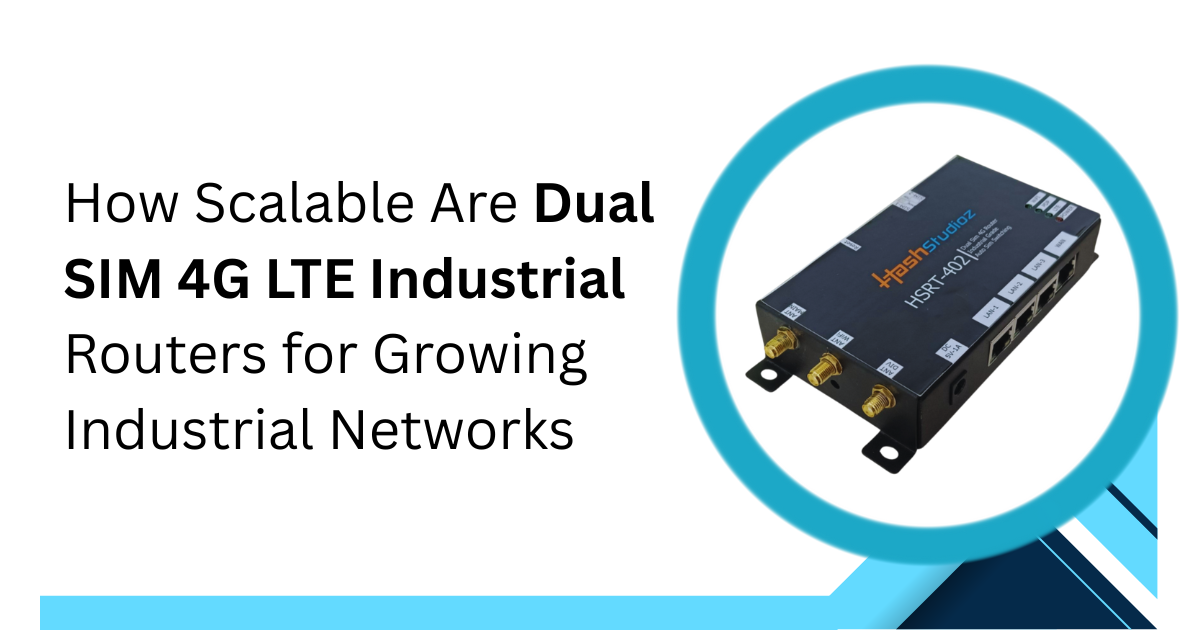
Industrial networks are expanding rapidly, connecting machines, sensors, and control systems across multiple sites. As operations grow, ensuring reliable and flexible connectivity becomes critical. Dual SIM Industrial Routers have emerged as a solution for maintaining constant connectivity while supporting scalability in large industrial networks. This article examines the technical capabilities, scalability, and practical considerations of Dual SIM 4G LTE Industrial Routers.
Understanding Dual SIM Industrial Routers
A Dual SIM 4G LTE Industrial Router is a network device that provides cellular connectivity to industrial systems. Unlike standard routers, these devices include two SIM slots, enabling connections to multiple carriers. This redundancy ensures uninterrupted connectivity even if one network experiences outages or weak signals.
Industrial routers are designed for harsh environments. They often include features such as rugged casings, wide temperature operation, and industrial communication protocols. Common applications include:
-
Remote monitoring of industrial plants
-
Automation and control systems
-
Smart grid and energy distribution networks
-
Mobile fleet management
-
IoT and telemetry networks
By integrating Dual SIM Industrial Routers, organizations can maintain continuous data flow and reduce downtime, supporting the growth of their industrial network.
Key Features Supporting Scalability
Scalability in industrial networks involves adding devices, extending coverage, and maintaining high performance without major redesign. Dual SIM routers provide scalability through several features.
1. Redundancy and Reliability
A primary scalability concern is maintaining uptime. Dual SIM routers provide:
-
Automatic failover: If one SIM loses signal, the router switches instantly to the secondary SIM.
-
Carrier diversity: Using SIMs from different operators reduces the risk of network unavailability.
-
High uptime: Industrial operations can achieve connectivity reliability exceeding 99.9%.
Redundancy ensures networks can expand without compromising critical data flow or operational continuity.
2. Geographic Scalability
Industrial networks often span large areas, including urban, rural, and remote sites. Dual SIM routers enable geographic scalability by:
-
Allowing connection to the best available carrier in each location
-
Extending coverage to areas with weak primary network signals
-
Supporting mobile deployments like vehicles, trains, or construction equipment
For example, in remote solar farms, dual SIM routers allow consistent monitoring across sites, even when one carrier has limited signal strength.
3. Load Management and Bandwidth Optimization
Many industrial operations generate significant data from sensors, cameras, or automated systems. Dual SIM routers enhance scalability by:
-
Balancing traffic between two SIMs to increase overall throughput
-
Preventing network bottlenecks during peak load
-
Ensuring low-latency communication for time-critical applications
This capability allows industrial networks to grow without compromising performance.
4. Device and IoT Integration
As industrial networks expand, they often include hundreds or thousands of IoT devices. Dual SIM routers act as gateways by:
-
Aggregating sensor and machine data
-
Supporting standard industrial protocols like Modbus, MQTT, and OPC-UA
-
Processing data at the edge to reduce network congestion
This ensures that networks can scale to accommodate new devices without major infrastructure changes.
Technical Considerations for Scalability
When assessing the scalability of Dual SIM 4G LTE Industrial Routers, several technical aspects are essential.
1. Cellular Performance
Throughput and latency directly affect the network’s ability to scale:
-
High-bandwidth tasks such as video monitoring require LTE Cat 4 or higher modems
-
Low-latency control operations need consistent response times below 50 milliseconds
-
Redundant SIM slots ensure network availability even under poor signal conditions
Selecting routers with advanced LTE support ensures networks can handle both current and future data demands.
2. Power and Environment
Industrial deployments often face harsh conditions:
-
Wide temperature range (-40°C to +75°C) ensures operation in extreme climates
-
Surge protection and industrial power inputs prevent interruptions
-
Compact, rugged design allows installation in factories, vehicles, or outdoor enclosures
Properly designed hardware supports scalability by allowing routers to be deployed in diverse environments.
3. Network Management
Scalable networks require centralized monitoring and easy configuration. Dual SIM routers often include:
-
Remote firmware updates
-
SIM management and failover policy configuration
-
Cloud-based monitoring for multiple sites
These features reduce operational complexity when adding more devices or sites.
Real-World Applications
1. Energy and Utilities
Electric grids and renewable energy sites use dual SIM routers to ensure reliable connectivity, enable continuous monitoring, support automatic carrier switching, and allow easy expansion across multiple remote locations.
2. Industrial Automation
In industrial automation, dual SIM routers provide reliable connectivity for factories with multiple PLCs and sensors, ensuring uninterrupted communication, supporting additional devices as production expands, and minimizing costly downtime, making them ideal for scalable operations.
3. Transportation and Logistics
In transportation and logistics, dual SIM routers provide mobile fleets with seamless carrier handover, real-time vehicle tracking, and integration of telematics and maintenance data, ensuring reliable connectivity and scalable network coverage across large geographic areas.
4. IoT Networks
In Industrial IoT networks, dual SIM routers reliably aggregate sensor data, support edge processing to reduce network traffic, and allow new devices to be added easily, enabling scalable and long-term growth of IoT ecosystems.
Performance Metrics for Evaluating Scalability
Key metrics for assessing router scalability include:
1. Throughput
It measures the total data rate a router can handle, ensuring it supports all connected devices. High throughput is essential for networks with numerous sensors, IoT devices, or industrial equipment generating large volumes of data simultaneously.
2. Latency
It refers to the delay in data transmission between devices and the network. Low latency is critical for real-time monitoring, automation, and control systems, where even small delays can affect operational efficiency or compromise safety.
3. Uptime
Uptime indicates the reliability and availability of the router. Dual SIM routers can achieve near 99.99% availability, maintaining continuous connectivity through automatic failover and carrier switching, minimizing operational downtime and ensuring mission-critical network stability.
4. Device capacity
Device capacity defines the number of endpoints a router can manage simultaneously. Scalable routers should handle hundreds or thousands of connected devices, including sensors, PLCs, or IoT nodes, without performance degradation or network congestion.
Evaluating routers using these metrics ensures networks can grow while maintaining reliability and performance.
Challenges in Scaling Dual SIM Networks
While dual SIM routers offer significant advantages, scaling networks has challenges:
1. Configuration complexity
Setting up dual SIM routers involves configuring failover mechanisms, load balancing, and SIM priorities. This process requires technical expertise, careful planning, and testing to ensure seamless connectivity, especially in industrial or large-scale network environments.
2. Cost
Dual SIM routers are more expensive than single SIM alternatives. Despite higher upfront costs, the investment is justified by reduced downtime, increased network reliability, and long-term operational savings in mission-critical applications.
3. Carrier limitations
In remote or rural areas, only one mobile carrier may provide strong signal coverage. This limits the effectiveness of dual SIM failover and may restrict the ability to achieve full redundancy in network connectivity.
Addressing these issues involves careful planning and selecting industrial routers suited to the deployment environment.
Future Trends in Industrial Network Scalability
Industrial networks are moving toward higher connectivity demands. Emerging trends include:
-
Transition to 5G LTE for higher bandwidth and lower latency
-
Multi-SIM routers for added redundancy beyond dual SIM
-
Enhanced edge computing capabilities to process data locally
-
Integration with cloud platforms for centralized monitoring and analytics
These trends indicate that dual SIM industrial routers will continue to be a foundation for scalable industrial networks.
Conclusion
Dual SIM 4G LTE industrial routers offer redundancy, high uptime, and carrier diversity, ensuring uninterrupted connectivity across industrial networks. They support bandwidth management, integrate hundreds of devices, and enable scalable, flexible network expansion. Ideal for energy, manufacturing, logistics, and Industrial IoT applications, these routers allow industries to grow their networks efficiently without major infrastructure changes, maintaining reliability and performance.

 English
 Arabic
 French
 Spanish
 Portuguese
 Deutsch
 Turkish
 Dutch
Dutch
 Italiano
 Russian
 Romaian
 Greek
Greek
