In today’s highly automated industrial landscape, the ability to process signals in real time is no longer optional—it is a fundamental requirement. From turbine control systems to high-speed manufacturing lines, industrial operations depend on precise, instantaneous data processing to maintain efficiency, safety, and reliability. At the heart of this capability lies the DSP (Digital Signal Processing) Control Board, a specialized component designed to handle complex computations with minimal latency.
Understanding DSP Control Boards
A DSP Control Board is an embedded hardware module equipped with a digital signal processor optimized for high-speed numeric operations. Unlike general-purpose processors, DSPs are specifically engineered to perform repetitive mathematical calculations—such as filtering, transformations, and signal analysis—at extremely high speeds.
These boards typically include dedicated processing units, high-speed memory, and multiple input/output interfaces that allow seamless communication with sensors, actuators, and higher-level control systems. Their architecture is tailored for deterministic performance, meaning they can execute tasks within strict timing constraints—an essential requirement in industrial environments.
Importance of Real-Time Signal Processing in Industrial Systems
Real-time signal processing refers to the ability to acquire, analyze, and respond to data within a defined time frame, often measured in microseconds or milliseconds. In industrial systems, this capability is critical for maintaining stable operations.
For example, in turbine systems, even a slight delay in processing speed or temperature signals can lead to inefficiencies or mechanical stress. Similarly, in automated production lines, delays in sensor feedback can disrupt synchronization, resulting in defective products or downtime. Therefore, minimizing latency and ensuring signal accuracy are top priorities.
Key Features of DSP Control Boards
DSP Control Boards offer several features that make them indispensable for real-time applications:
- High-Speed Computation: DSPs can perform millions of instructions per second, enabling rapid data processing.
- Parallel Processing: Many DSP architectures support simultaneous operations, improving throughput.
- Deterministic Execution: Tasks are completed within predictable timeframes, ensuring reliable control.
- Advanced Filtering: Built-in capabilities for noise reduction and signal conditioning enhance data quality.
- Flexible Connectivity: Integration with various industrial communication protocols allows seamless system integration.
How DSP Control Boards Enhance Real-Time Processing
The primary advantage of DSP Control Boards lies in their ability to significantly enhance real-time signal processing capabilities.
First, they enable faster data acquisition and computation. By processing incoming signals almost instantaneously, DSP boards ensure that control systems can react without delay. This is especially critical in closed-loop control systems, where feedback must be continuously analyzed to adjust outputs.
Second, DSP boards improve signal accuracy through advanced digital filtering techniques. Industrial environments are often noisy, with electrical interference affecting signal integrity. DSPs can filter out unwanted noise, ensuring that only accurate data is used for decision-making.
Third, they facilitate real-time feedback and control loop optimization. By continuously monitoring system parameters and adjusting outputs accordingly, DSP boards help maintain optimal performance. This results in smoother operations and reduced mechanical stress on equipment.
Finally, DSP Control Boards help reduce signal distortion, ensuring that processed data closely represents actual system conditions. This is particularly important in high-precision applications such as robotics and power electronics.
Applications in Industrial Systems
DSP Control Boards are widely used across various industrial domains:
- Turbine Control Systems: They manage speed, temperature, and pressure signals to ensure stable operation.
- Motor Drives and VFDs: DSPs regulate motor speed and torque with high precision.
- Process Automation: They enable real-time monitoring and control of manufacturing processes.
- Power Systems: DSP boards are used in grid management, power quality analysis, and energy optimization.
Benefits of Using DSP Control Boards
The integration of DSP Control Boards into industrial systems offers numerous benefits. One of the most significant is enhanced performance. Systems can operate at higher speeds and with greater accuracy, leading to improved productivity.
Additionally, DSP boards contribute to greater reliability. Their deterministic nature ensures consistent operation, reducing the likelihood of unexpected failures. This, in turn, leads to lower downtime and maintenance costs, as systems can detect and respond to issues before they escalate.
Another advantage is scalability. DSP-based systems can be easily upgraded or expanded to accommodate new requirements, making them a future-proof solution for evolving industrial needs.
Challenges and Considerations
Despite their advantages, implementing DSP Control Boards is not without challenges. Integration can be complex, particularly in legacy systems that were not designed for high-speed digital processing. Engineers must carefully consider compatibility, communication protocols, and system architecture.
Cost is another factor. While DSP boards offer high performance, they may require a higher initial investment. However, this cost is often offset by long-term efficiency gains and reduced operational expenses.
Environmental conditions, such as temperature, vibration, and electromagnetic interference, must also be considered to ensure reliable operation.
Conclusion
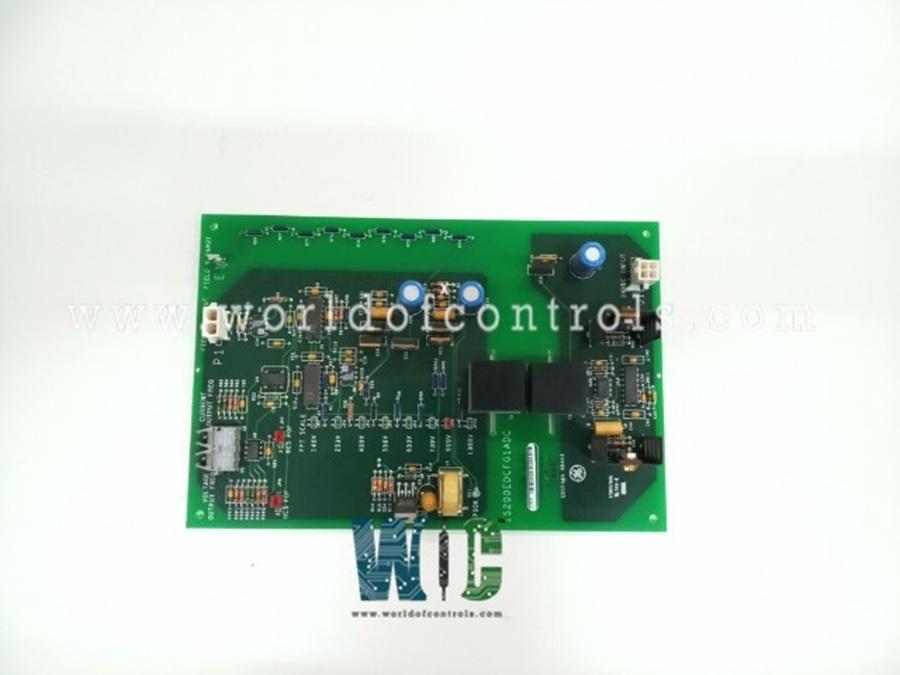
IS200DSPXH1A - DSP Control Board play a pivotal role in enabling real-time signal processing in modern industrial systems. By delivering high-speed computation, precise signal handling, and reliable performance, they form the backbone of advanced automation and control technologies.
As industries continue to move toward smarter and more connected systems, the importance of DSP technology will only grow. Investing in robust DSP Control Boards is not just a technical upgrade—it is a strategic decision that enhances efficiency, safety, and competitiveness in today’s demanding industrial environment.




 English
 Arabic
 French
 Spanish
 Deutsch
 Turkish
 Dutch
Dutch
 Italiano
 Russian
 Romaian
 Portuguese (Brazil)
 Greek
Greek
