


How to Choose the Right PhD Program for Your Career Goals 2026
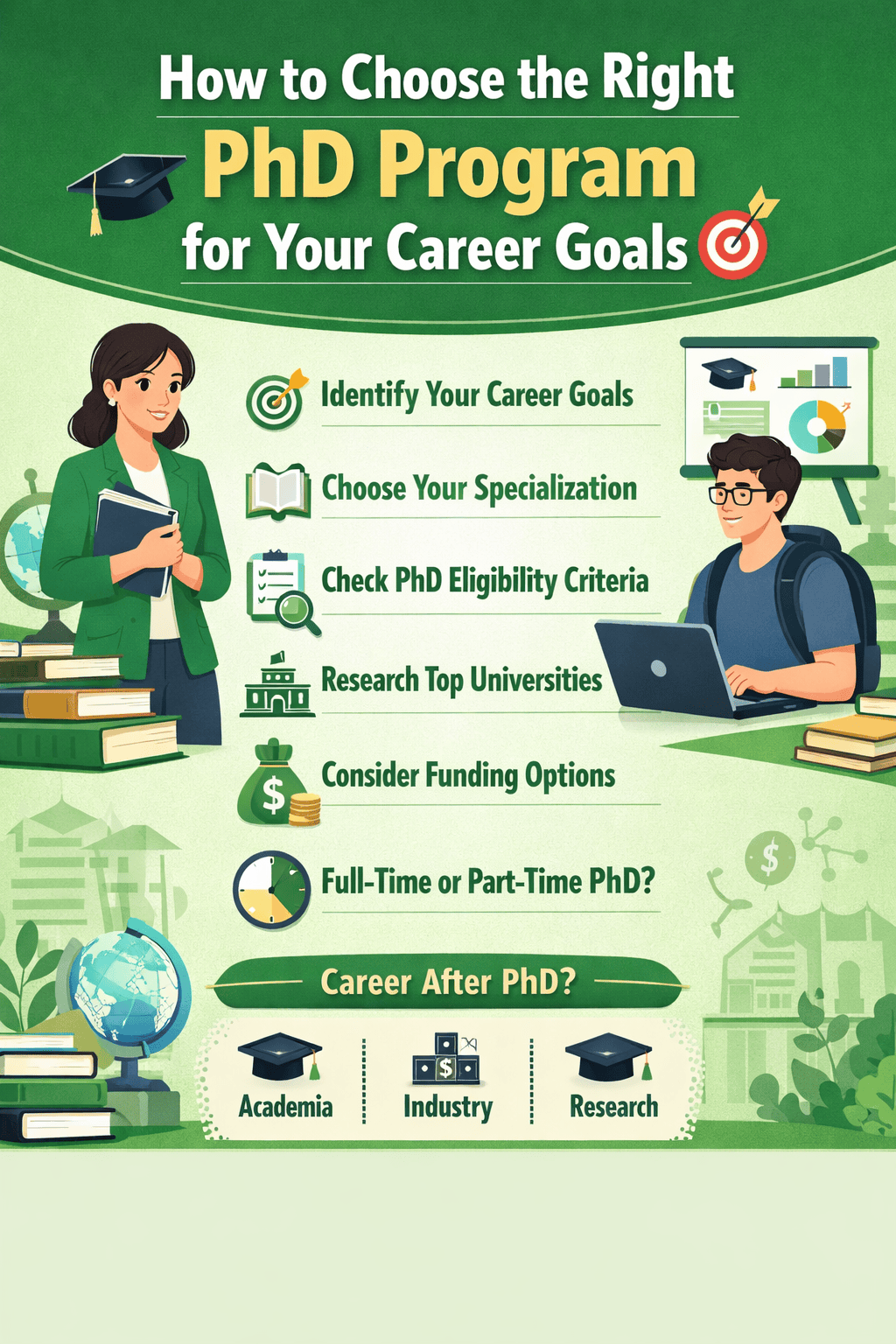
Choosing the right PhD program is one of the most important decisions in your academic and professional journey. A Doctor of Philosophy (PhD) is not just a degree—it is a long-term commitment that shapes your career, research expertise, and future opportunities. Whether you want to enter academia, research, or industry, selecting the right program is essential for achieving your career goals.
In this complete guide, we will help you understand how to choose the best PhD program, key factors to consider, and how to align your decision with your future ambitions.
What is a PhD Program?
A PhD program is the highest level of academic qualification that focuses on advanced research, critical thinking, and innovation. It typically takes 3 to 6 years to complete, depending on the subject and country.
PhD programs are available in various fields such as:
-
Management
-
Computer Science
-
Education
-
Engineering
-
Social Work
Choosing the right specialization is the first step toward building a successful career.
Why Choosing the Right PhD Program Matters
Selecting the wrong PhD program can lead to:
-
Loss of time and money
-
Lack of career satisfaction
-
Limited job opportunities
On the other hand, the right PhD program can help you:
-
Build expertise in your chosen field
-
Gain high-paying job opportunities
-
Establish a strong academic or research career
That’s why it is important to carefully evaluate your options before applying.
Step-by-Step Guide to Choose the Right PhD Program
1. Identify Your Career Goals
Before selecting a PhD program, ask yourself:
-
Do you want to become a professor or lecturer?
-
Are you interested in research or industry roles?
-
Do you want to work in India or abroad?
Your career goals will determine the type of PhD program you should choose. For example:
-
Academic career → Research-focused PhD
-
Industry career → Applied or professional PhD
Choose the Right Specialization
Your specialization should match your interests and future career plans. Some popular PhD specializations include:
-
PhD in Management
-
PhD in Computer Science
-
PhD in Education
-
PhD in Engineering
Choosing a relevant specialization ensures better job opportunities and career growth.
Check PhD Eligibility Criteria
Before applying, make sure you meet the PhD eligibility criteria, such as:
-
Master’s degree in a relevant field
-
Minimum required percentage (usually 55% or above)
-
Entrance exam qualification (UGC NET, GATE, etc.)
Some universities also allow PhD without NET, but conditions may vary.
Research Top Universities and Colleges
Not all universities offer the same quality of education. Always research:
-
University ranking and reputation
-
Faculty expertise
-
Research facilities
-
Placement opportunities
Choosing a reputed university can significantly improve your career prospects.
Evaluate PhD Program Structure
Different PhD programs have different formats. Check:
-
Course duration (3–6 years)
-
Coursework requirements
-
Research methodology training
-
Thesis submission process
Also, decide between:
-
Full-time PhD
-
Part-time PhD for working professionals
Consider Funding and Scholarships
PhD programs can be expensive, but many options are available:
-
Fully funded PhD programs
-
Government scholarships
-
Fellowships like JRF/SRF
A funded PhD reduces financial stress and allows you to focus on research.
Check Research Opportunities
A good PhD program should offer:
-
Access to research labs and tools
-
Opportunities to publish research papers
-
Guidance from experienced supervisors
Your research experience plays a key role in your future career.
Analyze Career Opportunities After PhD
Before choosing a program, understand the career scope after PhD:
-
Teaching and academic roles
-
Research scientist positions
-
Corporate and industry jobs
-
Government and policy roles
Make sure your chosen program aligns with your desired career path.
Look for Flexibility (Online or Part-Time PhD)
If you are a working professional, consider:
-
Online or distance PhD options
Flexible PhD programs help you balance work and studies effectively.
Full-Time vs Part-Time PhD: Which is Better?
|
Feature |
Full-Time PhD |
Part-Time PhD |
|
Duration |
3–4 years |
4–6 years |
|
Flexibility |
Low |
High |
|
Suitable for |
Fresh graduates |
Working professionals |
|
Funding |
Available |
Limited |
Choose based on your lifestyle and career needs.
Future Scope of PhD Programs
In 2026 and beyond, PhD programs are becoming more valuable due to:
-
Growth in research and innovation
-
Demand for skilled professionals
-
Opportunities in AI, data science, and technology
A PhD can open doors to global career opportunities and leadership roles.
Final Thoughts
Choosing the right PhD program is a life-changing decision that requires careful planning and research. From selecting the right specialization to evaluating universities and funding options, every step plays a crucial role in shaping your future.
If you align your PhD program with your career goals, interests, and industry demand, you can achieve long-term success and professional growth.
Take your time, explore your options, and make a smart decision—because the right PhD program can transform your career and unlock endless opportunities.
For more information Call:- Phone +91-9999117375, +91-8882301351
Visit:- https://www.mcmacademy.in/phd-admission/

 English
 Arabic
 French
 Spanish
 Portuguese
 Deutsch
 Turkish
 Dutch
Dutch
 Italiano
 Romaian
 Portuguese (Brazil)
 Greek
Greek
