


Why Timing Belt Kits Fail: A B2B Guide to Quality Sourcing
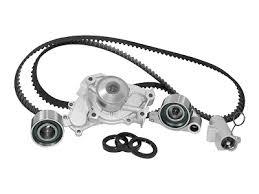
Engine reliability depends on the perfect harmony of moving parts, but many fleet managers overlook the silent wear happening inside the timing system. A minor tensioner misalignment often leads to catastrophic engine failure before the next service.
As an industry veteran, I have seen how "affordable" kits cause expensive legal disputes and warranty claims for distributors. Selecting a kit isn't just about the belt; it's about the precision of the bearings and the tensioners involved.
Our experience in automotive manufacturing proves that material fatigue is often the culprit behind sudden snaps. When you are sourcing for high-volume needs, understanding the technical nuances of component stress is the only way to protect your brand.
Why Early Wear Occurs in Professional Fleets
For B2B buyers and automotive distributors, the "Timing Belt Kits" you supply are the lifeline of your clients' vehicles. However, even high-end belts fail if the internal bearings or idlers are not engineered to handle high thermal loads.
-
Bearing Seizure: The most common cause of kit failure isn't the rubber—it's the metal. If the bearing inside the tensioner lacks high-grade lubrication, it generates friction, melting the belt.
-
Improper Tensioning: Many kits on the market use inferior springs in their tensioner assemblies. This leads to "belt slap," where the belt loses its grip on the camshaft gears, causing timing jumps.
-
Contamination Issues: Oil leaks or dust ingress can degrade the chemical structure of the belt. High-quality kits must feature advanced seals to keep lubricants in and contaminants out.
The Cost of "Value" Sourcing
In the automotive supply chain, a lower unit price often masks a higher Total Cost of Ownership (TCO). If a timing belt kit fails within 20,000 miles, the distributor faces:
-
Warranty Blowbacks: Covering the cost of a complete engine rebuild.
-
Reputational Damage: Losing trust with mechanical workshops and retailers.
-
Logistics Losses: The administrative nightmare of processing bulk returns.
Critical Components to Inspect
When evaluating a manufacturer, look beyond the brand name on the box. Focus on the structural integrity of the components within the kit.
| Component | What to Look For | B2B Impact |
| Tensioner Bearing | High-carbon chromium steel | Longevity and heat resistance |
| Idler Pulley | Precision-ground surfaces | Reduced vibration and noise |
| Water Pump | Long-life mechanical seals | Prevents coolant contamination |
Solving the Reliability Gap
The solution for B2B entities lies in Technical Specification Alignment. Instead of buying generic kits, partners should seek manufacturers who control the production of the most critical part: the bearing. Because the bearing sustains the rotational force, its precision determines the kit's lifespan. By focusing on ISO-certified manufacturing and rigorous load testing, suppliers can ensure that every kit sold reinforces their reputation for quality rather than becoming a liability.
Conclusion
As a dedicated manufacturer, NMR delivers high-precision timing belt kits engineered for durability. Partner with us for reliable B2B supply and superior bearing technology today.

 English
 Arabic
 French
 Spanish
 Portuguese
 Turkish
 Dutch
Dutch
 Italiano
 Russian
 Romaian
 Portuguese (Brazil)
 Greek
Greek
