


Mastering Resistance Spot Welding: Principles, Applications, and Industrial Best Practices
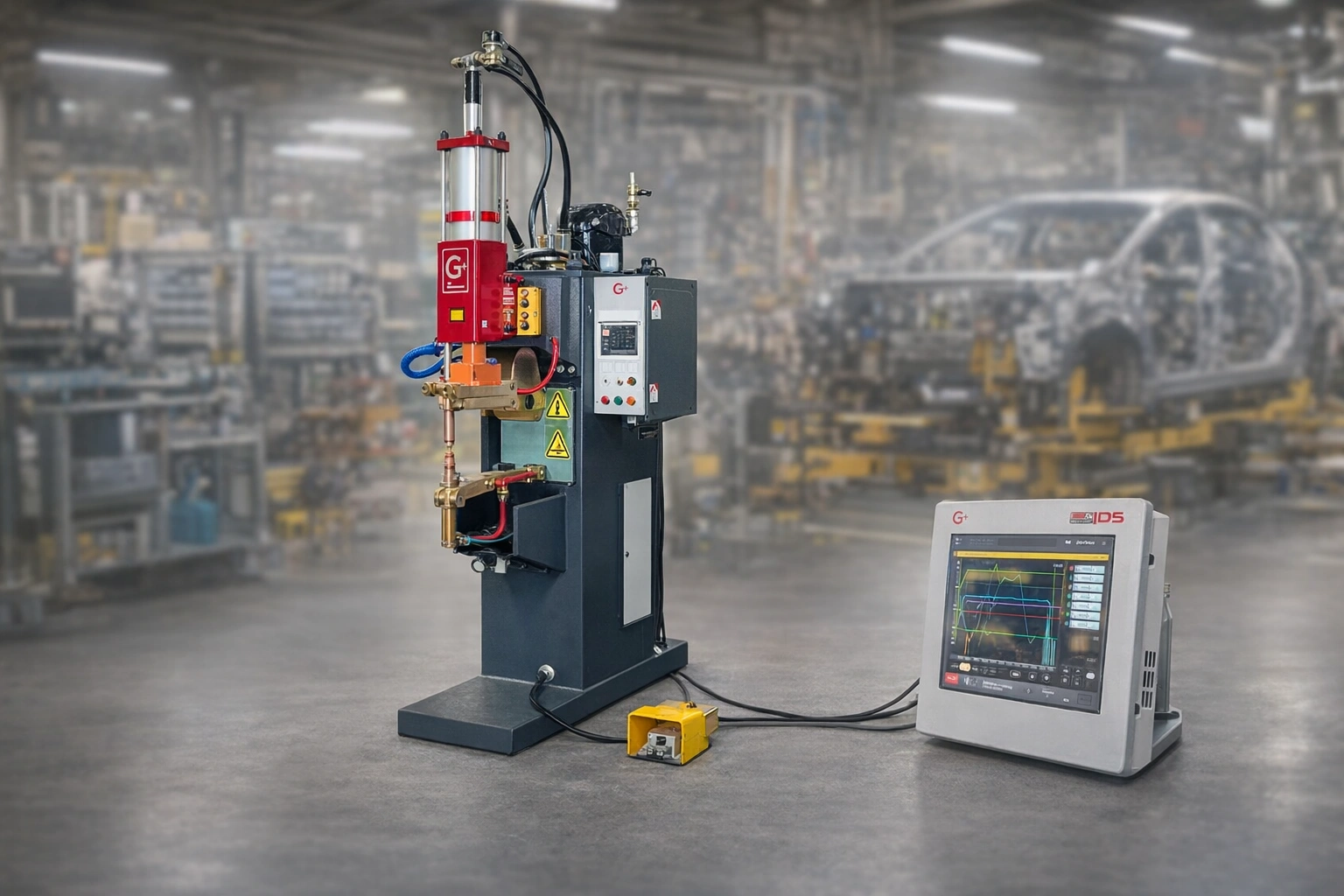
In modern manufacturing, precision, efficiency, and reliability are critical. Resistance spot welding (RSW) stands out as a core joining process that combines speed and accuracy for high-volume production. For OEMs, manufacturing engineers, and automation integrators, understanding the principles, benefits, and practical applications of resistance spot welding is essential for optimizing assembly lines and ensuring product quality. Heron Welder, a global leader in industrial welding solutions, delivers advanced resistance welding systems and automation lines designed to meet these exacting needs.
What Is Resistance Spot Welding?
Resistance spot welding is a metal joining process where two or more metal sheets are fused together by applying pressure and passing a high electric current through the contact point. The process generates localized heat at the interface due to electrical resistance, melting the metal and forming a weld nugget upon cooling.
Unlike arc welding, resistance spot welding does not require filler material or shielding gas, making it highly suitable for high-speed production in automotive, electronics, and appliance manufacturing.
Key Principles of Resistance Spot Welding
-
Electrical Resistance and Heat Generation
The core principle relies on Joule heating, where heat is produced at the contact point due to the metal’s electrical resistance. Proper control of current, pressure, and welding time is critical to produce consistent welds. -
Electrode Force and Alignment
Electrodes deliver both current and pressure. Correct electrode alignment and force ensure the sheets remain in position, preventing defects such as expulsion or weak welds. -
Weld Nugget Formation
The weld nugget is the small, localized molten area that fuses the metals. Nugget size is influenced by material thickness, current, electrode design, and welding duration.
Common Applications of Resistance Spot Welding
Resistance spot welding is widely used in industries where high-volume metal assembly is required:
-
Automotive Manufacturing: Car bodies, chassis components, and brackets often rely on RSW for efficient mass production.
-
Appliance Production: Refrigerators, washing machines, and HVAC units benefit from precise, repeatable spot welds.
-
Electronics and Metal Cabinets: RSW is ideal for joining thin-gauge metals used in electronics enclosures.
-
Aerospace and Heavy Equipment: Lightweight alloys and structural components are joined with high precision.
Heron’s resistance spot welding machines cater to automated production lines, providing integrated solutions that optimize throughput while maintaining consistent weld quality.
Advantages of Resistance Spot Welding
Choosing resistance spot welding offers several strategic benefits for manufacturers:
-
Speed and Efficiency: Spot welding is fast, supporting high-volume production.
-
Material Versatility: Can weld various metals, including steel, stainless steel, and aluminum alloys.
-
Reduced Labor Costs: Automation-friendly technology reduces manual labor and human error.
-
Consistent Quality: Advanced controls and monitoring maintain uniform weld strength.
-
Environmentally Friendly: No filler metals or gases are required, minimizing waste.
Resistance Spot Welding vs. Other Welding Methods
| Feature | Resistance Spot Welding | Arc Welding | Laser Welding |
|---|---|---|---|
| Speed | Very high for repetitive joints | Moderate | High but expensive |
| Automation | Easily automated | Requires operator | Can be automated but complex |
| Material Thickness | Thin to medium | Medium to thick | Thin to medium |
| Heat Affected Zone | Localized | Larger | Very precise |
| Consumables | Electrodes only | Filler rods, shielding gas | Rarely needed |
RSW provides a balanced approach for high-speed, repeatable, and energy-efficient metal joining, making it ideal for mass production environments.
Best Practices for Industrial Resistance Spot Welding
-
Correct Electrode Selection: The shape, size, and material of electrodes directly affect weld quality.
-
Optimized Welding Parameters: Adjust current, time, and pressure according to metal type and thickness.
-
Regular Electrode Maintenance: Clean and dress electrodes to prevent defects and ensure consistent heat transfer.
-
Monitoring and Automation: Use digital controllers and welding sensors to track weld quality in real-time.
-
Training and Safety: Operators and engineers must understand proper handling, especially for high-current applications.
Heron Welder offers machines with advanced MFDC controls, customizable welding sequences, and integration with robotic cells, ensuring manufacturers achieve the highest standards of efficiency and reliability.
Why Partner with Heron Welder for Resistance Spot Welding?
Heron Welder provides end-to-end solutions for manufacturers seeking to implement or upgrade resistance spot welding operations. With decades of expertise, we deliver:
-
High-performance resistance spot welding machines for small to large-scale production.
-
Fully integrated automation lines with robotic arms and production controls.
-
Customizable welding solutions for automotive, appliance, and industrial applications.
-
Expert consultation and service support to maximize uptime and productivity.
Frequently Asked Questions (FAQs)
Q1: What materials can resistance spot welding handle?
A: RSW works best with steels, stainless steels, and aluminum alloys, though electrode design may vary per material.
Q2: How is weld quality measured in resistance spot welding?
A: Weld quality is assessed by nugget size, tensile-shear strength, and peel tests. Automated monitoring improves repeatability.
Q3: Can resistance spot welding be automated?
A: Absolutely. RSW is highly compatible with robotic arms and conveyor-based production lines, ensuring consistent high-volume output.
Q4: How do I prevent electrode wear and defects?
A: Regular dressing and maintenance of electrodes, proper cooling, and controlled welding parameters reduce wear and maintain weld integrity.
Q5: Is resistance spot welding suitable for high-strength automotive steels?
A: Yes, with MFDC or capacitor discharge spot welding machines, even advanced high-strength steels can be welded efficiently.
Take the Next Step in Industrial Welding
For OEMs, manufacturing engineers, and automation integrators looking to elevate production efficiency, Heron Welder offers tailored resistance spot welding solutions designed for reliability, speed, and precision. Whether integrating into an existing line or building a fully automated welding cell, our experts provide consultation, equipment, and support for optimized metal joining.
Request a quote or consult with Heron today to explore customized welding and automation solutions that meet your production goals.

 English
 Arabic
 French
 Portuguese
 Deutsch
 Turkish
 Dutch
Dutch
 Italiano
 Russian
 Romaian
 Portuguese (Brazil)
 Greek
Greek
