


Animal Gastroesophageal Reflux Disease Industry to Expand by USD 1.5 Billion by 2035
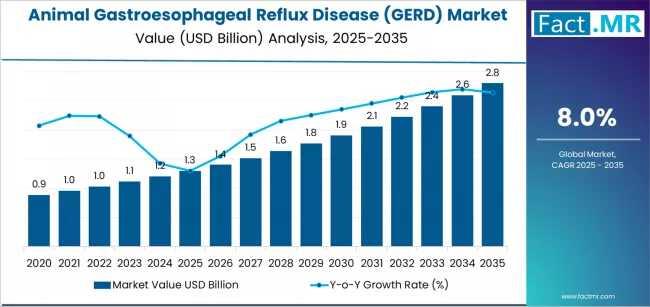
The global animal gastroesophageal reflux disease (GERD) market is entering a period of robust structural expansion, projected to grow from USD 1.3 billion in 2025 to USD 2.8 billion by 2035. According to a definitive market outlook by Fact.MR, the sector is expanding at a 8.0% CAGR, catalyzed by the rising "humanization" of pets, increasing veterinary specialty clinic networks, and a global surge in companion animal ownership.
As pet owners increasingly prioritize evidence-based medical interventions, the market is shifting from basic symptomatic relief toward advanced, species-specific pharmaceuticals. Proton Pump Inhibitors (PPIs) have emerged as the dominant therapeutic class, capturing 41.0% of the market, praised by veterinarians for providing symptom resolution rates of 75-85% in feline and canine patients.
Get Access Report Sample :
https://www.factmr.com/connectus/sample?flag=S&rep_id=11727
Quick Stats: Animal GERD Market at a Glance
- Market Value (2025E): USD 1.3 Billion
- Projected Value (2035F): USD 2.8 Billion
- Forecast CAGR:0% (2025–2035)
- Leading Drug Segment: Proton Pump Inhibitors (41.0% share)
- Dominant Animal Type: Companion Animals (63.0% share)
- Growth Hotspot: India (8.9% CAGR)
Therapeutic Dynamics: The Dominance of PPIs
The market’s expansion is heavily influenced by the efficacy of modern acid-suppression mechanisms.
Proton Pump Inhibitors (41.0% share):
PPIs, particularly omeprazole-based formulations (which hold 58.0% of this segment), are the gold standard for treating severe esophageal inflammation. Their once-daily dosing and high safety margins make them the preferred choice for chronic disease management in veterinary hospitals.
H2 Receptor Blockers (28.0% share):
These remain vital for mild-to-moderate cases and acute symptom control, offering a shorter duration of action that appeals to owners managing intermittent reflux issues.
Supportive Therapies:
Antacids (19.0%) and Prokinetic agents (12.0%) continue to play a critical role in adjunctive therapy, specifically in cases requiring improved gastric motility and esophageal sphincter function.
Distribution Channels: The Rise of Specialized Veterinary Care
Veterinary Hospitals & Clinics (55.0% share):
Professional facilities remain the primary gateway for GERD diagnosis and treatment. Specialty and referral hospitals, which account for 42.0% of this segment, are driving the adoption of complex treatment protocols and endoscopic evaluation.
Online & Retail Pharmacies (45.0% combined share):
E-commerce and pet-specific retail pharmacies are growing rapidly. The rise of telemedicine-integrated prescription fulfillment (15.0% of the total market) is making it easier for pet owners to maintain long-term treatment regimens without frequent clinic visits.
Regional Performance: Asia-Pacific Outpacing Global Averages
While the United States (8.3% CAGR) remains the value leader due to high pet insurance penetration (68% in urban markets), India is the world's fastest-growing corridor.
|
Country |
Projected CAGR |
Primary Growth Catalyst |
|
India |
8.9% |
Rapid adoption of companion animals among the urban middle class. |
|
USA |
8.3% |
Established specialty care infrastructure and high diagnostic awareness. |
|
China |
8.1% |
Accelerated urbanization and pet humanization trends. |
|
Germany |
7.7% |
Strong owner investment in premium veterinary services and high compliance. |
|
Japan |
7.5% |
An aging pet population requiring advanced gastrointestinal monitoring. |
Strategic Drivers & Industry Challenges
Market Drivers:
- Pet Humanization: Owners are increasingly seeking medical care for pets that mirrors human standards.
- Diagnostic Advancement: Wider availability of veterinary endoscopy and specialized pH monitoring.
- Insurance Integration: Growth in pet insurance coverage is making expensive, long-term pharmaceutical treatments more accessible.
Market Restraints:
- High Formulation Costs: The technical requirement to optimize drug palatability for different species increases manufacturing expenses.
- Regulatory Complexity: Stringent validation standards for animal-specific drug approvals can delay market entry for new formulations.
- Supply Chain Volatility: Fluctuating costs of active pharmaceutical ingredients (APIs) for veterinary-grade medications.
Competitive Landscape
The market features a concentrated group of animal health giants, including Zoetis Inc., Boehringer Ingelheim, Elanco, and Virbac. Competitive differentiation is increasingly found in palatability-enhanced formulations and integrated diagnostic-therapeutic platforms that help veterinarians monitor clinical outcomes in real-time.
To View Related Report:
Animal Antibiotics and Antimicrobials Market https://www.factmr.com/report/animal-antibiotics-and-antimicrobials-market
Animal Osteoarthritis Market https://www.factmr.com/report/animal-osteoarthritis-market
Animal Intestinal Health Market https://www.factmr.com/report/animal-intestinal-health-market
Animal Drug Compounding Market https://www.factmr.com/report/animal-drug-compounding-market
- Contact Us -
11140 Rockville Pike, Suite 400, Rockville,
MD 20852, United States
Tel: +1 (628) 251-1583 | sales@factmr.com
About Fact.MR
Fact.MR is a global market research and consulting firm, trusted by Fortune 500 companies and emerging businesses for reliable insights and strategic intelligence. With a presence across the U.S., UK, India, and Dubai, we deliver data-driven research and tailored consulting solutions across 30+ industries and 1,000+ markets. Backed by deep expertise and advanced analytics, Fact.MR helps organizations uncover opportunities, reduce risks, and make informed decisions for sustainable growth.

 English
 Arabic
 French
 Spanish
 Portuguese
 Deutsch
 Turkish
 Dutch
Dutch
 Italiano
 Russian
 Romaian
 Greek
Greek
