


A Versatile and Reliable Casting Method
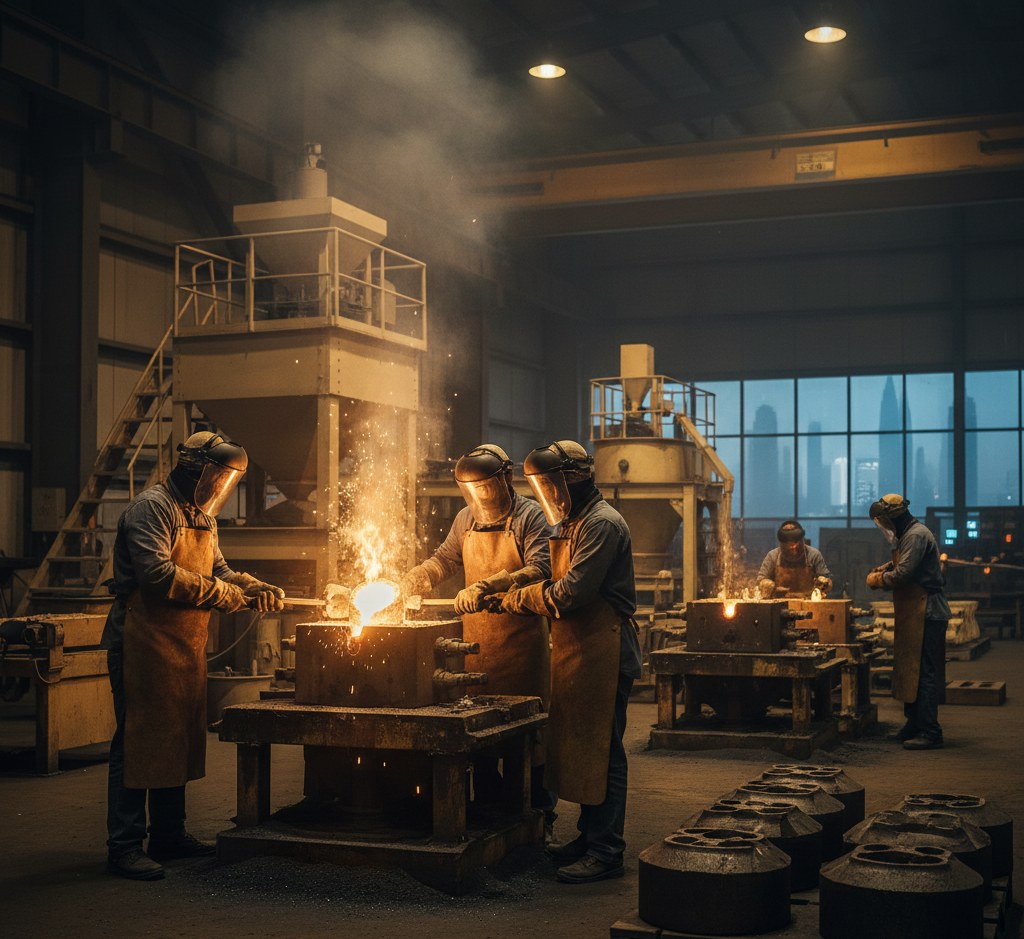
In the world of manufacturing and metal fabrication, sand casting remains one of the most widely used methods for producing metal parts. Its versatility, cost-effectiveness, and adaptability to various metals and sizes make it a cornerstone of industrial production. For businesses looking for precision, durability, and scalability, professional sand casting services provide a reliable solution for creating high-quality components for multiple industries.
What is Sand Casting?
Sand casting is a metal casting process that uses sand as the mold material to shape molten metal into the desired form. The process involves creating a mold by packing sand around a pattern of the component to be produced. Once the mold is ready, molten metal is poured into the cavity, allowed to cool, and then removed to reveal the finished product.
This method is highly adaptable, capable of producing components in a wide range of metals, including aluminum, brass, bronze, cast iron, and steel. Sand casting is particularly suitable for medium to large production runs and can accommodate complex shapes and intricate designs.
The Sand Casting Process
The sand casting process involves several critical steps, each contributing to the precision and quality of the final product:
1. Pattern Creation
The first step in sand casting is creating a pattern of the part. Patterns can be made of wood, metal, or plastic and are designed to form the cavity in the sand mold. A well-made pattern ensures accurate dimensions and reduces defects in the finished casting.
2. Mold Preparation
The mold is prepared by packing sand around the pattern in a molding box. Special bonding agents are added to the sand to maintain its shape under the heat and pressure of molten metal. The mold is then carefully removed from the pattern, leaving a cavity that matches the shape of the part to be cast.
3. Core Making (if needed)
For parts with hollow sections or complex internal structures, cores are made from sand and inserted into the mold. Cores ensure that internal cavities are accurately formed in the final casting.
4. Metal Pouring
Once the mold is ready, molten metal is poured into the cavity through a gating system. The metal fills the mold, taking the exact shape of the cavity. Careful control of pouring temperature and speed is critical to avoid defects such as shrinkage or porosity.
5. Cooling and Solidification
After the metal is poured, the casting is allowed to cool and solidify. Cooling times vary depending on the metal and the size of the casting. Proper cooling ensures structural integrity and minimizes internal stresses.
6. Casting Removal and Finishing
Once solidified, the sand mold is broken to retrieve the casting. The casting is then cleaned, removing any remaining sand and excess metal from the gating system. Finishing processes such as grinding, machining, and heat treatment may be applied to achieve the final specifications and surface quality.
Advantages of Sand Casting
Sand casting offers several advantages that make it a preferred method for manufacturing metal components:
-
Versatility: Can be used with a wide variety of metals and alloys.
-
Cost-Effective: Ideal for small to medium production runs without the high tooling costs of other casting methods.
-
Complex Shapes: Capable of producing parts with intricate geometries and undercuts.
-
Scalability: Suitable for both low-volume prototypes and large-scale production.
-
Adaptability: Easy to modify molds for design changes without significant cost increases.
Industrial Applications of Sand Casting
Sand casting is used across multiple industries due to its flexibility and reliability:
-
Automotive Industry: Manufacturing engine blocks, cylinder heads, and suspension components.
-
Construction and Engineering: Producing machinery parts, pumps, valves, and brackets.
-
Aerospace: Creating durable and lightweight components for aircraft and space applications.
-
Marine Industry: Fabricating propellers, engine parts, and structural components.
-
Art and Decoration: Crafting sculptures, ornamental pieces, and architectural hardware.
Why Choose Professional Sand Casting Services
Investing in professional sand casting services provides significant benefits for businesses seeking high-quality metal components:
1. Precision and Quality
Experienced sand casting service providers use advanced techniques and quality control measures to ensure every casting meets exact specifications. Dimensional accuracy and surface finish are critical for functional and aesthetic components.
2. Customized Solutions
Professional services offer customization, adapting patterns, molds, and processes to meet specific client requirements. This flexibility is crucial for industries that demand unique designs or specialized alloys.
3. Cost and Time Efficiency
Outsourcing sand casting to experienced providers reduces in-house production costs and minimizes lead times. Efficient mold preparation, metal pouring, and finishing processes ensure timely delivery without compromising quality.
4. Material Expertise
Expert sand casting services have extensive knowledge of metals and alloys, ensuring the selection of the right material for durability, strength, and corrosion resistance.
5. Post-Casting Services
Professional services often include finishing operations such as machining, heat treatment, painting, and polishing, providing clients with ready-to-use components.
Innovations in Sand Casting
Modern sand casting services incorporate advanced technologies to improve efficiency, accuracy, and sustainability:
-
3D Printed Patterns: Rapid prototyping allows for precise and complex patterns without extensive manual labor.
-
Automated Sand Molding: Machines create molds with consistent quality, reducing human error.
-
Simulation Software: Computer-aided simulation predicts molten metal flow, cooling patterns, and potential defects, improving design accuracy.
-
Eco-Friendly Practices: Recycling sand and using low-emission binding agents reduce environmental impact.
Common Challenges in Sand Casting
Despite its versatility, sand casting can face challenges if not properly managed:
-
Porosity and Shrinkage: Improper cooling or metal flow can lead to internal voids.
-
Surface Roughness: Sand texture can leave rough surfaces, requiring additional finishing.
-
Dimensional Variability: Changes in mold materials, temperature, or metal composition can affect precision.
-
Labor-Intensive Process: Traditional sand casting requires skilled labor for mold preparation, pouring, and finishing.
Professional sand casting services mitigate these challenges with expertise, quality control, and advanced equipment.
Selecting the Right Sand Casting Service Provider
When choosing a sand casting service, consider the following factors:
-
Experience and Reputation: Companies with a proven track record deliver reliable and consistent results.
-
Technical Expertise: Skilled engineers and technicians ensure precise casting and quality assurance.
-
Range of Services: Providers offering design, pattern making, casting, and finishing deliver end-to-end solutions.
-
Quality Certifications: ISO, ASTM, and other certifications demonstrate adherence to international standards.
-
Client Support: Responsive service, technical advice, and project management improve collaboration and efficiency.
Conclusion
Sand casting remains one of the most effective and versatile methods for producing metal components. From automotive parts and industrial machinery to decorative items, the process is integral to manufacturing across industries. Professional sand casting services provide the expertise, technology, and quality control necessary to deliver durable, precise, and cost-effective castings.
By choosing experienced service providers, businesses can ensure high-quality production, timely delivery, and optimized performance of their metal components. Whether for prototyping or large-scale production, sand casting continues to be a reliable, flexible, and essential manufacturing solution.

 English
 Arabic
 French
 Spanish
 Portuguese
 Deutsch
 Turkish
 Dutch
Dutch
 Italiano
 Romaian
 Portuguese (Brazil)
 Greek
Greek
