


How an HR Analytics Course Helps HR Teams Use Data
HR analytics course helps HR teams use workforce data to improve hiring, retention, performance management, and HR decisions through practical analytics skills.
An HR manager sits with multiple spreadsheets after a quarterly review. Hiring numbers look positive, yet employee turnover has increased and engagement scores have dropped. Something in the workforce is shifting, but the exact reason is not immediately visible.
Many HR teams face similar situations where large amounts of employee data exist but meaningful insights remain hidden. Decisions often rely on observation rather than clear evidence.
An HR analytics course helps HR professionals interpret workforce data, identify patterns in employee behaviour, and transform everyday HR information into insights that support better hiring, retention, and performance strategies.
Understanding the Role of Data in Modern HR
HR departments handle a wide range of workforce information that can reveal patterns about employee behaviour, productivity, and organizational performance. An HR analytics course helps professionals understand how this information can support decision-making.
When HR teams begin working with data effectively, they can identify workforce challenges early and build solutions based on measurable evidence.
Key ways data supports HR functions include:
-
Identifying patterns in employee turnover and retention
-
Tracking recruitment efficiency and hiring success rates
-
Monitoring employee engagement levels
-
Measuring training effectiveness and skill development
-
Evaluating workforce productivity and performance trends
Through structured learning, HR professionals begin to see data not just as reports but as insights that guide strategic workforce planning.
Building Analytical Thinking for HR Decision Making
HR professionals traditionally rely on experience and interpersonal skills when making decisions. While these skills remain valuable, modern organizations require HR teams to complement them with analytical thinking.
An HR analytics course helps professionals develop a mindset focused on interpreting information objectively. Participants learn how to connect workforce metrics with business outcomes and understand how data supports strategic HR initiatives.
This analytical approach enables HR teams to:
-
Evaluate recruitment channels using measurable results
-
Identify factors influencing employee engagement
-
Assess the impact of HR policies and programs
-
Use evidence when presenting workforce insights to leadership
When HR professionals adopt analytical thinking, their role shifts from administrative support to strategic partnership within the organization.
Improving Recruitment Strategies Through Data
Recruitment is one of the most data-rich areas within HR operations. Hiring processes generate valuable information about candidate sources, selection criteria, hiring timelines, and employee performance after recruitment.
An HR analytics course teaches HR professionals how to interpret recruitment data and use it to improve hiring strategies.
With recruitment analytics, HR teams can:
-
Identify the most effective sourcing channels
-
Analyze the time required to fill positions
-
Measure candidate quality based on long-term performance
-
Improve interview and assessment processes
-
Reduce hiring costs while maintaining candidate quality
These insights help organizations build stronger hiring strategies that align talent acquisition with long-term workforce needs.
Strengthening Employee Retention with Workforce Insights
Employee retention is a critical challenge for many organizations. High turnover affects productivity, increases recruitment costs, and disrupts team stability.
HR analytics helps HR teams identify the factors that influence employee turnover. By analyzing workforce data, HR professionals can detect patterns that signal potential retention risks.
Through an HR analytics course, professionals learn how to evaluate retention metrics such as:
-
Turnover rates across departments
-
Employee tenure patterns
-
Exit interview trends
-
Engagement survey responses
-
Internal mobility opportunities
These insights help HR teams design targeted retention strategies that address specific employee concerns and improve workplace satisfaction.
Enhancing Employee Engagement Strategies
Employee engagement significantly influences productivity, collaboration, and overall workplace culture. However, engagement cannot be improved without understanding what drives employee motivation and satisfaction.
An HR analytics course teaches professionals how to interpret engagement data and translate it into actionable workforce strategies.
HR teams can analyze engagement indicators such as:
-
Employee feedback surveys
-
Participation in company initiatives
-
Performance review outcomes
-
Communication patterns within teams
-
Employee recognition and reward data
Using these insights, HR professionals can design initiatives that strengthen workplace culture and encourage greater employee participation in organizational goals.
Supporting Performance Management with Measurable Insights
Performance management systems generate significant data related to employee productivity, goal achievement, and professional development. HR analytics helps HR teams interpret this information more effectively.
An HR analytics course equips professionals with the skills needed to evaluate performance data and identify areas where employees may require additional support or development.
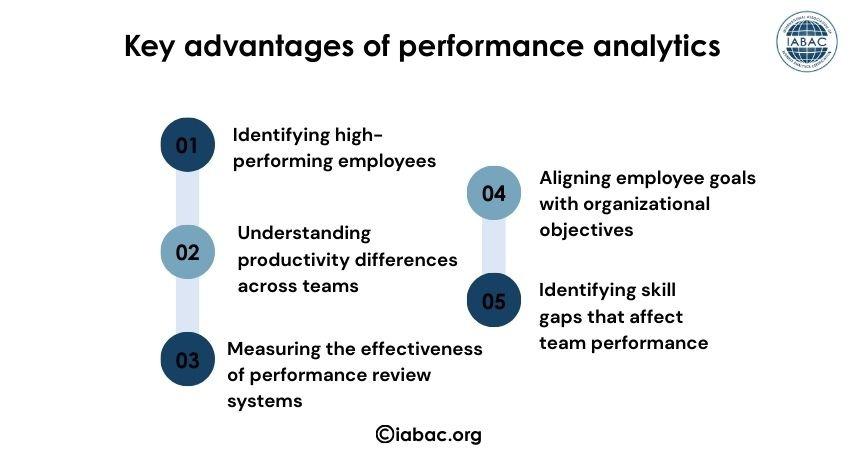
Key advantages of performance analytics include:
-
Identifying high-performing employees and leadership potential
-
Understanding productivity differences across teams
-
Measuring the effectiveness of performance review systems
-
Aligning employee goals with organizational objectives
-
Identifying skill gaps that affect team performance
These insights allow HR teams to improve performance management frameworks and ensure employees receive meaningful development opportunities.
Improving Learning and Development Programs
Employee training programs represent a major investment for many organizations. HR analytics helps determine whether these programs produce measurable improvements in workforce performance.
An HR analytics course helps HR professionals evaluate learning outcomes using data-based approaches. Instead of measuring training success only through participation rates, HR teams learn to assess how training influences job performance and skill development.
Important metrics in training analytics include:
-
Training completion rates
-
Employee performance before and after training
-
Skill improvement across teams
-
Employee feedback on training effectiveness
-
Productivity improvements after development programs
By analyzing these factors, HR teams can refine training strategies and ensure that learning initiatives contribute to workforce growth.
Supporting Workforce Planning and Organizational Growth
Workforce planning requires organizations to anticipate future talent requirements while balancing current workforce capabilities. HR analytics supports this process by providing accurate insights about workforce trends.
An HR analytics course helps HR professionals understand how to forecast workforce needs using data.
HR teams can analyze:
-
Workforce demographics and retirement patterns
-
Skill availability within the organization
-
Future hiring requirements based on business expansion
-
Internal promotion and mobility trends
-
Workforce productivity levels across departments
These insights allow organizations to prepare for future workforce demands while maintaining operational stability.
Strengthening Collaboration Between HR and Leadership
One of the major benefits of HR analytics is the ability to communicate workforce insights clearly to business leaders. Data-backed insights strengthen HR’s role in strategic discussions.
An HR analytics course helps HR professionals develop the ability to present workforce insights in a structured and meaningful way.
This enables HR teams to:
-
Support leadership decisions with workforce data
-
Provide clear reports on employee performance trends
-
Demonstrate the impact of HR initiatives
-
Align workforce planning with organizational strategy
-
Improve transparency in HR decision-making
When HR teams communicate insights effectively, they contribute directly to business growth and organizational planning.
Developing Technical Skills for HR Data Analysis
Modern HR analytics relies on various digital tools and technologies that help professionals collect, organize, and interpret workforce data.
An HR analytics course introduces HR professionals to analytical tools that support workforce data analysis. These tools help HR teams handle large volumes of information efficiently and generate insights quickly.
Common analytical capabilities taught in HR analytics programs include:
-
Data visualization for HR reporting
-
Workforce dashboard creation
-
Spreadsheet analysis for HR metrics
-
Data interpretation techniques
-
Identifying patterns within workforce datasets
These technical skills allow HR teams to work confidently with data and generate insights that support organizational decision-making.
Data is becoming central to workforce management, and HR teams that understand how to interpret workforce insights contribute significantly to organizational success. HR analytics training equips professionals with analytical thinking, technical skills, and strategic perspectives that strengthen HR’s impact within modern organizations.
Professionals aiming to strengthen their expertise in workforce data and HR strategy can build practical knowledge through the IABAC Certification, designed to support HR professionals working with modern workforce analytics.

 English
 Arabic
 French
 Spanish
 Portuguese
 Deutsch
 Turkish
 Dutch
Dutch
 Italiano
 Romaian
 Portuguese (Brazil)
 Greek
Greek
