


Custom Home Builders in Des Moines & Iowa: Steps to Customize Your Lot in Waukee
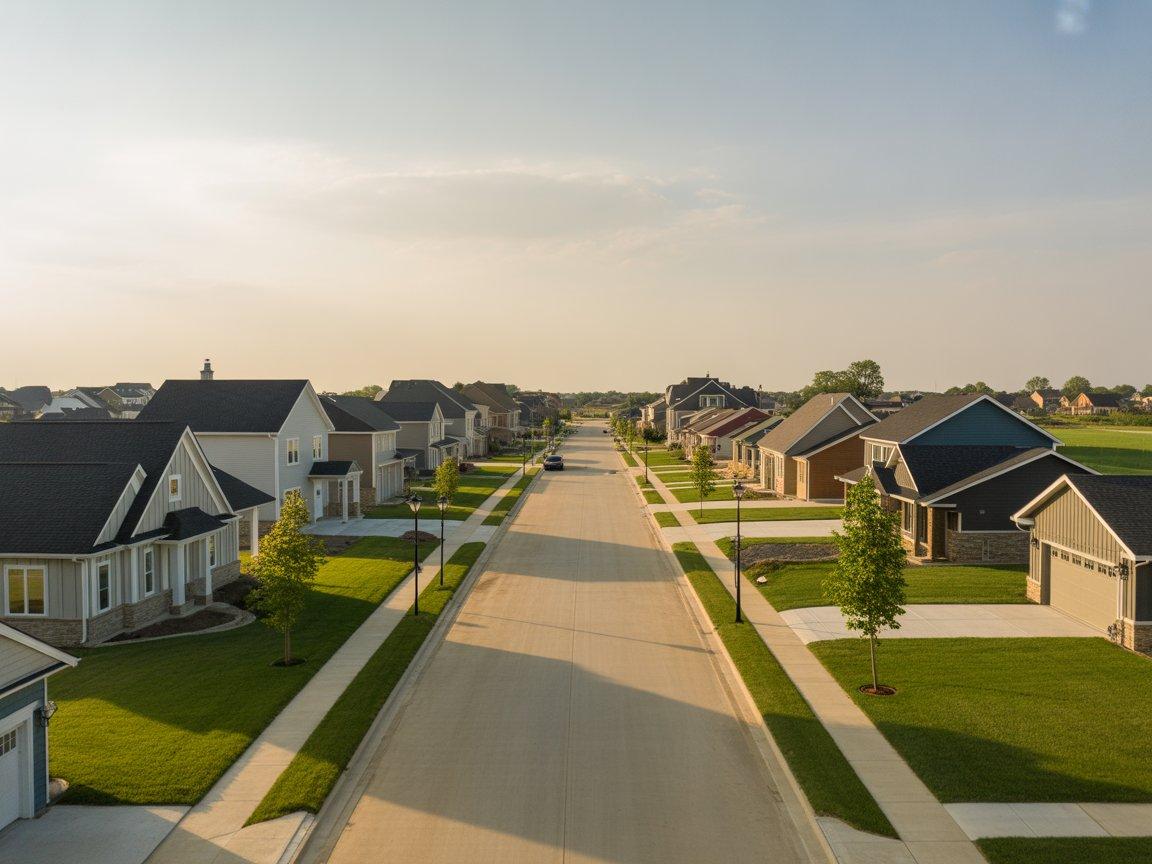
Custom home builders in Des Moines & Iowa who work in Waukee will tell you the same thing: buying a lot in Waukee is the easy part. Knowing how to customize it — from floor plan selection through final finishes — is where most buyers get lost.
Waukee has become one of the most sought-after communities in the Des Moines metro for new construction. The school district consistently ranks among Iowa's best, the city's infrastructure is modern, and the neighborhoods feel genuinely well-planned. But strong demand means less room for error. If you're building here, you need to go in with a clear process.
This article walks through every step — from lot selection to move-in — so you know exactly what to expect and where to make decisions that actually matter.
Why Waukee? Understanding the Appeal Before You Build
What Makes Waukee Different in the Des Moines Metro
Waukee sits about 12 miles west of downtown Des Moines, and it's grown faster than almost any city in Iowa over the past decade. That growth isn't random — it follows the school district boundaries, the job corridors along I-80 and Highway 6, and the city's reputation for well-managed development.
For buyers considering new construction in the western suburbs, Waukee competes directly with West Des Moines and Urbandale. The key difference: Waukee still has active land development happening, which means more new construction communities with modern floor plans and current building standards.
West Des Moines and Urbandale are largely built out. Waukee still has room — and that room is where custom builds and lot customization actually happen.
Who Is Building in Waukee Right Now
The buyer profile in Waukee skews toward:
- Families with school-age children prioritizing the school district
- Move-up buyers coming from starter homes in Ankeny or West Des Moines
- Buyers relocating to Des Moines for employment who want top-tier suburbs
- Professionals who want western access to I-80 and the Jordan Creek corridor
If you fit any of those profiles, Waukee makes sense. The premium you pay over east metro communities is real — but so is what you get for it.
Step 1: Understand What "Lot Customization" Actually Means
The Difference Between Choosing a Lot and Customizing One
Most buyers confuse these two things. Choosing a lot means picking which parcel in a community you want to build on. Customizing a lot means making decisions about how your home sits on that lot, how the site gets prepared, and what factors about the land itself affect your final home.
Both matter. But customization decisions — the ones most buyers overlook — often have bigger cost and livability implications than the floor plan itself.
Lot customization decisions include:
→ Home orientation (which direction your home faces on the lot) → Setback positioning (how far from the street your home sits) → Grading and drainage (how the lot slopes away from the foundation) → Driveway placement and length → Walkout or lookout basement potential based on lot topography → Utility connection locations and costs
Each of these decisions happens before a single wall goes up — and each one affects your finished home in ways you'll live with for decades.
Lot Types in Waukee Communities
Not every lot is the same, even within the same community. Here are the main lot types you'll encounter in Waukee new construction:
a. Standard interior lots — most common, rectangular shape, predictable costs b. Corner lots — larger footprint but higher premiums and more sidewalk maintenance c. Cul-de-sac lots — pie-shaped, often larger rear yard, quieter traffic, usually premium-priced d. Walkout lots — slope allows for a walkout basement door; adds significant livable space potential e. Premium view lots — back to green space, pond, or open area; highest premiums in most communities
For most buyers building in Waukee on a controlled budget, a standard interior lot offers the best value. Walkout lots deserve serious consideration if you plan to finish the basement — the grading work the builder does upfront makes that future project far more practical.
Step 2: Choose the Right Floor Plan for Your Waukee Lot
How the Lot Constrains (and Enables) Your Floor Plan
Here's something builders don't always explain upfront: the lot often picks the floor plan before you do.
Waukee community lots typically run 55–75 feet wide. A wide ranch home needs 60+ feet of lot width to work properly with standard setbacks. A two-story home can fit on a 50-foot lot. If your chosen lot is 55 feet wide, your ranch options are limited before you even open a floor plan booklet.
Always get the lot dimensions, setback requirements, and HOA restrictions before falling in love with a specific floor plan. The community's architectural controls may also dictate minimum square footage, garage placement, or exterior material requirements.
Matching Floor Plan to Lifestyle in Waukee
Waukee buyers tend to skew toward larger floor plans than buyers in other Des Moines suburbs — partly because of the buyer profile, partly because lot sizes support it.
That said, I always push back on buyers who default to "as big as possible." In Waukee's price range, upgrade costs add up fast. A well-designed 1,800 square foot two-story will live better than a poorly planned 2,400 square foot home at the same budget — and cost you less to heat, cool, and maintain every year.
New homes for sale in Waukee, Iowa cover a range of plan types. The key is matching the plan to how your family actually uses space — not to how the square footage looks on paper.
Step 3: Navigate the Customization Options Without Blowing Your Budget
Structural vs. Cosmetic Customization
This is the most important distinction in the entire process, and most first-time custom buyers don't hear it until they're already over budget.
Structural customizations — changes to the home's physical structure — must happen during the build. Once the walls go up, these decisions are permanent or extremely expensive to undo.
Structural options typically include:
✔ Ceiling height upgrades (8 ft standard → 9 or 10 ft) ✔ Finished vs. unfinished basement ✔ Walkout basement configuration ✔ Added windows or changed window sizes ✔ Room additions or layout changes ✔ Three-car garage vs. two-car
Cosmetic customizations — finishes, fixtures, colors — can often be changed later at your own cost without involving a contractor.
Cosmetic options include:
- Countertop material and color
- Cabinet door style and finish
- Flooring type and color
- Lighting fixtures
- Paint colors
- Backsplash tile
My rule: spend on structural upgrades first, be conservative on cosmetics. You can replace countertops in five years. You can't add a 9-foot ceiling after the drywall is in.
The Design Center: Where Budgets Go to Die
Every builder has some version of a design center or selections process. This is where you walk through finish options with a design coordinator and make choices that get priced into your contract.
Design centers are exciting. They're also where the average buyer spends $25,000–$60,000 above the base price without fully tracking it.
💬 Real Buyer Example: A couple building in Waukee came in with a $295,000 base price and a clear intention to keep their total under $330,000. After design center selections — mostly cosmetic upgrades — they walked out at $372,000. Every individual choice seemed reasonable. The total wasn't. Set a firm cap before you walk in, and stick to it the way you'd stick to a grocery list.
How to control design center spending:
- Set a hard dollar cap on total upgrades before the appointment
- Prioritize structural and functional upgrades over aesthetic ones
- Ask the coordinator which upgrades add the most resale value
- Price out cosmetic upgrades independently — some can be done cheaper after closing
- Sleep on any decision over $3,000 before committing
Step 4: Understand the Waukee Build Timeline
What Drives Construction Timelines in the Des Moines Metro
Building in Waukee typically runs 5–8 months from contract to closing, depending on:
- Builder's current backlog and scheduling
- Permit approval timelines with the City of Waukee
- Material availability (windows and cabinets have historically been the longest lead items)
- Weather — Iowa winters can delay foundation work and framing by weeks
The City of Waukee has grown fast enough that permit processing times have occasionally stretched. Ask your builder specifically about current permit timelines before committing to a move-in date.
Key Milestones to Know
| Build Phase | Typical Duration | What Happens |
|---|---|---|
| Lot purchase & contract | 1–2 weeks | Finalize selections, sign build agreement |
| Permitting | 2–6 weeks | Builder submits plans to City of Waukee |
| Site prep & foundation | 2–4 weeks | Grading, footings, foundation pour |
| Framing | 3–5 weeks | Walls, floors, roof structure |
| Mechanicals | 3–5 weeks | HVAC, plumbing, electrical rough-in |
| Insulation & drywall | 2–3 weeks | Insulation, hang and finish drywall |
| Interior finishes | 4–6 weeks | Cabinets, flooring, trim, paint |
| Final punch & closing | 1–2 weeks | Walkthrough, punch list, closing |
Build phases overlap in practice — framing starts before foundation is fully cured, mechanicals start before framing is complete. The timeline above is sequential for clarity, but your actual build will compress some of these.
For a detailed breakdown of what each phase looks like and what buyers should do at each step, what to expect during the new home construction process in Des Moines is one of the most thorough resources I've seen for Central Iowa buyers.
Step 5: Know the Real Costs of Building in Waukee
Base Price vs. Total Cost in Waukee
Waukee commands a premium over other Des Moines suburbs, and that premium is real. Here's a realistic picture of what building in Waukee costs in 2025:
Typical all-in ranges for Waukee new construction:
- Entry-level (1,400–1,600 sq ft): $280,000–$330,000
- Mid-range (1,700–2,100 sq ft): $330,000–$420,000
- Higher-end (2,200+ sq ft): $420,000–$550,000+
Additional costs to budget outside the base price:
→ Lot premium (corner, walkout, or view lots): $10,000–$50,000+ → Design center upgrades: $20,000–$60,000 average → Landscaping (builder typically does basic seeding only): $5,000–$20,000 → Window treatments: $3,000–$10,000 → Appliances (if not included): $4,000–$10,000 → Garage organization, shelving, epoxy floor: $2,000–$8,000
Total realistic budget: Add 20–30% above the base price to get a realistic all-in number for most Waukee builds.
How Waukee Compares to Other Des Moines Suburbs
| Suburb | Typical Entry New Construction | School District Rating | Drive to Downtown |
|---|---|---|---|
| Waukee | $280,000–$330,000 | Exceptional | 20 min |
| Ankeny | $235,000–$290,000 | Very Good | 18 min |
| Norwalk | $220,000–$275,000 | Very Good | 22 min |
| Altoona/Bondurant | $195,000–$250,000 | Good | 20 min |
Waukee runs $40,000–$80,000 higher than comparable builds in Ankeny or Norwalk at entry level. Whether that premium is worth it depends entirely on how much the school district and western location matter to your specific situation.
Pros and Cons of Building a Custom Home in Waukee, Iowa
Pros
✅ One of Iowa's top-rated school districts — consistent, documented performance ✅ Active new construction means current building standards and modern floor plans ✅ Strong long-term home value appreciation in the western Des Moines corridor ✅ Well-planned community infrastructure — parks, trails, commercial development ✅ High walkability and amenities near Jordan Creek and the Highway 6 corridor
Cons
- Premium pricing — Waukee costs more than any other Central Iowa suburb at new construction
- High buyer competition for desirable lots in active communities
- Permit timelines can stretch due to city growth pace
- Limited lot inventory compared to outer suburbs
- Property taxes reflect the premium nature of the market
When Waukee Isn't the Right Call
Waukee is the right choice when the school district is a non-negotiable priority and your budget comfortably supports the premium. It's the wrong choice if you're stretching your finances to get there — because building at the top of your budget in a premium market leaves no margin for the surprises that every build produces.
If budget is tight, Ankeny and Norwalk deliver genuinely excellent school districts and new construction quality at a lower entry price. That's not a consolation prize — it's a smarter financial decision for many buyers.
Maintenance: Protecting Your Waukee Investment from Day One
First-Year Priorities for New Construction in Iowa
Waukee's clay-heavy soil moves with moisture. That's not a scare — it's just Iowa geology. Here's what to stay on top of in year one:
✔ Grading inspection after first spring — check that water drains away from the foundation on all sides ✔ Caulk inspection at 12 months — new homes settle; re-caulk windows, tubs, and exterior penetrations ✔ Driveway and sidewalk — avoid de-icing salts the first winter; use sand instead to protect new concrete ✔ HVAC filters — change monthly for the first 3 months to clear construction dust from the system ✔ Sump pump test — if you have a basement, test the sump pump before the first heavy rain season
Warranty calendar tip: Schedule your 1-year builder warranty walkthrough at 10 months. Document everything in writing. Iowa weather will reveal any settling or drainage issues by then, and you want those addressed before the warranty window closes.
Ready to Build in Waukee?
Building a custom home in Waukee is one of the stronger long-term real estate decisions you can make in the Des Moines metro — if you go in with a realistic budget, a clear process, and a builder who doesn't hide costs in the upgrade process.
The steps I've covered here — lot selection, floor plan matching, design center discipline, timeline management, and realistic cost planning — are the same steps that separate buyers who love their finished home from buyers who feel like the process got away from them.
If you're ready to see what's actually available in Waukee and the surrounding western suburbs, visit Gladiator Homes to browse current floor plans and communities. It's a low-pressure way to understand your real options before committing to anything.
Frequently Asked Questions
Q: Who are the best custom home builders in Des Moines & Iowa for building in Waukee? A: The best builders for Waukee are regional builders familiar with city permit processes, local subcontractors, and community architectural requirements — not national builders whose systems don't adapt well to local conditions.
Q: How much does it cost to build a custom home in Waukee, Iowa? A: Entry-level new construction in Waukee starts around $280,000–$330,000 all-in for 1,400–1,600 square feet, with mid-range builds running $330,000–$420,000 depending on square footage and upgrades.
Q: How long does it take to build a new home in Waukee? A: Most Waukee builds run 5–8 months from contract signing to closing, with permit timelines from the City of Waukee occasionally adding 2–4 weeks to the front end of the process.
Q: What lot type is best for a custom build in Waukee, Iowa? A: Standard interior lots offer the best price-to-value ratio; walkout lots are worth the premium if you plan to finish the basement, since the grading work significantly reduces future finishing costs.
Q: Is Waukee more expensive to build in than Ankeny or Norwalk? A: Yes — Waukee typically runs $40,000–$80,000 higher than comparable new construction in Ankeny or Norwalk, primarily reflecting school district premium and western corridor demand.
Q: Can I use my own lender when building a custom home in Waukee? A: Yes — you have the legal right to use any lender; some builders offer incentives for using their preferred lender, so compare both options carefully before deciding.
Q: What is the most important customization decision when building in Waukee? A: Structural decisions — ceiling height, basement configuration, room additions — matter most because they can't be changed after construction; prioritize those over cosmetic selections every time.

 English
 Arabic
 French
 Spanish
 Portuguese
 Deutsch
 Turkish
 Dutch
Dutch
 Italiano
 Russian
 Portuguese (Brazil)
 Greek
Greek
