Waste generation is increasing at an unprecedented rate due to rapid urbanization, industrial expansion, and changing consumption patterns. Traditional waste collection models, which rely on fixed schedules and manual monitoring, are no longer sufficient to handle modern environmental challenges. Cities now require intelligent, data-driven systems capable of optimizing waste collection, improving recycling rates, and reducing operational costs. This is where AI waste management systems are reshaping the industry. By leveraging automation, predictive analytics, computer vision, and IoT integration, municipalities and private operators can transform inefficient waste handling into a streamlined, sustainable ecosystem.
Understanding AI-Powered Waste Management Systems and Their Core Technologies
AI-powered waste management systems combine artificial intelligence, machine learning, IoT sensors, cloud computing, and data analytics to automate and optimize waste operations. These systems collect real-time data from smart bins, GPS-enabled trucks, and sorting facilities to improve decision-making and efficiency.
Machine learning algorithms analyze historical waste patterns to forecast collection requirements. Computer vision technology enables automated waste sorting by identifying recyclable, organic, and hazardous materials. IoT sensors embedded in bins measure fill levels and transmit data to centralized dashboards. Cloud platforms process large volumes of information and provide actionable insights to waste management operators.
The integration of these technologies forms the foundation of AI Waste Management Software Development, allowing organizations to create scalable, adaptive, and data-driven waste solutions that respond dynamically to changing environmental demands.
Key Components of Smart Waste Infrastructure
Smart Bins and Sensor Integration
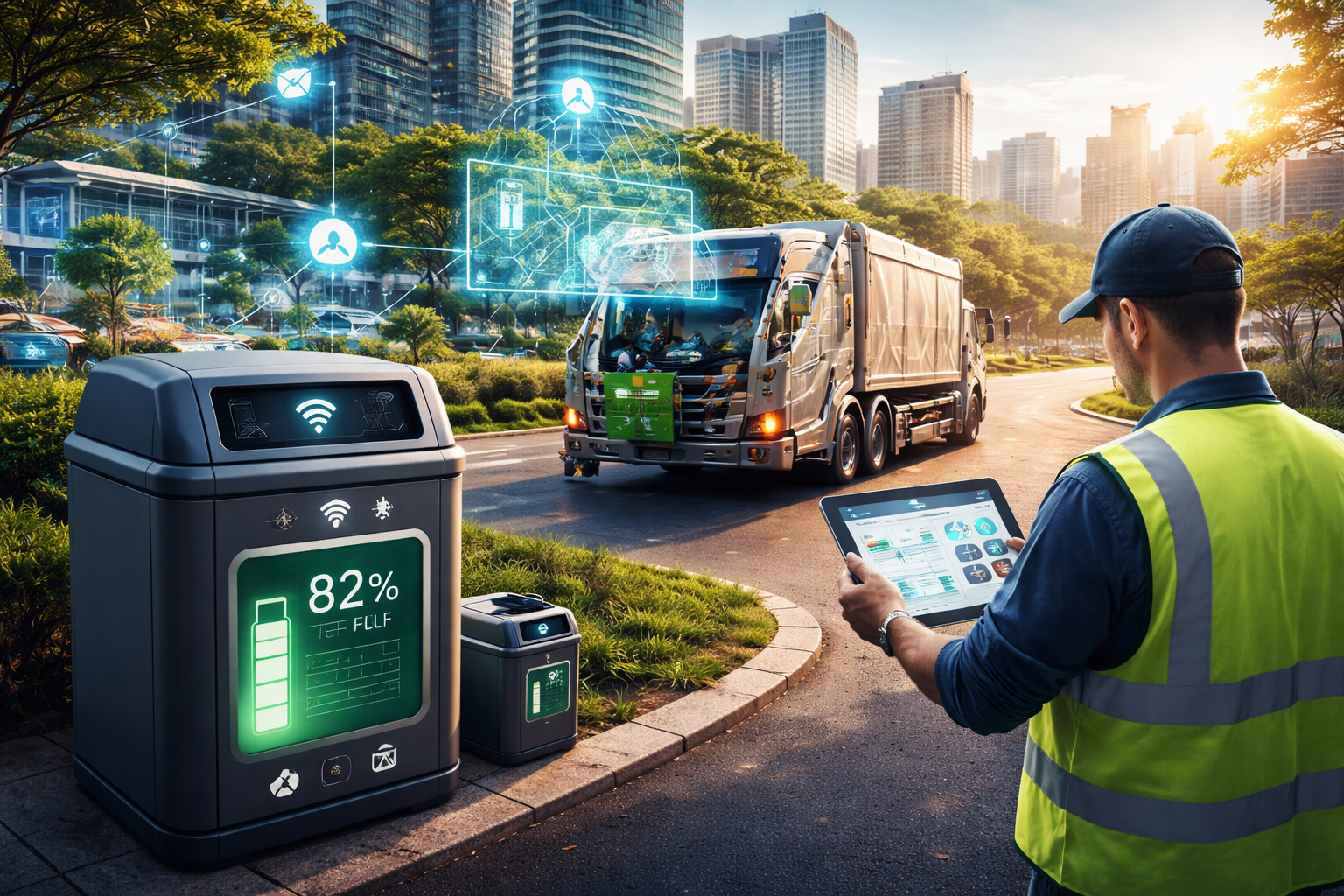
Smart bins are equipped with ultrasonic sensors, weight sensors, and RFID systems that detect fill levels and waste types. These sensors reduce unnecessary pickups and prevent overflow, minimizing public health risks and operational inefficiencies.
Route Optimization Systems
AI algorithms analyze bin fill data, traffic conditions, and fuel consumption patterns to generate optimized collection routes. This significantly reduces fuel costs, carbon emissions, and vehicle wear and tear.
Automated Waste Sorting
Computer vision systems identify materials on conveyor belts in recycling plants. AI-powered robotic arms separate plastics, metals, paper, and glass with higher accuracy than manual sorting methods, improving recycling rates and reducing contamination.
Predictive Analytics Dashboards
Advanced dashboards provide real-time monitoring of waste metrics, including collection frequency, recycling efficiency, and landfill diversion rates. Predictive analytics helps city planners forecast waste generation trends and allocate resources more effectively.
How Artificial Intelligence Enhances Operational Efficiency
AI-driven waste systems eliminate guesswork from waste management operations. Instead of following rigid schedules, collection trucks operate based on actual demand. Predictive maintenance algorithms monitor vehicle performance and prevent breakdowns, reducing downtime.
Data-driven insights allow waste authorities to identify areas with high waste generation and implement targeted awareness campaigns. AI also assists in detecting illegal dumping patterns through image recognition and geospatial data analysis.
AI Waste Management Software Development plays a crucial role in building intelligent platforms that integrate all operational components into a unified ecosystem. From real-time tracking to compliance monitoring, AI enhances transparency and accountability across the waste management lifecycle.
Environmental and Economic Benefits of Smart Waste Systems
Reduction in Carbon Emissions
Optimized routing decreases fuel consumption, directly reducing greenhouse gas emissions. Smart scheduling prevents redundant collection trips, contributing to cleaner urban environments.
Increased Recycling Rates
Automated sorting improves material recovery efficiency, ensuring recyclable materials are not lost to landfills. Higher recycling rates support circular economy initiatives and reduce raw material dependency.
Lower Operational Costs
By minimizing manual labor, fuel expenses, and equipment maintenance costs, AI-powered systems deliver measurable financial savings. Municipalities can reinvest these savings into sustainability programs and infrastructure upgrades.
Data-Driven Policy Development
Reliable data empowers policymakers to implement evidence-based waste regulations. Performance analytics helps measure the success of recycling campaigns and sustainability targets.
The Role of Readymade Waste Management Solutions in Accelerating Adoption
For municipalities and startups seeking faster deployment, readymade waste management solutions offer a practical alternative to building systems from scratch. These pre-built platforms include essential modules such as route optimization, smart bin integration, reporting dashboards, and compliance tracking.
Readymade waste management solutions reduce development time, minimize initial investment, and allow quicker scalability. Organizations can customize these systems according to regional requirements without undertaking lengthy development cycles. This approach is particularly beneficial for emerging markets where rapid urban growth demands immediate waste management modernization.
Smart Cities and the Integration of AI Waste Systems
Smart waste systems are a cornerstone of smart city infrastructure. Integration with other urban technologies such as traffic management systems, energy grids, and public safety networks creates a connected ecosystem.
For example, real-time traffic data can be synchronized with waste collection routes to avoid congestion. Waste-to-energy facilities can utilize AI data to optimize energy generation from organic waste. The seamless integration of AI-powered waste management into broader smart city frameworks enhances urban sustainability and resilience.
Challenges in Implementing AI-Based Waste Management Systems
Despite its advantages, AI-powered waste management faces several implementation challenges.
Initial infrastructure costs can be high, especially for sensor deployment and system integration. Data privacy and cybersecurity concerns must be addressed to protect sensitive municipal information. Workforce training is essential to ensure staff can effectively operate AI-driven platforms. Additionally, integrating legacy systems with modern AI solutions may require significant technical upgrades.
Overcoming these challenges requires strategic planning, stakeholder collaboration, and long-term investment in digital infrastructure.
Future Trends in AI Waste Management Software Development
The future of AI Waste Management Software Development is driven by advancements in automation, robotics, and blockchain integration. Emerging technologies are expected to enhance transparency in waste tracking and enable real-time monitoring of recycling supply chains.
Autonomous waste collection vehicles are under development to further reduce labor costs and increase operational efficiency. AI-powered material recognition systems are becoming more sophisticated, capable of identifying complex composite materials. Edge computing is also gaining importance, enabling real-time data processing at the device level without relying solely on centralized cloud systems.
As environmental regulations become stricter and sustainability goals become more ambitious, AI-driven waste management will evolve into a fully automated, predictive, and self-optimizing ecosystem.
Strategic Considerations for Businesses Investing in Smart Waste Solutions
Organizations planning to invest in AI-powered waste systems should evaluate scalability, interoperability, and compliance standards. Selecting the right technology partner is critical to ensuring seamless integration and long-term system reliability.
Businesses must assess whether to pursue custom AI Waste Management Software Development or adopt readymade waste management solutions based on budget, timeline, and operational complexity. A hybrid approach that combines customization with pre-built modules often delivers optimal results.
Long-term ROI analysis, regulatory alignment, and sustainability objectives should guide investment decisions to ensure that smart waste initiatives deliver measurable value.
Conclusion
AI-powered waste management systems are redefining how cities and businesses handle waste in the modern era. By integrating advanced analytics, smart sensors, and automated sorting technologies, these systems enhance operational efficiency, reduce environmental impact, and drive sustainable urban development. Whether through custom AI Waste Management Software Development or the adoption of readymade waste management solutions, organizations have multiple pathways to modernize their waste infrastructure. As technological innovation continues to accelerate, smart waste management will become an essential pillar of future-ready cities and environmentally responsible enterprises.
Frequently Asked Questions
What is AI-powered waste management?
AI-powered waste management refers to the use of artificial intelligence technologies such as machine learning, computer vision, and predictive analytics to optimize waste collection, sorting, and disposal processes. It improves efficiency, reduces costs, and enhances sustainability.
How does AI Waste Management Software Development benefit municipalities?
AI Waste Management Software Development enables municipalities to build customized platforms that integrate smart bins, route optimization, real-time monitoring, and predictive analytics. This leads to reduced operational costs, improved recycling rates, and better regulatory compliance.
Are readymade waste management solutions suitable for small cities?
Yes, readymade waste management solutions are ideal for small and mid-sized cities because they reduce development time and initial investment. They offer scalable modules that can be customized based on local waste management needs.
What technologies are commonly used in smart waste systems?
Smart waste systems typically use IoT sensors, GPS tracking, cloud computing, AI-based analytics, computer vision for sorting, and predictive maintenance algorithms to improve overall efficiency.
What is the future of AI in waste management?
The future includes autonomous collection vehicles, advanced robotic sorting systems, blockchain-based waste tracking, and edge computing integration. These innovations will further automate and optimize waste management processes globally.




 English
 Arabic
 French
 Spanish
 Portuguese
 Deutsch
 Turkish
 Dutch
Dutch
 Italiano
 Romaian
 Portuguese (Brazil)
 Greek
Greek
