


How AI Can Accelerate Business Growth in 2026
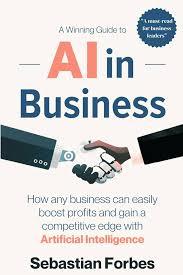
2026: The Year Intelligence Becomes Infrastructure
In 2026, artificial intelligence is no longer be an “add-on” tool. It has evolved into business infrastructure — as essential as electricity or the internet. Companies are no longer asking whether AI is useful. They are asking how deeply it can be integrated to unlock speed, scale, and sustainable competitive advantage.
Understanding how AI can accelerate business growth in 2026 requires looking beyond automation buzzwords. Growth today is about precision, predictive power, personalization, and proactive strategy. AI delivers all four — simultaneously.
Businesses that treat AI as a strategic growth engine rather than a technical experiment are positioning themselves for exponential expansion.
Data to Dominance: From Information Overload to Smart Action
Most organizations are drowning in data but starving for clarity. In 2026, AI changes that dynamic completely.
Machine learning systems analyze customer behavior, operational performance, supply chain metrics, and market signals in real time. Instead of waiting for quarterly reports, leaders receive predictive insights instantly. AI identifies patterns humans might overlook and transforms them into actionable strategies.
This results in:
-
Faster decision cycles
-
Reduced operational blind spots
-
Accurate demand forecasting
-
Early identification of new revenue streams
Speed in decision-making directly translates into accelerated business growth. Companies that move first often win first.
Intelligent Customer Journeys: Growth Through Relevance
Customer expectations have evolved. Generic communication no longer converts. In 2026, AI enables businesses to craft hyper-relevant experiences tailored to individual preferences, behaviors, and purchasing history.
Rather than blasting one message to thousands, AI customizes offers dynamically. It predicts what customers want before they actively search for it. From adaptive websites to AI-powered chat interfaces, brands now create seamless, intuitive digital journeys.
The growth impact is measurable:
-
Higher engagement rates
-
Increased repeat purchases
-
Stronger emotional brand connection
-
Lower customer acquisition costs
When customers feel understood, they stay — and they spend more.
Automation 2.0: Strategic Efficiency, Not Just Cost Cutting
Early automation focused on reducing manual work. In 2026, AI-driven automation is strategic.
Intelligent systems now handle complex workflows such as lead qualification, financial forecasting, compliance monitoring, and even product recommendations. These systems learn and improve over time, increasing accuracy and productivity.
But the real acceleration happens when human talent is redirected. Teams no longer spend hours on repetitive reporting or data entry. Instead, they focus on innovation, partnerships, and strategic expansion.
AI doesn’t replace people — it multiplies their impact.
Smarter Marketing Ecosystems
Marketing in 2026 is no longer campaign-based — it is ecosystem-based.
AI continuously analyzes campaign performance, audience behavior, and engagement patterns. It adjusts targeting, bidding strategies, and messaging in real time. This continuous optimization eliminates wasted budget and enhances return on investment.
Sales teams benefit as well. AI-driven scoring systems prioritize leads most likely to convert, reducing sales cycles and increasing close rates. Predictive models estimate lifetime customer value, guiding smarter allocation of marketing resources.
The result? Revenue grows faster without proportionally increasing costs.
AI-Driven Innovation and Product Development
Innovation used to rely heavily on intuition and market surveys. Today, AI analyzes customer feedback, support conversations, product usage data, and industry trends to reveal hidden opportunities.
In 2026, businesses use AI simulations to test product features digitally before launching them. This reduces development risks and shortens time-to-market. Companies can experiment rapidly, learn quickly, and refine continuously.
The businesses that grow fastest are those that adapt fastest — and AI dramatically enhances adaptability.
Operational Intelligence and Supply Chain Agility
Global markets remain unpredictable. AI helps businesses maintain resilience and agility.
Predictive models forecast supply fluctuations, transportation delays, and inventory shortages before they disrupt operations. AI systems recommend optimized shipping routes, efficient stock levels, and dynamic pricing adjustments.
Operational excellence directly influences profitability. Lower costs, reduced waste, and smoother logistics create financial capacity for reinvestment into growth initiatives.
In 2026, operational intelligence is not optional — it is a growth multiplier.
Risk Mitigation and Smart Governance
Sustainable growth requires stability. AI strengthens governance by identifying anomalies in financial transactions, cybersecurity threats, and regulatory compliance risks.
Instead of reacting to issues after damage occurs, AI flags irregular patterns in real time. Fraud detection algorithms evolve continuously, learning from new threats.
By protecting assets and maintaining trust, companies safeguard the foundation upon which growth depends.
AI Culture: The Hidden Growth Accelerator
Technology alone does not accelerate business growth. Culture does.
Organizations that successfully leverage AI in 2026 foster a mindset of experimentation, continuous learning, and data-driven thinking. Employees are trained to collaborate with AI tools rather than resist them. Leadership aligns AI investments with clear business objectives.
This alignment ensures that AI initiatives are not isolated experiments but interconnected systems driving measurable outcomes.
When AI becomes embedded in strategy, marketing, operations, finance, and customer service simultaneously, growth compounds.
Competitive Edge in a Hyper-Digital Economy
Markets in 2026 move at digital speed. Competitors emerge quickly. Customer loyalty shifts rapidly.
AI provides businesses with three decisive advantages:
-
Predictive foresight
-
Real-time adaptability
-
Scalable personalization
Companies that embrace AI outperform those relying on traditional processes. They pivot faster, optimize smarter, and innovate more confidently.
In a crowded marketplace, intelligence becomes differentiation.
Conclusion: Growth in 2026 Is Powered by Intelligence
Understanding how AI can accelerate business growth in 2026 is about recognizing a fundamental shift. AI is no longer a futuristic investment — it is a present-day catalyst.
It enhances decisions.
It personalizes experiences.
It optimizes operations.
It drives innovation.
It protects stability.
Businesses that strategically integrate AI across departments will not just grow incrementally — they will scale exponentially.

 English
 Arabic
 French
 Spanish
 Portuguese
 Deutsch
 Turkish
 Dutch
Dutch
 Italiano
 Romaian
 Portuguese (Brazil)
 Greek
Greek
