Modern businesses operate in an era where sustainability, regulatory compliance, and operational efficiency are no longer optional—they are strategic necessities. Rapid urbanization, increasing industrial activity, and stricter environmental regulations have forced organizations to rethink how they manage waste. As a result, readymade waste management solutions are gaining significant attention among enterprises that want faster deployment, lower costs, and measurable environmental impact without building systems from scratch. This comprehensive guide explores how these solutions work, why they matter, and how AI Waste Management Software Development is shaping the next generation of intelligent waste ecosystems.
Understanding the Growing Need for Digital Waste Management Systems
Traditional waste management methods often rely on manual tracking, paper-based documentation, and reactive scheduling. These outdated processes create inefficiencies such as missed pickups, overfilled bins, fuel wastage, compliance risks, and poor data visibility. Businesses across manufacturing, healthcare, retail, logistics, and municipalities are increasingly adopting digital systems to eliminate these bottlenecks.
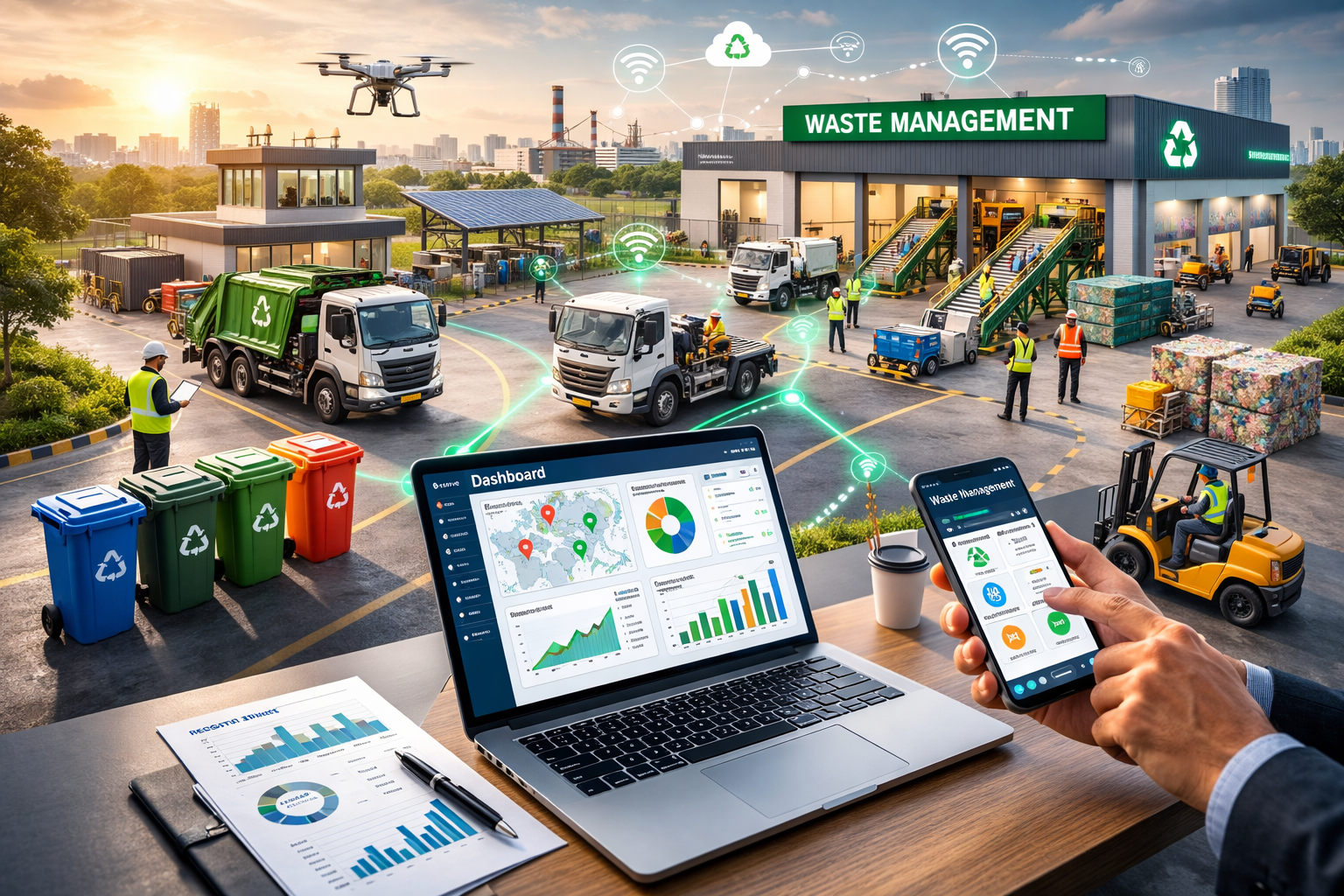
Digital waste management platforms centralize data related to waste generation, collection schedules, fleet routes, recycling processes, disposal records, and compliance reporting. Instead of fragmented systems, organizations get a unified dashboard that offers transparency, automation, and actionable insights. This shift is especially critical for businesses operating across multiple locations where coordination and reporting complexity are significantly higher.
What Are Readymade Waste Management Solutions and How Do They Work
Readymade waste management solutions are pre-built software platforms designed to automate and streamline waste operations. Unlike custom-built systems that require months of development and high investment, these solutions offer ready deployment with configurable modules tailored to specific industry needs.
These platforms typically include:
-
Waste tracking and categorization modules
-
Smart bin monitoring integration
-
Fleet and route optimization
-
Real-time reporting dashboards
-
Regulatory compliance management
-
Customer and vendor management systems
-
Billing and invoicing automation
The core advantage lies in rapid implementation. Businesses can configure the system based on their operational requirements instead of investing time in building from scratch. Most platforms also support cloud-based deployment, ensuring scalability and remote accessibility.
Key Business Benefits of Implementing Readymade Waste Management Solutions
Faster Deployment and Lower Initial Investment
Developing a custom waste management system demands significant time and resources. Readymade waste management solutions reduce development timelines and allow businesses to go live quickly. This accelerates ROI and ensures operational improvements without prolonged implementation cycles.
Improved Operational Efficiency
Automated scheduling, route optimization, and digital documentation reduce manual errors and operational delays. Real-time data allows managers to identify inefficiencies and implement corrective actions immediately.
Regulatory Compliance and Risk Mitigation
Environmental regulations are becoming stricter worldwide. Digital platforms help businesses maintain accurate disposal records, generate compliance reports, and ensure adherence to local and international guidelines.
Data-Driven Decision Making
Advanced analytics dashboards provide insights into waste generation trends, recycling rates, and cost structures. This enables strategic planning and sustainability reporting.
Scalability for Growing Enterprises
As businesses expand geographically or operationally, scalable platforms accommodate increased waste volume, additional users, and new compliance requirements without system overhaul.
The Role of AI Waste Management Software Development in Modern Solutions
Artificial Intelligence is transforming the waste management industry by introducing predictive analytics, automation, and intelligent resource allocation. AI Waste Management Software Development integrates machine learning algorithms, IoT sensors, and data analytics into waste operations to create smarter ecosystems.
AI-driven systems can:
-
Predict bin fill levels using sensor data
-
Optimize collection routes based on traffic and historical trends
-
Identify recyclable materials through image recognition
-
Forecast waste generation patterns
-
Reduce fuel consumption through dynamic route adjustments
By combining AI with readymade waste management solutions, businesses can significantly reduce operational costs and environmental footprint while improving service quality.
Core Features to Look for in a Readymade Waste Management Platform
Smart Bin Monitoring Integration
IoT-enabled bins equipped with sensors transmit fill-level data in real time. This prevents overflow situations and enables on-demand collection scheduling.
Route Optimization and Fleet Management
Advanced route optimization reduces fuel consumption and travel time. Fleet tracking ensures transparency and accountability across operations.
Waste Segregation and Recycling Management
The system should track different waste categories such as organic, recyclable, hazardous, and industrial waste. Proper categorization improves recycling efficiency and compliance reporting.
Compliance Reporting and Documentation
Automated generation of compliance documents simplifies audits and regulatory inspections.
Multi-Location Management
For enterprises operating across multiple sites, centralized dashboards provide unified oversight.
Integration Capabilities
Seamless integration with ERP, CRM, billing systems, and government portals enhances operational continuity.
Industries Benefiting from Readymade Waste Management Solutions
Manufacturing Sector
Manufacturing facilities generate industrial waste that must be handled carefully to meet environmental standards. Digital tracking ensures safe disposal and regulatory compliance.
Healthcare Industry
Hospitals and laboratories generate biomedical waste that requires strict documentation and controlled disposal. Automated tracking minimizes risks and improves accountability.
Retail and Commercial Enterprises
Retail chains produce packaging waste and organic waste. Smart systems help optimize collection schedules and improve recycling rates.
Municipal Corporations
Urban local bodies use digital waste platforms to monitor public waste collection, improve sanitation, and reduce operational costs.
Construction and Real Estate
Construction projects generate debris and hazardous materials. Structured tracking and reporting reduce environmental impact and legal risks.
Comparing Custom Development and Readymade Waste Management Solutions
Custom-built software offers full flexibility but requires higher investment, longer development cycles, and ongoing technical maintenance. In contrast, readymade waste management solutions provide standardized features, quicker deployment, and lower upfront costs.
However, customization remains possible within configurable modules. Many providers also offer hybrid models that combine ready frameworks with tailored enhancements, especially when integrated with AI Waste Management Software Development capabilities.
Implementation Strategy for Successful Deployment
Assess Operational Requirements
Identify waste types, collection frequency, fleet size, compliance requirements, and reporting needs.
Choose a Reliable Technology Partner
Select a vendor with industry expertise, scalable infrastructure, and strong post-deployment support.
Conduct Pilot Testing
Start with a pilot deployment to evaluate system performance and identify optimization opportunities.
Train Staff and Stakeholders
Ensure that employees understand how to use dashboards, mobile apps, and reporting tools effectively.
Monitor Performance Metrics
Track KPIs such as fuel savings, route efficiency, recycling percentage, and compliance accuracy.
Sustainability and ESG Impact of Digital Waste Management
Environmental, Social, and Governance (ESG) reporting has become a strategic priority for global businesses. Digital waste management platforms support sustainability goals by reducing landfill waste, increasing recycling rates, and minimizing carbon emissions.
AI-enabled forecasting also supports circular economy models by identifying reusable material streams and optimizing resource recovery processes. Businesses adopting intelligent systems strengthen their brand reputation while contributing to long-term environmental sustainability.
Cost Considerations and ROI Analysis
Investment in readymade waste management solutions varies based on deployment model, features, and customization requirements. Cloud-based subscription models reduce capital expenditure, while enterprise-grade systems may require higher licensing fees.
Key ROI drivers include:
-
Reduced fuel and fleet costs
-
Lower compliance penalties
-
Improved operational efficiency
-
Increased recycling revenue
-
Enhanced reporting accuracy
When integrated with AI Waste Management Software Development, predictive analytics further amplify cost savings by reducing unnecessary pickups and optimizing workforce allocation.
Future Trends in Waste Management Technology
The future of waste management is driven by automation, IoT connectivity, and AI innovation. Emerging trends include:
-
Robotics for automated waste sorting
-
Blockchain for transparent waste tracking
-
Predictive maintenance for waste collection vehicles
-
Digital twins for waste infrastructure modeling
-
Advanced analytics for carbon footprint monitoring
Businesses that adopt intelligent and scalable systems today will gain a competitive advantage as regulatory and sustainability expectations continue to rise.
Conclusion
The growing complexity of environmental regulations and sustainability expectations demands smarter waste management strategies. Readymade waste management solutions provide businesses with a fast, scalable, and cost-effective way to modernize operations. When combined with AI Waste Management Software Development, these systems transform traditional waste handling into data-driven, predictive, and environmentally responsible ecosystems. Organizations that invest in intelligent waste technologies today position themselves for operational excellence, regulatory compliance, and long-term sustainability success.
Frequently Asked Questions
What are readymade waste management solutions?
Readymade waste management solutions are pre-built software platforms designed to automate waste tracking, collection scheduling, reporting, and compliance management without requiring custom development from scratch.
How does AI Waste Management Software Development improve waste operations?
AI Waste Management Software Development introduces predictive analytics, route optimization, smart bin monitoring, and automated material identification to reduce costs and improve operational efficiency.
Are readymade waste management solutions suitable for small businesses?
Yes, many platforms offer scalable subscription-based models that allow small and medium enterprises to implement digital waste management systems without large capital investments.
How long does it take to implement a waste management software solution?
Implementation timelines vary depending on system complexity and customization needs, but readymade waste management solutions typically deploy much faster than fully custom-built systems.
Can these solutions integrate with existing enterprise systems?
Most modern platforms support integration with ERP, CRM, billing, and compliance systems to ensure seamless data flow across business operations.
What is the expected return on investment?
ROI depends on operational scale, but businesses often experience savings through optimized routes, reduced fuel costs, lower compliance penalties, and improved recycling efficiency.




 English
 Arabic
 French
 Spanish
 Portuguese
 Deutsch
 Turkish
 Dutch
Dutch
 Italiano
 Russian
 Romaian
 Greek
Greek
