


Electric Resistance Welding: Precision, Efficiency, and Reliability for Modern Manufacturing
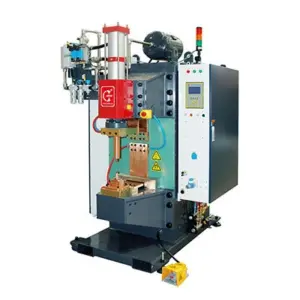
In today’s high-demand industrial landscape, manufacturers are continually seeking welding solutions that balance precision, speed, and cost-efficiency. Electric resistance welding (ERW) has emerged as a cornerstone technology in this quest, offering reliable, high-quality joints across a range of metal types and thicknesses. From automotive assembly lines to appliance manufacturing, ERW remains a go-to solution for engineers and OEMs looking to optimize production and maintain consistent quality.
At Heron Welder, we specialize in delivering cutting-edge resistance welding machines, clinching systems, and automated welding solutions, designed to meet the needs of modern factories and production integrators worldwide. In this guide, we explore the principles, applications, types, and best practices of electric resistance welding, helping manufacturers make informed decisions about their welding processes.
Understanding Electric Resistance Welding
Electric resistance welding is a process in which heat generated by electrical resistance is used to join metal components. Unlike traditional arc welding, ERW does not rely on an external filler material or open flame. Instead, the combination of electrical current and applied pressure fuses the metals at the interface, creating a strong and consistent bond.
How It Works
-
Current Application: An electric current is passed through the metal pieces at the contact area.
-
Resistance Heating: The natural electrical resistance of the metals generates heat locally.
-
Pressure Application: Simultaneously, mechanical pressure is applied, forcing the metal surfaces together.
-
Solid-State Bonding: The heated metal flows and coalesces under pressure, forming a durable joint upon cooling.
This method ensures rapid cycle times, precise control over weld quality, and minimal thermal distortion a critical advantage in automated production environments.
Types of Electric Resistance Welding
ERW encompasses several welding techniques, each optimized for different manufacturing needs:
1. Spot Welding
Spot welding is the most common form of resistance welding. It is ideal for joining sheet metal, particularly in automotive body panels, enclosures, and household appliances. Spot welding applies current through copper electrodes that clamp the metal sheets together, creating a small, precise weld at each spot.
2. Seam Welding
Seam welding produces continuous, leak-proof joints, often used for fuel tanks, pipes, and HVAC components. The process uses rotating wheel electrodes to create overlapping welds along the seam, combining speed and consistency for high-volume production.
3. Projection Welding
Projection welding focuses current on raised sections or “projections” of the metal, ensuring precise fusion at the intended location. This technique is commonly applied in fastener assembly, such as nuts, bolts, or studs, and electrical connectors.
4. Capacitor Discharge and MFDC Welding
Capacitor discharge (CD) and medium-frequency direct current (MFDC) welding are advanced ERW variants for delicate or thin metals. They provide high precision, minimal heat input, and repeatable results for specialized applications, including battery tab welding, electronics, and lightweight components.
Applications Across Industries
Electric resistance welding is versatile, making it essential in several sectors:
-
Automotive Manufacturing: Body panels, structural components, and electrical assemblies.
-
Electrical & Electronics: Bus bars, terminals, battery packs, and enclosures.
-
Appliances & Consumer Goods: Washing machines, refrigerators, and HVAC units.
-
Industrial Equipment: Pipes, tanks, and precision machinery assemblies.
By integrating ERW into automated production lines, manufacturers can achieve high throughput with reduced labor costs, while maintaining consistent joint quality.
Advantages Over Traditional Welding Methods
ERW offers several benefits that make it the preferred choice for high-volume, automated operations:
-
Speed and Efficiency: Welds are completed in fractions of a second.
-
Consistent Quality: Automated controls ensure uniform weld size and strength.
-
Minimal Distortion: Localized heating reduces the risk of warping.
-
Cost Savings: No filler material is needed, and energy consumption is lower compared to arc welding.
-
Automation-Friendly: Easily integrated into robotic or fully automated production lines.
For OEMs and factory managers, these advantages translate into improved productivity, lower rejection rates, and predictable production costs.
Best Practices for Electric Resistance Welding
Maximizing ERW performance requires attention to both equipment and process parameters:
-
Material Preparation: Ensure clean, oxide-free surfaces for reliable current flow.
-
Electrode Maintenance: Properly shaped and cooled electrodes reduce wear and improve weld consistency.
-
Parameter Optimization: Adjust current, pressure, and time based on material type and thickness.
-
Process Monitoring: Use sensors and controllers to track weld quality and prevent defects.
-
Integration with Automation: Robotic arms and conveyor systems can enhance efficiency, accuracy, and safety.
Heron Welder provides a range of controllers and automated welding solutions that simplify parameter management and optimize production outcomes for various industrial needs.
Why Choose Heron for Resistance Welding Solutions
With decades of experience in industrial welding technology, Heron Welder offers:
-
Complete Welding Systems: From MFDC and spot welding machines to clinching and self-pierce riveting solutions.
-
Customized Automation: Tailored production lines for specific industrial applications.
-
Global Support: Expert technical support and training for OEMs, integrators, and factory teams.
-
High-Quality Components: Durable electrodes, precise controllers, and reliable welding guns for long-term performance.
Our solutions help manufacturers increase productivity, reduce downtime, and ensure high-quality welds across multiple applications.
FAQs About Electric Resistance Welding
Q1: Can ERW weld different metal types?
Yes, ERW can weld compatible metals, typically similar alloys. Advanced MFDC and capacitor discharge machines handle dissimilar metals with careful parameter control.
Q2: What thicknesses can ERW handle?
Spot and projection welding typically handle thin to medium sheets (0.3–6 mm). Seam, MFDC, and CD welding extend capabilities for delicate or thicker materials.
Q3: Is ERW safe for automated production lines?
Absolutely. ERW is highly compatible with robotic integration, offering precise, repeatable welding cycles with minimal operator intervention.
Q4: How does ERW compare to arc welding?
ERW is faster, produces less distortion, and requires no filler material. Arc welding may be preferred for thicker or structural steel components.
Q5: How do I choose the right ERW machine?
Consider material type, thickness, production speed, and automation level. Heron offers expert guidance and customized solutions to match your requirements.
Take the Next Step with Heron Welder
For manufacturers, OEMs, and automation integrators seeking precision, efficiency, and reliability in metal joining, electric resistance welding is a proven solution. Whether you need spot, seam, projection, or advanced MFDC welding, Heron Welder delivers industry-leading machines and complete production line solutions.
Contact us today to request a quote or consult our experts for customized welding and automation systems tailored to your factory’s unique needs.

 English
 Arabic
 French
 Spanish
 Portuguese
 Turkish
 Dutch
Dutch
 Italiano
 Russian
 Romaian
 Portuguese (Brazil)
 Greek
Greek
