


Medical Sensors Accelerating Digital Health Transformation
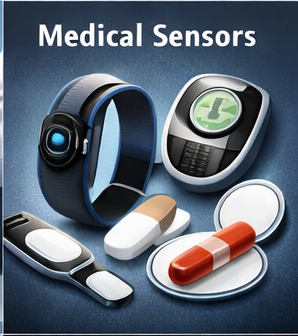
The Expanding Role of Medical Sensors in Modern Healthcare
Medical sensors are redefining how healthcare is delivered, monitored, and optimized across clinical and home-based settings. From hospital intensive care units to remote patient monitoring platforms, these devices form the backbone of real-time diagnostics and continuous health assessment. As healthcare systems worldwide shift toward preventive and personalized medicine, the demand for advanced medical sensors is accelerating at a remarkable pace.
Today’s medical sensors are engineered to capture a wide spectrum of physiological parameters, including heart rate, oxygen saturation, glucose levels, and body temperature. Their integration into digital health ecosystems allows clinicians to access accurate data streams that improve clinical decision-making.
Wearable Medical Sensors and Remote Monitoring
One of the most transformative trends is the rise of wearable medical sensors. These compact, lightweight devices are embedded into smartwatches, patches, and fitness bands, enabling continuous patient monitoring outside traditional hospital environments. Wearable medical sensors play a pivotal role in chronic disease management, particularly for cardiovascular disorders and diabetes.
Remote patient monitoring systems increasingly rely on wearable medical sensors to transmit data securely to healthcare providers. This shift reduces hospital readmissions, supports early intervention, and enhances patient engagement. Advances in miniaturization, low-power electronics, and wireless communication protocols such as Bluetooth Low Energy (BLE) and IoT frameworks have significantly improved the efficiency and reliability of these devices.
Moreover, artificial intelligence integration is enhancing data analytics capabilities. Algorithms can now interpret data collected by medical sensors to detect anomalies, predict potential complications, and generate actionable insights. This convergence of sensor technology and AI is setting a new standard for proactive healthcare management.
Advancements in Biosensors and Precision Diagnostics
Biosensors represent another critical segment driving innovation in the medical sensors landscape. These devices combine a biological recognition element with a transducer to detect biochemical markers in real time. Biosensors are widely used in glucose monitoring systems, infectious disease diagnostics, and even cancer biomarker detection.
Recent developments in nanotechnology and microfluidics have significantly improved the sensitivity and specificity of biosensors. For instance, lab-on-chip platforms allow rapid testing with minimal sample volumes, making diagnostics faster and more accessible. The COVID-19 pandemic further accelerated the adoption of biosensors for rapid detection and decentralized testing solutions.
Importantly, research and development efforts are focusing on non-invasive biosensors. Sweat-based and saliva-based diagnostic tools are gaining attention as alternatives to traditional blood-based tests. These innovations reduce patient discomfort and expand the scope of preventive healthcare.
Pressure Sensors and Critical Care Applications
Pressure sensors continue to play a vital role in various medical applications, particularly in critical care and surgical settings. They are extensively used in ventilators, infusion pumps, and blood pressure monitoring systems. High-precision pressure sensors ensure accurate readings, which are essential for life-support equipment and patient safety.
In minimally invasive procedures, pressure sensors are integrated into catheters to measure intracranial or intra-abdominal pressure. Their ability to deliver real-time feedback enables surgeons to make precise adjustments during complex interventions. Additionally, smart mattresses equipped with pressure sensors help prevent pressure ulcers in bedridden patients by monitoring and redistributing body weight.
Beyond hospitals, pressure sensors are increasingly incorporated into home healthcare devices. Digital blood pressure monitors, sleep apnea management systems, and smart inhalers rely on advanced pressure sensing technologies to deliver reliable performance in non-clinical environments.
A recent research report by Grand View Research highlights the sustained growth trajectory of the sector, emphasizing technological advancements and increasing healthcare digitization as primary growth drivers. In essence, the global medical sensors market is expected to reach USD 142.2 billion by 2030, expanding at a 19.1% compound annual growth rate from 2024 onward. This projection underscores the strategic importance of innovation and regulatory compliance in sustaining market momentum.

 English
 Arabic
 French
 Spanish
 Portuguese
 Deutsch
 Turkish
 Italiano
 Russian
 Romaian
 Portuguese (Brazil)
 Greek
Greek
