


Industrial Automation Software and the Future of AI Factories
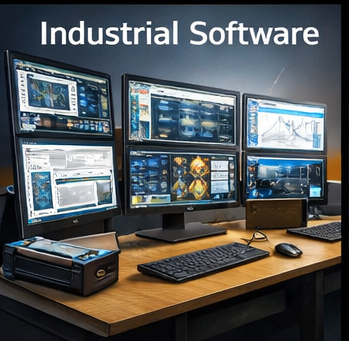
Digital Transformation Reshaping Industrial Operations
The rapid acceleration of digital transformation is redefining how factories, processing plants, and large-scale industrial facilities operate. At the center of this shift is industrial software, which has evolved from basic control systems into intelligent, data-driven platforms that connect machines, people, and processes in real time. Organizations are increasingly investing in advanced industrial software solutions to enhance productivity, reduce downtime, and improve operational visibility across complex supply chains.
Cloud connectivity, Industrial Internet of Things (IIoT) integration, and edge computing are now standard components of modern industrial automation software. These technologies enable seamless communication between equipment and enterprise systems, allowing manufacturers to collect and analyze massive volumes of data. As a result, decision-making is becoming faster, more accurate, and more predictive rather than reactive.
One of the key growth drivers behind this expansion is the global push for efficiency and sustainability. According to Grand View Research., the global industrial software market size is projected to reach USD 60.91 billion by 2030, growing at a CAGR of 16.8% from 2024 to 2030. This growth trajectory reflects increasing demand for smart manufacturing environments and scalable digital infrastructure that can adapt to changing production requirements.
Rise of Smart Manufacturing and AI Integration
Artificial intelligence and machine learning are significantly enhancing the capabilities of manufacturing software. Predictive maintenance, for example, uses real-time sensor data and advanced analytics to anticipate equipment failures before they occur. This reduces unplanned downtime and extends asset lifecycles, directly impacting profitability.
Modern industrial automation software is also leveraging digital twins—virtual replicas of physical assets or processes—to simulate performance, optimize workflows, and test production changes without interrupting operations. These capabilities are especially valuable in industries such as automotive, energy, pharmaceuticals, and heavy machinery, where precision and compliance are critical.
Another emerging trend is the convergence of operational technology (OT) and information technology (IT). Historically siloed systems are now being unified through integrated industrial software solutions that provide end-to-end visibility—from shop-floor equipment to enterprise resource planning (ERP) systems. This integration enables better coordination between production planning, inventory management, and quality control.
Cloud, Cybersecurity, and Scalable Platforms
Cloud-based deployment models are rapidly gaining traction in the industrial sector. Manufacturers are transitioning from on-premise legacy systems to flexible, subscription-based manufacturing software platforms. Cloud-enabled industrial software offers scalability, remote access, and continuous updates, which are essential for globally distributed operations.
However, as connectivity increases, so does the risk of cyber threats. Cybersecurity has therefore become a critical priority in the development of industrial software solutions. Vendors are embedding advanced encryption, multi-layer authentication, and network monitoring tools directly into industrial automation software to safeguard sensitive operational data. Regulatory compliance and data protection standards are also shaping product development strategies.
In addition, low-code and no-code platforms are making industrial software more accessible to non-technical users. Plant managers and engineers can now customize dashboards, workflows, and reporting tools without deep programming expertise. This democratization of technology accelerates deployment and enhances user adoption across organizations.
Sustainability and Data-Driven Decision Making
Sustainability goals are further influencing the evolution of manufacturing software. Companies are using advanced analytics to monitor energy consumption, track carbon emissions, and optimize resource utilization. Industrial software plays a central role in enabling transparent environmental reporting and supporting corporate ESG initiatives.
In essence, the market is witnessing a shift toward intelligent, interconnected ecosystems powered by advanced industrial automation software. The projected growth to USD 60.91 billion by 2030 underscores the scale of opportunity and transformation underway. As industrial enterprises continue modernizing their operations, industrial software solutions will remain a foundational element in achieving resilience, efficiency, and long-term competitiveness.
The convergence of AI, cloud computing, IIoT, and cybersecurity is not merely a technological upgrade—it represents a structural transformation in how industries design, produce, and deliver value. Companies that strategically adopt next-generation industrial software will be better positioned to navigate supply chain disruptions, evolving regulations, and intensifying global competition.

 English
 Arabic
 French
 Spanish
 Portuguese
 Deutsch
 Turkish
 Dutch
Dutch
 Italiano
 Romaian
 Portuguese (Brazil)
 Greek
Greek
