


AI-Powered Fuel Delivery App Development: The Future of On-Demand Energy Solutions
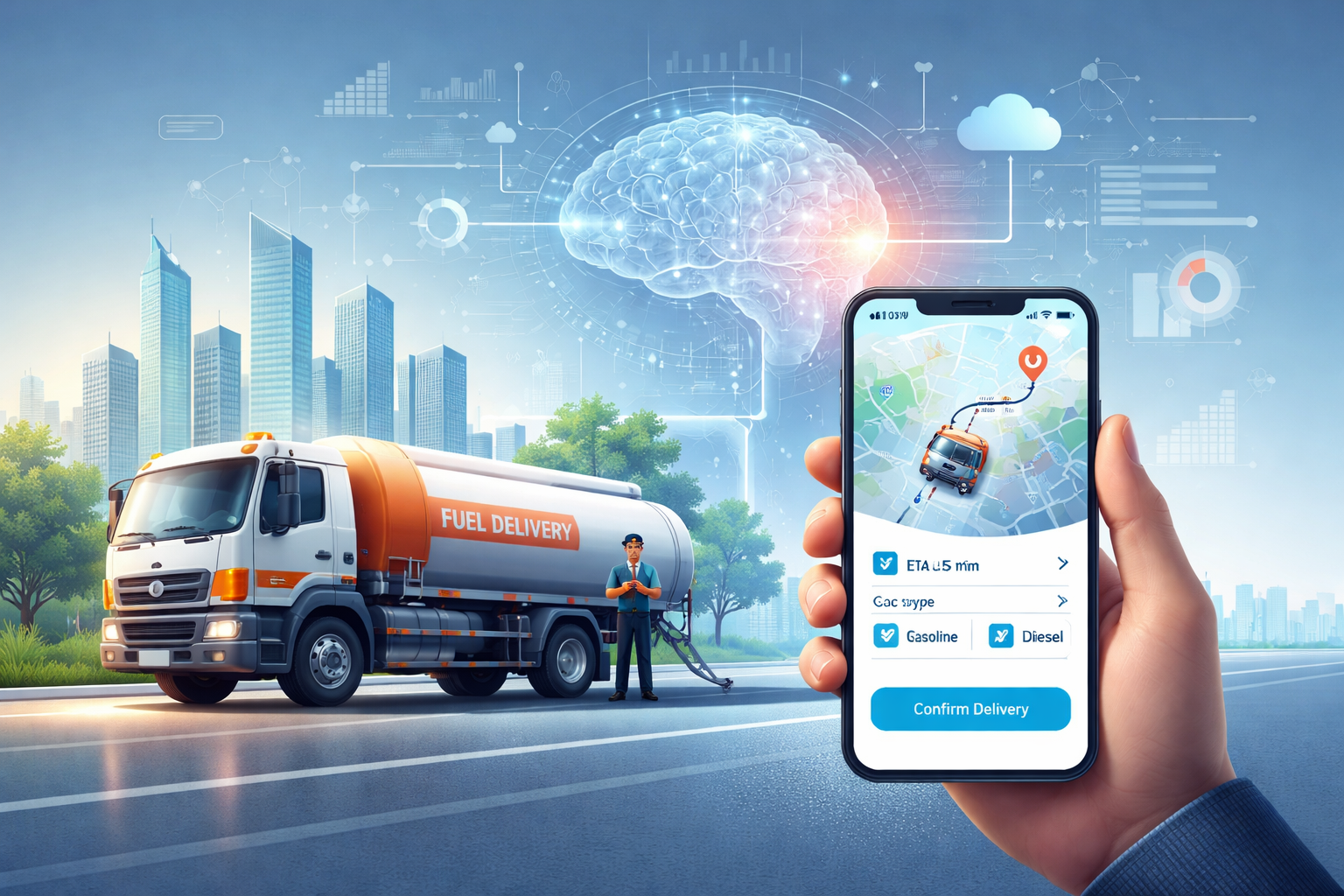
The on-demand economy has transformed how people access everyday services, from groceries and medicine to transportation and home maintenance. Now, the same convenience is rapidly extending into one of the most essential resources in modern life: fuel. As logistics, mobile payments, and real-time tracking technologies mature, businesses are increasingly investing in Fuel Delivery App Development to serve consumers and commercial fleets with doorstep fuel refilling.
But in 2026 and beyond, the market is no longer defined by basic ordering and delivery. The next major shift is being driven by artificial intelligence. AI is transforming how fuel delivery platforms forecast demand, optimize delivery routes, prevent fraud, manage safety compliance, and personalize customer experiences. This is why AI-powered Fuel Delivery App Development is becoming the most strategic direction for energy startups, logistics providers, and petroleum distribution companies.
This article explains how AI is changing the fuel delivery industry, what features are essential, what technologies are required, how much it costs, and how entrepreneurs can launch a scalable solution.
Understanding AI-Powered Fuel Delivery and Why the Market Is Expanding Fast
Fuel delivery apps allow users to order petrol, diesel, or other energy products directly to their location. Instead of driving to a gas station, customers can schedule fuel delivery to their home, workplace, or fleet yard.
This concept is gaining traction due to several factors:
-
Increasing consumer demand for convenience-based services
-
Growth of last-mile logistics infrastructure
-
Rising fleet and delivery vehicle requirements in cities
-
Expansion of B2B fueling needs for construction, logistics, and warehouses
-
The increasing adoption of digital payments and real-time tracking
However, the real competitive edge today is not simply “fuel delivered to your location.” The competitive advantage is delivering fuel efficiently, safely, and profitably at scale.
This is where AI-powered Fuel Delivery App Development becomes essential.
AI systems can help businesses:
-
Predict peak demand by zone and time
-
Auto-assign drivers and tankers
-
Reduce delivery delays with intelligent routing
-
Detect suspicious orders or payment fraud
-
Ensure compliance through automated safety checks
-
Optimize pricing and offers based on customer behavior
In short, AI enables fuel delivery businesses to grow faster while controlling operational costs and maintaining safety standards.
Why AI Is a Game-Changer in Fuel Delivery App Development
Traditional fuel delivery apps rely heavily on manual operations. Dispatch teams manually assign drivers, delivery schedules are fixed, and pricing often remains static. As order volume increases, these systems break down quickly due to human limitations and inefficiencies.
AI improves fuel delivery operations through automation and decision intelligence. It does not just make the app smarter for customers, but also transforms the backend logistics engine that powers the entire business.
Here are the key areas where AI creates measurable impact:
AI Improves Delivery Speed and Efficiency Through Predictive Dispatch
AI models analyze order history, customer location patterns, and demand trends. This allows the system to pre-plan fueling routes and position delivery vehicles closer to expected high-demand zones.
This reduces:
-
idle time
-
fuel wastage from unnecessary driving
-
delivery delays
-
dispatcher workload
AI Reduces Operational Costs Through Smart Route Optimization
AI route planning considers:
-
traffic conditions
-
road closures
-
delivery windows
-
driver shift hours
-
vehicle capacity
-
distance and time
This results in fewer trips, faster deliveries, and higher profitability per delivery vehicle.
AI Enhances Customer Trust Through Better Order Accuracy
Fuel delivery is a high-trust service. Customers want accurate quantity delivery, verified tanker identity, and a transparent process.
AI supports trust-building by enabling:
-
automated verification workflows
-
smart OTP-based validation
-
real-time driver behavior monitoring
-
anomaly detection for delivery measurement
AI Helps Prevent Fraud and Abuse in High-Value Transactions
Fuel delivery orders can be high-value, especially for fleet refueling. Fraud can occur in multiple ways:
-
fake customer accounts
-
stolen payment methods
-
repeated refund requests
-
manipulated delivery confirmation
-
driver-side theft and under-delivery
AI fraud detection models identify unusual patterns and flag suspicious activity before losses occur.
Core Business Models Supported by AI-Powered Fuel Delivery Apps
Fuel delivery platforms can serve multiple segments. A successful platform often starts with one model and expands to others.
B2C Fuel Delivery for Consumers
This model focuses on delivering fuel to individuals at:
-
homes
-
workplaces
-
parking areas
-
apartments
-
roadside emergencies (depending on regulations)
AI helps by improving customer experience, personalizing offers, and ensuring fast delivery.
B2B Fuel Delivery for Commercial Fleets
Fleet fueling is one of the most profitable segments. Businesses need fuel delivered for:
-
logistics fleets
-
cab operators
-
delivery vans
-
buses
-
warehouse vehicles
AI helps by managing recurring schedules, fleet-level analytics, and bulk pricing optimization.
On-Demand Fuel Delivery for Construction and Industrial Sites
Construction and industrial operations rely on continuous fuel availability. AI improves this model by forecasting consumption and triggering auto-refill workflows.
Subscription-Based Fuel Delivery
Subscription fueling allows users to pre-book fuel deliveries weekly or monthly. AI improves this model by:
-
predicting customer refilling frequency
-
offering smart refill suggestions
-
reducing churn through personalization
Must-Have Features in AI-Powered Fuel Delivery App Development
A successful fuel delivery platform is not one app. It is typically a complete ecosystem with three major modules:
-
Customer app
-
Driver app
-
Admin and dispatcher dashboard
Below are the essential features each module should include, along with AI enhancements that create competitive differentiation.
Customer App Features That Drive High Adoption and Repeat Orders
The customer app must be fast, simple, and transparent. Fuel delivery is often time-sensitive, so users need a low-friction ordering process.
Fuel Ordering With Product and Quantity Selection
Customers should be able to select:
-
fuel type (petrol/diesel)
-
quantity (liters)
-
delivery location
-
delivery time slot
AI can recommend quantity based on past orders, vehicle type, and refueling patterns.
Real-Time Delivery Tracking With ETA
Live tracking builds trust and reduces customer anxiety. AI improves ETA accuracy by analyzing:
-
traffic data
-
driver route changes
-
historical delivery time per zone
Smart Scheduling and Auto-Refill Suggestions
AI can notify customers when they are likely to need fuel again based on:
-
previous refill frequency
-
average order quantity
-
seasonal changes
-
local price fluctuations
Secure Digital Payments and Wallet
The app should support:
-
credit/debit cards
-
UPI and wallets (for India market)
-
business invoicing for B2B customers
-
prepaid wallet for faster checkout
AI fraud detection can reduce payment disputes and chargeback risk.
Order History, Invoices, and Fuel Delivery Proof
Users should see complete transparency, including:
-
quantity delivered
-
delivery timestamp
-
driver details
-
invoice and tax breakdown
-
delivery proof (OTP, photo, or digital signature)
Driver App Features for Safe, Verified, and Efficient Delivery Execution
The driver app is a critical operational tool. It must be designed for safety and usability, especially since drivers may be operating fueling equipment.
Intelligent Job Assignment and Delivery Queue
AI can auto-assign deliveries based on:
-
driver proximity
-
tanker capacity
-
delivery time window
-
driver performance rating
-
traffic conditions
Navigation and Route Optimization
The driver app should integrate navigation tools and AI-based routing for multi-stop delivery runs.
Delivery Confirmation Workflow
Fuel delivery confirmation can include:
-
OTP verification
-
photo proof
-
GPS location confirmation
-
digital signature
AI anomaly detection can flag suspicious deliveries (wrong location, unusual time, repeated partial deliveries).
Driver Compliance and Safety Checklist
Fuel delivery is regulated and safety-sensitive. The app should enforce checklists such as:
-
vehicle inspection
-
nozzle and equipment checks
-
emergency kit verification
-
safety gear compliance
AI can ensure checklist completion and detect repeated violations.
Admin Dashboard Features That Power the Entire Fuel Delivery Operation
The admin panel is where profitability is decided. A basic admin dashboard is not enough in this industry. You need an intelligent operations console.
Real-Time Order Monitoring and Dispatcher Control
Admins must track:
-
incoming orders
-
assigned deliveries
-
driver availability
-
delivery delays
-
cancellation trends
AI can suggest dispatch decisions automatically.
Fleet Management and Tanker Capacity Tracking
Admin should monitor:
-
tanker fuel levels
-
vehicle capacity
-
maintenance schedules
-
driver shifts
-
route utilization
AI helps optimize utilization and reduce empty return trips.
Pricing Management and Dynamic Offer Engine
Pricing can vary by:
-
fuel type
-
location
-
delivery distance
-
time slot
-
demand surge
-
customer segment
AI can recommend pricing strategies without damaging margins.
Customer Support and Issue Resolution System
Fuel delivery issues may include:
-
late delivery
-
incorrect quantity
-
payment failure
-
refund requests
-
safety complaints
AI chatbots and automated ticket triage can reduce support workload.
AI Capabilities That Separate Basic Apps From Next-Gen Fuel Delivery Platforms
Many businesses build a simple app and call it “AI-powered” because they use a route API. Real AI-powered Fuel Delivery App Development involves deeper intelligence across the platform.
Here are the AI components that matter most:
Demand Forecasting and Inventory Planning
AI models forecast demand by:
-
location zone
-
day of week
-
time of day
-
weather patterns
-
holiday trends
-
fuel price changes
This helps businesses pre-position tankers and manage inventory efficiently.
AI Route Optimization for Multi-Stop Fuel Delivery
Instead of optimizing one delivery, AI optimizes the full delivery run. This reduces delivery time per order and increases the number of deliveries per shift.
Fraud Detection and Anomaly Monitoring
AI detects patterns such as:
-
repeated refunds from one customer
-
high-risk payment methods
-
unusual order quantities
-
suspicious driver activity
This is especially important in Gas Delivery App Development where fuel is a high-value commodity.
Personalized Offers and Retention Automation
AI improves customer lifetime value by:
-
sending targeted discounts
-
offering subscription plans
-
suggesting optimal refill times
-
preventing churn with loyalty campaigns
Predictive Maintenance for Delivery Vehicles
AI can monitor vehicle health by analyzing:
-
mileage patterns
-
maintenance history
-
sensor readings (if integrated)
-
breakdown frequency
This reduces downtime and improves delivery reliability.
Compliance, Legal, and Safety Requirements in Fuel Delivery App Development
Fuel delivery is not like food delivery. It is a regulated service that must follow strict safety standards. If your app does not support compliance workflows, your business will face serious legal and operational risks.
Key compliance areas include:
Licensing and Regulatory Approvals
Fuel delivery regulations vary by country and region. You may need:
-
fuel distribution license
-
hazardous material transport license
-
insurance coverage
-
certified storage and dispensing equipment
Delivery Safety Protocols and Audit Trails
Your app should store logs for:
-
driver identity verification
-
vehicle inspection records
-
delivery location confirmation
-
delivery timestamp and proof
-
customer acknowledgement
Fuel Quantity Accuracy and Tamper Prevention
Fuel measurement disputes can destroy customer trust. Many platforms integrate:
-
digital flow meters
-
IoT-based fuel measurement
-
tamper detection seals
AI can detect suspicious delivery patterns and reduce leakage.
Technology Stack for AI-Powered Fuel Delivery App Development
To build a scalable fuel delivery platform, you need a modern tech stack that supports:
-
real-time operations
-
location tracking
-
AI/ML processing
-
secure payments
-
compliance logging
Frontend Technologies
-
iOS: Swift
-
Android: Kotlin
-
Cross-platform: Flutter or React Native
-
Web admin: React.js, Angular, or Vue.js
Backend Technologies
-
Node.js or Python (FastAPI/Django)
-
Java (Spring Boot) for enterprise scalability
-
Microservices architecture for large-scale operations
Database and Storage
-
PostgreSQL for structured data
-
MongoDB for flexible logs and documents
-
Redis for caching and real-time operations
-
AWS S3 or Google Cloud Storage for files
AI/ML and Analytics Layer
-
Python-based ML pipelines
-
TensorFlow or PyTorch (optional)
-
Recommendation engine for refueling patterns
-
Predictive routing models
Maps and Tracking APIs
-
Google Maps API
-
Mapbox
-
HERE Maps (for enterprise routing)
Payments
-
Stripe, Razorpay, PayPal (depending on market)
-
Wallet and invoice generation for B2B
Cloud Infrastructure
-
AWS, Azure, or Google Cloud
-
Kubernetes for scalable deployment
-
CI/CD pipelines for frequent updates
Step-by-Step Development Process for an AI-Powered Fuel Delivery App
A structured development process is critical for quality, safety, and scalability.
Step 1: Business Discovery and Compliance Planning
Before development begins, you must define:
-
target market and service area
-
fuel types and delivery capacity
-
compliance and legal requirements
-
pricing model and commission structure
-
B2C vs B2B focus
Step 2: UI/UX Design With Conversion and Trust in Mind
Fuel delivery apps must prioritize:
-
quick ordering
-
transparent pricing
-
delivery proof
-
trust-building design
Step 3: MVP Development With Core Modules
A strong MVP should include:
-
customer ordering and tracking
-
driver app with job management
-
admin dashboard with dispatch control
-
payment integration
-
compliance logs
Step 4: AI Feature Integration in Phases
AI should be implemented strategically:
Phase 1:
-
smart ETA
-
route optimization
-
basic fraud detection
Phase 2:
-
demand forecasting
-
personalized offers
-
predictive dispatch
Phase 3:
-
IoT measurement integration
-
predictive maintenance
-
advanced analytics and business intelligence
Step 5: Testing and Safety Validation
Testing must include:
-
performance testing under high order load
-
GPS accuracy testing
-
payment security and fraud simulation
-
driver workflow validation
-
compliance checklist verification
Step 6: Deployment, Monitoring, and Scaling
After launch, you must monitor:
-
delivery success rate
-
customer retention
-
operational cost per delivery
-
driver performance metrics
-
AI model accuracy and drift
Cost of AI-Powered Fuel Delivery App Development in 2026
The cost depends on the complexity of your platform and the level of AI integration. Fuel delivery apps require more robust backend and compliance features compared to typical on-demand services.
Key cost factors include:
-
number of apps (customer, driver, admin)
-
AI capabilities observed in real-time operations
-
route optimization complexity
-
compliance workflows and audit logging
-
payment integrations and invoicing
-
cloud hosting and security requirements
-
scalability needs for multi-city expansion
A basic MVP can be built with essential features, while a full-scale enterprise solution can require advanced AI, IoT, and analytics integrations.
If you are planning Gas Delivery App Development for B2B fleets, you should also budget for:
-
invoice automation
-
multi-user company accounts
-
subscription and contract pricing
-
fleet consumption reports
Monetization Models for Fuel Delivery Apps
Fuel delivery platforms can generate revenue through multiple channels. AI can improve profitability by optimizing each monetization stream.
Delivery Fee Per Order
A flat or distance-based delivery fee is the simplest model.
Margin Per Liter
Platforms can earn a margin per liter delivered, depending on supplier agreements.
Subscription Plans
Subscription fueling ensures recurring revenue and predictable demand.
Fleet Contracts
B2B contracts can be high-value, long-term, and scalable.
Advertising and Partner Promotions
Apps can promote:
-
vehicle services
-
insurance
-
maintenance packages
-
EV charging solutions (future expansion)
Challenges in Fuel Delivery App Development and How AI Helps Solve Them
Fuel delivery is operationally complex. Below are common challenges and how AI provides solutions.
Challenge: High Operational Costs
Solution:
AI route optimization and predictive dispatch reduce fuel wastage and idle time.
Challenge: Delivery Delays and Poor ETA Accuracy
Solution:
AI-powered ETA prediction improves delivery reliability and customer satisfaction.
Challenge: Fuel Theft and Under-Delivery
Solution:
AI anomaly detection combined with flow meter integration reduces leakage.
Challenge: Customer Trust and Adoption Barriers
Solution:
AI improves transparency with better tracking, proof workflows, and accurate delivery reporting.
Challenge: Scaling From One City to Multiple Cities
Solution:
AI demand forecasting supports expansion planning and fleet distribution.
Future Trends Shaping AI-Powered Fuel Delivery App Development
Fuel delivery is evolving quickly. Businesses investing now should build platforms that can adapt to future energy and mobility trends.
Integration With EV Charging and Hybrid Energy Delivery
Many fuel delivery businesses are preparing to expand into:
-
EV charging station discovery
-
mobile EV charging vans
-
battery swap logistics
Smart City Integration and IoT Fueling Networks
IoT devices can provide real-time data for:
-
fuel consumption
-
tanker capacity
-
delivery accuracy
-
compliance monitoring
AI-Powered Pricing Based on Market Conditions
Dynamic pricing models will become more common as competition increases and margins tighten.
Autonomous Delivery Vehicles (Long-Term)
While still in early stages, autonomous delivery for controlled environments like warehouses and industrial sites may become feasible.
Conclusion
AI-powered Fuel Delivery App Development is redefining how consumers and businesses access fuel in a fast-moving, on-demand economy. The future of fuel delivery is not just about building an app that takes orders. It is about building an intelligent, compliant, and scalable energy delivery platform that can optimize logistics, improve safety, reduce fraud, and increase profitability.
For entrepreneurs and enterprises investing in Gas Delivery App Development or Fuel Delivery App Development, AI is no longer an optional upgrade. It is the foundation for operational excellence, customer trust, and sustainable scaling in a highly competitive and regulated market.
FAQs
What is AI-powered Fuel Delivery App Development?
AI-powered Fuel Delivery App Development is the process of building a fuel delivery platform that uses artificial intelligence for route optimization, demand forecasting, smart dispatch, fraud detection, ETA prediction, and customer personalization. It helps fuel delivery businesses operate more efficiently, reduce costs, and scale faster.
How is Gas Delivery App Development different from a regular delivery app?
Gas Delivery App Development requires stricter safety workflows, compliance logs, verified driver operations, accurate delivery proof, and secure transaction handling. Unlike food or grocery delivery, fuel delivery also involves hazardous material regulations and higher operational risk.
What AI features are most important for a fuel delivery app MVP?
For an MVP, the most important AI features are smart ETA prediction, basic route optimization, and fraud/anomaly detection. These features immediately improve customer experience and reduce operational losses without adding excessive complexity.
Can a fuel delivery app support both B2C and B2B customers?
Yes, modern Fuel Delivery App Development can support both segments. B2C users typically need quick ordering and live tracking, while B2B customers require invoicing, fleet accounts, recurring deliveries, contract pricing, and detailed fuel consumption reports.
How long does it take to build an AI-powered fuel delivery app?
Development time depends on the scope. A functional MVP with customer, driver, and admin modules can take a few months. A full-scale AI-powered platform with forecasting, advanced analytics, and IoT integration takes longer due to testing, compliance, and operational validation requirements.
What are the biggest challenges in launching a fuel delivery app?
The biggest challenges include regulatory compliance, safety operations, fleet management, delivery accuracy, fraud prevention, and scaling logistics. AI helps solve many of these challenges by automating dispatch, improving routing, detecting anomalies, and forecasting demand.
Is it possible to add AI features later after launching the app?
Yes, AI can be integrated in phases. Many businesses start with a strong MVP and then add AI features like demand forecasting, predictive dispatch, personalized retention campaigns, and predictive maintenance as the platform grows.
What makes a fuel delivery app scalable for multi-city expansion?
Scalability depends on backend architecture, fleet operations design, role-based admin controls, city-wise pricing and compliance configurations, and AI-driven demand forecasting. A well-planned Fuel Delivery App Development approach ensures smooth expansion without rebuilding the platform.

 English
 Arabic
 French
 Spanish
 Portuguese
 Deutsch
 Turkish
 Dutch
Dutch
 Italiano
 Russian
 Romaian
 Greek
Greek
