


Building Unified Systems with FHIR Interoperability Frameworks
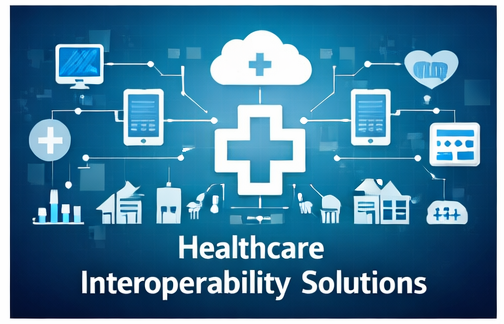
The Growing Importance of Healthcare Interoperability Solutions
As healthcare systems become increasingly digitized, the need for seamless data exchange across platforms has moved from a technical aspiration to an operational necessity. Healthcare interoperability solutions are now central to modern care delivery, enabling providers, payers, laboratories, and patients to access and share information securely in real time. With value-based care models expanding and regulatory frameworks tightening around data transparency, organizations are accelerating investments in systems that break down information silos.
Electronic health records (EHRs) remain the backbone of digital healthcare infrastructure. However, fragmented systems and vendor-specific architectures have historically limited data flow. Today, EHR interoperability solutions are evolving to bridge these gaps by standardizing data formats and enabling cross-platform communication. This transformation is driven by both compliance requirements and the strategic imperative to enhance care coordination, reduce duplicate testing, and improve clinical decision-making.
FHIR Interoperability and API-Driven Ecosystems
A defining trend in this space is the rapid adoption of FHIR interoperability standards. Fast Healthcare Interoperability Resources (FHIR) provides a modern, web-based framework that simplifies data exchange across healthcare applications. Unlike earlier standards, FHIR interoperability supports modular, scalable integration—allowing organizations to build applications that connect seamlessly with existing systems.
Healthcare API integration has become the technical foundation of this shift. APIs enable third-party applications, remote monitoring tools, telehealth platforms, and patient engagement apps to connect directly with core clinical systems. As a result, healthcare providers can deliver more personalized, data-driven services while maintaining security and compliance.
Major technology vendors and health IT companies are expanding their API marketplaces, offering developer-friendly environments to accelerate innovation. Cloud-based interoperability platforms are also gaining traction, allowing health systems to centralize integration processes while ensuring scalability. This convergence of FHIR interoperability and healthcare API integration is fostering a more connected digital ecosystem where real-time data exchange is no longer a bottleneck but a competitive advantage.
Expansion and Strategic Investments
The commercial outlook for healthcare interoperability solutions reflects strong and sustained demand. Report published by Grand View Research. indicates that the global healthcare interoperability solutions market size is projected to reach USD 8.57 billion by 2030, growing at a CAGR of 14.15% from 2024 to 2030. This growth trajectory underscores the urgency among healthcare stakeholders to modernize legacy IT infrastructures and meet evolving regulatory mandates.
In practical terms, healthcare organizations are moving beyond basic connectivity toward advanced analytics-enabled interoperability. Integrated data environments now support predictive modeling, population health management, and clinical workflow automation. Vendors are responding by embedding artificial intelligence tools within interoperability frameworks, allowing clinicians to derive actionable insights from aggregated data sets.
Moreover, payer-provider collaboration is intensifying. Interoperable systems enable claims data, clinical data, and social determinants of health information to be exchanged seamlessly, improving risk assessment and care planning. As interoperability matures, stakeholders are recognizing its value not only as an IT function but as a strategic enabler of cost containment and quality improvement.
Future Outlook: Toward a Unified Digital Health Infrastructure
Looking ahead, healthcare interoperability solutions will continue to evolve toward platform-based ecosystems that prioritize flexibility, security, and patient empowerment. EHR interoperability solutions are expected to become increasingly vendor-agnostic, reducing dependency on proprietary systems and encouraging competitive innovation. Regulatory initiatives promoting open data access will further accelerate adoption.
Cybersecurity and data governance will remain critical considerations. As healthcare API integration expands the number of connected endpoints, organizations must implement robust authentication protocols and continuous monitoring mechanisms to mitigate risks. Investments in zero-trust architectures and encrypted data exchange frameworks are becoming standard practice.
Ultimately, FHIR interoperability is shaping a future where data liquidity becomes intrinsic to healthcare delivery. When clinical, administrative, and patient-generated data flow seamlessly across networks, care becomes more coordinated, efficient, and patient-centered. The ongoing expansion of healthcare interoperability solutions signals a decisive shift toward integrated digital health infrastructure—one that supports innovation, compliance, and improved outcomes on a global scale.

 English
 Arabic
 French
 Spanish
 Portuguese
 Deutsch
 Turkish
 Dutch
Dutch
 Italiano
 Russian
 Romaian
 Portuguese (Brazil)
