


Financing Trends in Green Ammonia Production Projects
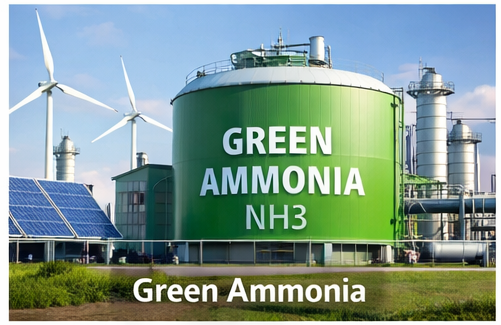
The Rapid Rise of Green Ammonia in the Energy Transition
Green ammonia is quickly emerging as a cornerstone of the global decarbonization movement. Traditionally, ammonia has been produced using natural gas through the Haber–Bosch process, resulting in significant carbon emissions. In contrast, green ammonia production relies on renewable electricity—typically from wind, solar, or hydropower—to generate hydrogen via electrolysis. This hydrogen is then combined with nitrogen to produce ammonia without fossil fuel inputs, drastically reducing lifecycle emissions.
The growing urgency to decarbonize heavy industry, shipping, and agriculture has accelerated investments in renewable ammonia projects worldwide. Governments across Europe, Asia-Pacific, and the Middle East are incorporating green ammonia into national hydrogen strategies, offering subsidies and forming cross-border partnerships. Large-scale electrolyzer installations and falling renewable energy costs are improving project viability, moving the technology from pilot phase to commercial deployment.
Expanding Role in Agriculture and Fertilizers
Agriculture remains the largest consumer of ammonia globally, and the shift toward green ammonia fertilizer represents a major opportunity to cut emissions in the food supply chain. Conventional fertilizer production accounts for a substantial share of industrial greenhouse gases. By replacing grey ammonia with renewable alternatives, producers can significantly reduce Scope 1 and Scope 2 emissions.
Several fertilizer manufacturers are investing in retrofitting existing ammonia plants with renewable hydrogen inputs. In addition, governments are exploring incentives for low-carbon agricultural inputs, encouraging farmers and agribusinesses to adopt green ammonia fertilizer without facing steep cost increases. Over time, economies of scale and carbon pricing mechanisms are expected to narrow the cost gap between conventional and green ammonia products.
Notably, the global green ammonia market size is projected to reach USD 73.05 billion by 2030, growing at a CAGR of 116.5% from 2023 to 2030, according to Grand View Research. This extraordinary growth rate reflects both policy momentum and expanding industrial applications. The research highlights how rapid capacity additions, technological innovation, and international hydrogen trade agreements are shaping a robust growth trajectory for renewable ammonia worldwide.
Green Ammonia as a Future Marine and Power Fuel
Beyond fertilizers, green ammonia fuel is gaining attention as a viable alternative for maritime shipping and power generation. The International Maritime Organization’s decarbonization targets have prompted shipping companies to evaluate ammonia as a zero-carbon bunker fuel. Unlike hydrogen, ammonia is easier to store and transport due to its higher energy density and established global infrastructure.
Major engine manufacturers are currently developing ammonia-compatible marine engines, with pilot vessels expected to enter operation in the near term. Ports are simultaneously investing in bunkering facilities to handle green ammonia fuel safely and efficiently. In power generation, ammonia co-firing in coal plants is being tested as a transitional pathway to reduce emissions while maintaining grid stability.
From an energy storage perspective, renewable ammonia offers additional advantages. It can function as a hydrogen carrier, enabling long-distance transport of renewable energy from resource-rich regions to demand centers. Countries with abundant solar and wind resources, such as Australia and parts of the Middle East, are positioning themselves as future exporters of green ammonia.
Investment Trends and Outlook
Capital inflows into green ammonia production projects have accelerated dramatically over the past two years. Energy majors, fertilizer producers, and infrastructure funds are forming joint ventures to de-risk early-stage investments. Electrolyzer manufacturers are scaling up production capacity, aiming to bring down capital expenditure through manufacturing efficiencies.
Challenges remain, particularly regarding high upfront costs, renewable energy intermittency, and the need for supportive regulatory frameworks. However, policy instruments such as carbon pricing, tax credits, and clean fuel mandates are gradually strengthening the business case for renewable ammonia.
As technology matures and supply chains stabilize, green ammonia is expected to move from a niche innovation to a mainstream industrial commodity. Its dual role—as both a sustainable agricultural input and a low-carbon energy carrier—positions it uniquely within the broader clean energy ecosystem. With continued collaboration among governments, industry stakeholders, and research institutions, green ammonia fuel and fertilizer applications are set to redefine the future of sustainable production and global energy trade.

 English
 Arabic
 French
 Spanish
 Portuguese
 Deutsch
 Turkish
 Dutch
Dutch
 Italiano
 Russian
 Romaian
 Greek
Greek
