


Predictive Emission Monitoring Systems Enabling Smarter Decision-Making
Emerging Role of Emission Monitoring in a Tightly Regulated World
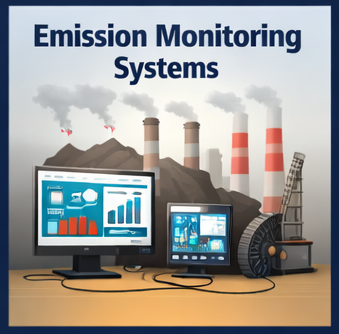
As industries worldwide face increasing pressure to decarbonize and operate transparently, emission monitoring systems have become a core component of modern environmental compliance strategies. Power generation, cement, chemicals, metals, and oil & gas sectors are all under stricter regulatory oversight, pushing companies to adopt more accurate, real-time, and data-driven solutions. Rather than being viewed solely as compliance tools, emission monitoring systems are now recognized as operational assets that help organizations improve efficiency, reduce risk, and support long-term sustainability goals.
Shift Toward Continuous and Real-Time Measurement
One of the most significant trends shaping the market is the growing adoption of continuous emission monitoring. Unlike periodic or manual testing methods, continuous emission monitoring provides uninterrupted measurement of pollutants such as SO₂, NOₓ, CO₂, and particulate matter directly from industrial stacks. This real-time visibility allows operators to quickly identify deviations, prevent violations, and optimize combustion or process conditions before problems escalate.
CEMS, or Continuous Emission Monitoring Systems, have become the standard in many regulated industries, particularly where emissions are high and compliance requirements are stringent. Advances in sensor technology, analyzer accuracy, and system integration have made modern CEMS more reliable and easier to maintain than earlier generations. Additionally, digital connectivity enables seamless data transfer to regulatory authorities and internal dashboards, reducing administrative burden while improving transparency.
Predictive Analytics and the Rise of Smart Monitoring
Beyond direct measurement, predictive emission monitoring systems are gaining strong momentum. These systems use advanced algorithms, machine learning models, and historical process data to estimate emissions without relying solely on physical analyzers. Predictive emission monitoring systems are especially valuable in complex processes where installing traditional sensors may be costly or technically challenging.
The integration of predictive models with plant control systems enables proactive emission management. Instead of reacting to exceedances after they occur, operators can forecast emission trends and adjust operating parameters in advance. This approach not only improves compliance but also supports cost savings by minimizing downtime, maintenance, and reagent consumption. As industrial facilities accelerate their digital transformation initiatives, predictive emission monitoring systems are increasingly viewed as a complementary solution to conventional CEMS rather than a replacement.
Outlook and Regulatory Influence
Regulatory frameworks remain a primary driver of market expansion, particularly in regions with ambitious air quality and climate targets. Governments are mandating stricter reporting standards and encouraging the adoption of advanced monitoring technologies. In this context, the commercial outlook for emission monitoring systems continues to strengthen. The global emission monitoring systems market size is projected to reach USD 6.71 billion by 2030, growing at a CAGR of 10.3% from 2024 to 2030, according to Grand View Research.
This growth reflects not only regulatory enforcement but also increased awareness among industries about the operational and reputational benefits of accurate emissions data. Companies that invest in robust monitoring infrastructures are better positioned to meet environmental, social, and governance (ESG) expectations from investors and stakeholders.
Integration, Automation, and Future Direction
Another notable trend is the integration of emission monitoring systems with broader industrial automation and environmental management platforms. Cloud-based analytics, remote diagnostics, and automated calibration are improving system uptime and reducing lifecycle costs. Vendors are also focusing on modular designs that allow facilities to scale or upgrade their CEMS as regulations evolve.
Looking ahead, the convergence of continuous emission monitoring, predictive emission monitoring systems, and advanced analytics will define the next phase of the market. Emission monitoring is no longer a standalone compliance function; it is becoming a strategic capability that supports cleaner production, data-driven decision-making, and long-term sustainability. As industries continue to balance regulatory demands with operational efficiency, emission monitoring systems will remain central to achieving both environmental and business objectives.

 English
 Arabic
 French
 Spanish
 Portuguese
 Deutsch
 Turkish
 Dutch
Dutch
 Russian
 Romaian
 Portuguese (Brazil)
 Greek
Greek
